House O by Amaine Architects
House O sits on a lava-formed plateau above Itō, Japan, where Amaine Architects threads a clear geometry through dense cypress forest and distant sea views. The house works as a deliberate pause in this long geological story, raising daily life above the undergrowth while holding on to the breeze, the horizon, and the rhythm of the trees. Within this lifted volume, a quiet holiday routine meets the calm of the woods.
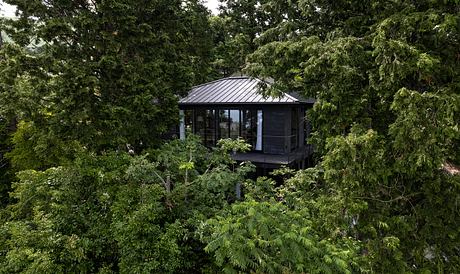
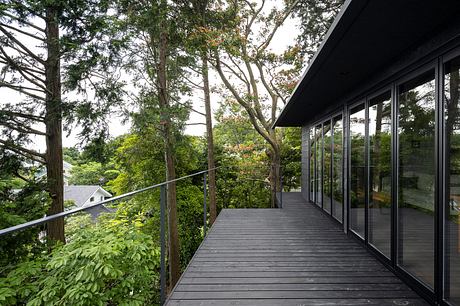
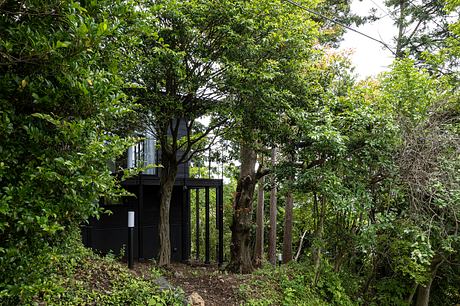
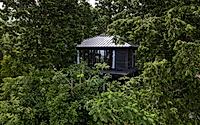
Dappled light filters through tall cypress trunks before touching the pale undercroft of House O, where slender columns stand among roots and needles. Above, a simple rectangle hovers just clear of the canopy, catching sea air and a long slice of horizon at the level of daily eye lines.
This house is a holiday retreat on the lava plateau above Itō, Japan, shaped by Amaine Architects around the slow movement of geology, vegetation, and light. The project treats the forest and the distant Izu Islands as fixed coordinates, then raises living routines into their path to register sun, breezes, and the passage of time. A lifted main floor, a projecting terrace, and a calm interior palette together bind domestic use to the changing coastal weather.
Lava Plateau Setting
Four thousand years of cooling lava underlie the site, a former flow from Mount Omuro that hardened into an undulating plateau reaching toward Sagami Bay. On top of this ancient field, plantation cypress gave way to a holiday subdivision 66 years ago, yet one dense patch of trees remained untouched until this commission. The house acknowledges both time scales by reading the bedrock as immovable structure and the forest as a living, moving layer that frames every view.
Rectangular Volume In The Trees
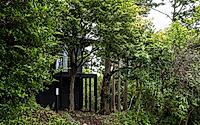
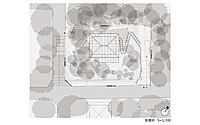
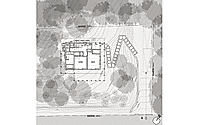
Early sketches tried to follow the existing trunks, but the final scheme introduces a clear rectangle that cuts across the irregular grove. Carved carefully from a larger imagined volume, this simple form carries the logic of traditional Japanese measurement, giving rooms and terrace a quiet internal order. The clarity of the box reads as an intentional anchor in the forest, a fixed datum against which shifting light, weather, and foliage can be felt from day to day.
Raised Floor And Terrace
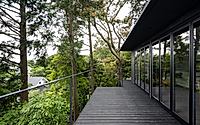
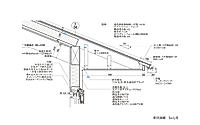
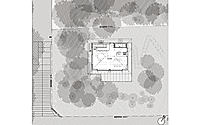
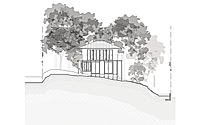
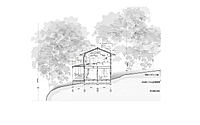
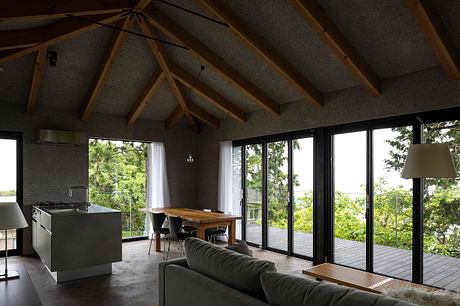
The main floor stands about two metres above the ground, a height chosen to clear the tree canopy while aligning with the most generous horizon line. From this level, the rectangle pushes outward as a terrace supported by a grid of slender columns at 4.4 metre intervals. Their rhythm echoes the surrounding cypress trunks, so the underfloor level reads almost like an added grove rather than a solid plinth. Life unfolds in a band between forest and sky, where the deck holds chairs, walking paths, and quiet pauses facing the sea.
Interior Calm Between Forest And Sea
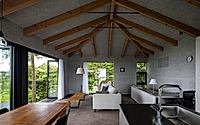
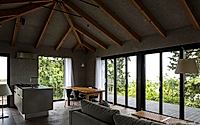
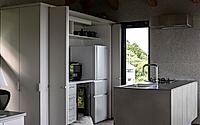
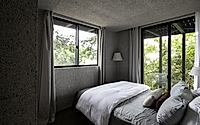
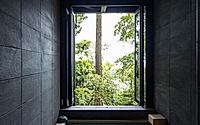
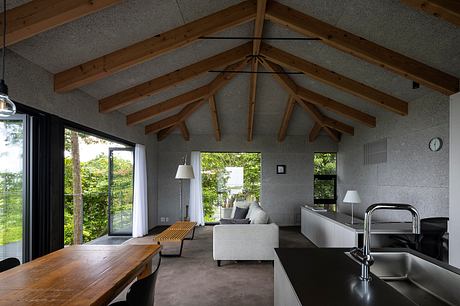
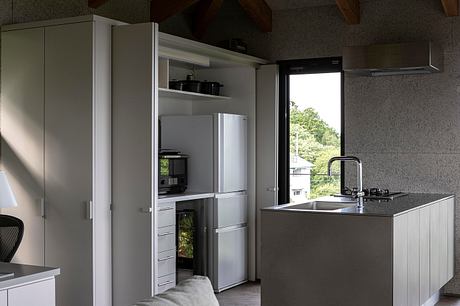
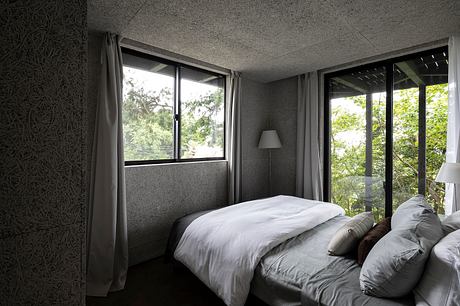
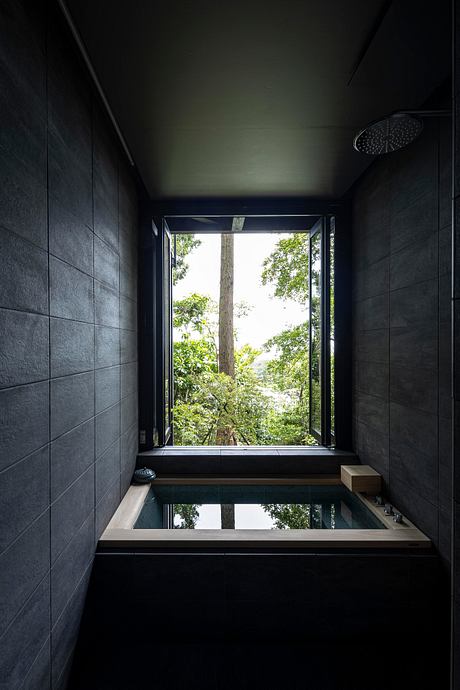
Inside, wood fibre cement boards and resin mortar set up a subdued backdrop that keeps attention on outside movement. Services and utilities pull back into walls and built elements, freeing the main rooms as broad, continuous surfaces for light to slide across. Openings toward the sea capture blue distance, while the opposite side leans into filtered green from the forest, giving each corner a slightly different balance of security and openness. Over time, the rectangle almost disappears into its setting, holding a stable outline while the world around it keeps shifting.
As seasons turn, the house stays put on its lava sheet while canopies grow, winds change, and the bay flickers between calm and storm. The project fixes one clear volume at the edge of these forces, not as a monument but as a temporary mooring for everyday rituals. In that steady posture, visitors register the long story underfoot and the quick weather above, feeling the gap between the moving and the unmoving with each return.
Photography courtesy of Amaine Architects
Visit Amaine Architects