Barra Apartment: Quiet Coastal Minimalism
Barra sets a calm tone in the Aveiro District, Portugal, where Paulo Martins Arq&Design reworks a classic beachfront apartment into a restrained, coastal home. The project leans on minimalist lines, soft sand-toned surfaces, and measured detailing to translate the beach outside into a quietly immersive interior for daily living and rare moments of genuine pause.


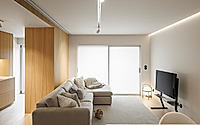
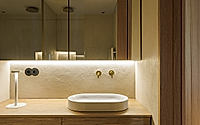
Light filters in from Praia da Barra and runs along soft beige walls, landing gently on oak boards underfoot. Refined surfaces stay calm so the glow of the coast can do most of the work.
Barra is an apartment renovation in the Aveiro District by Paulo Martins Arq&Design, set within a classic four-storey building facing the Atlantic edge. The project reinterprets the original residence as a contemporary retreat, rooted in a minimalist interior language and a palette tuned to sand, water, and sky. Every room turns that palette into structure, storage, and daily rituals rather than surface decoration.
The layout remains clear and functional, yet the experience centres on light, texture, and reflection. Natural materials and muted tones guide circulation from entry to living room to bedroom, shaping a domestic environment that feels composed without stiffness. Interior choices underline the coastal context, translating the beach into quiet surfaces and measured volumes that frame everyday life.
Soft Tones And Timber
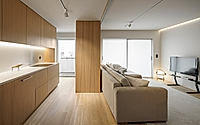
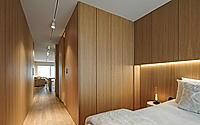
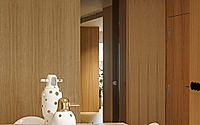
Across the apartment, soft beige tones recall sand under a washed sky. That single chromatic family wraps floors, walls, and built-in elements so rooms connect visually without strain. Oak boards run along the floor and rise onto selected walls, giving a continuous grain that feels tactile under changing daylight. Pale ceilings lift the eye and catch reflected light, adding height and clarity without calling attention to themselves.
Color does quiet work here. Subtle shifts of beige and warm timber set the rhythm rather than bold accents or pattern. This restraint allows the material junctions to stand out: where oak meets painted wall, where floor meets mirrored volume, where ceiling lines adjust to hold hidden services. Each contact is straightforward, which keeps the overall composition calm.
Mirrored Volume As Anchor
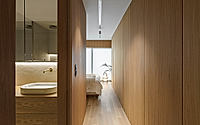
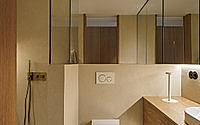
At the core of the apartment, the sanitary block becomes a sculptural presence. Clad in grey mirror, this volume pulls light from windows and sends it back into deeper zones. Reflection blurs hard corners and loosens the sense of enclosure, making circulation feel wider than the plan alone would suggest. Edges soften as the mirrored planes catch movement, sky, and the muted tones of surrounding surfaces.
This single element does more than hide bathrooms. It acts as a quiet pivot around which daily life turns, tying together the living room, kitchen, and hall. The grey tint avoids harsh glare while still extending perception, so the mirrored box reads as object and landscape at once. In a compact footprint, it is the key device for openness and continuity.
Open Living, Layered Uses
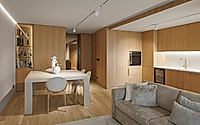
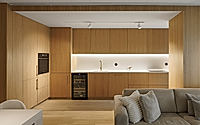
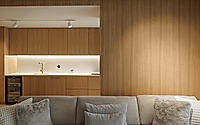
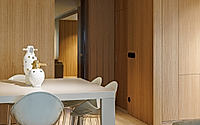
The principal living area works as a long, open composition that absorbs several programs. Living, dining, and kitchen zones align in sequence rather than strict separation, which keeps views unbroken from front to back. A laundry area sits discreetly within this arrangement, concealed yet easily reached, so daily tasks stay close without dominating the room. Furniture and built-ins trace simple lines that let the oak and beige surfaces remain the visual constant.
Circulation threads along this open room with minimal obstacles. Seating groups orient toward light and horizon, while the kitchen reads as a calm working strip rather than a technical corner. Surfaces stay restrained to foreground proportion and clarity, turning the main room into a flexible setting that supports quiet evenings, shared meals, and casual work without changing character each time.
Bedroom As Quiet Core
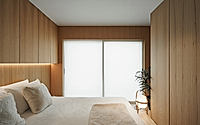
In the bedroom, the palette holds steady but the mood drops a notch softer. An en-suite bathroom and generous wardrobe are built into the volume, allowing the main room to stay uncluttered. Storage tucks behind clean fronts, so textiles, personal objects, and light carry most of the atmosphere. Oak and sandy tones draw the eye horizontally, which makes the room feel broad and composed.
Privacy here comes from control rather than isolation. The consistent material language ties the bedroom back to the rest of the apartment, yet acoustic separation and layered thresholds keep it protected. For residents with demanding schedules, this balance between connection and withdrawal turns the bedroom into a place where rest can actually happen.
The project settles into its coastal context without resorting to nautical motifs. Sand-inspired colors, reflective surfaces, and warm timber take their cues from the beach outside and translate them into daily routines. As day moves toward evening, light softens across mirror and oak, and the apartment leans back into quiet.
From entry to bedroom, the interior stays measured, relying on a controlled palette and clear forms rather than visual noise. The result is a coastal home tuned to calm, where material choices and carefully balanced volumes shape the rhythm of everyday life.
Photography courtesy of Paulo Martins Arq&Design
Visit Paulo Martins Arq&Design