PCG House by Visioarq Arquitectos
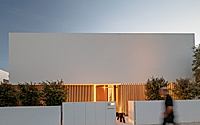
PCG House sets a composed horizontal line against the light of Loulé, Portugal, where Visioarq Arquitectos grounds a contemporary house in its sloping terrain. Glass, terraces, and a long infinity pool open the rooms toward the southern horizon, while careful solar orientation shapes how the family moves through the day. The result is a residence tuned to climate and view without losing clarity of form.


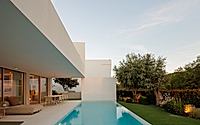
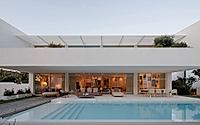
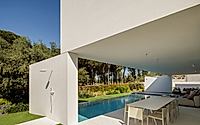
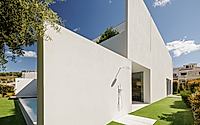
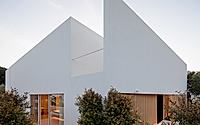
Late sun washes across the long white volumes as they stretch along the slope, catching light on one side and casting deep shadows on the other. From the pool edge, water meets horizon in a single line, with glass walls behind pulling the landscape straight into daily life.
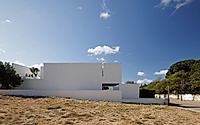
PCG House is a single-family house in Loulé, Portugal, drawn by Visioarq Arquitectos around orientation, landscape, and climate. The project leans into horizontality to sit low on the terrain, using pure volumes and generous glazing to connect interior and exterior. Rather than rely only on systems, it uses the site itself to manage light, air, and heat for everyday comfort.
Placing Volumes In The Land
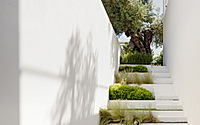
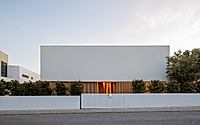
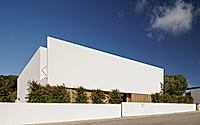
The composition starts with distinct volumes, each tied to a function, grouped into a clear horizontal arrangement that echoes the natural contours. This gesture lowers the visual impact on the site and lets the house read as part of the topography instead of an object on it. Subtle projections and recesses along the facades break any sense of monotony, pulling light into sheltered corners and setting up shaded edges. Over the day, those shifts in depth sharpen and soften, turning walls into a quiet register of changing sun.
Tuning Form To Climate
Orientation does the heavy lifting here, particularly toward the south and west where the main living areas face out. Generous glazed surfaces frame long views while inviting cross-ventilation, so summer heat is tempered by a steady flow of air through the rooms. Solar gain is carefully judged, giving warmth and brightness when needed without overexposure at the hottest hours. In this way, energy use drops because the building form itself moderates temperature and daylight.
Extending Life Outdoors
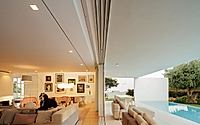
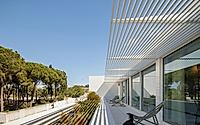
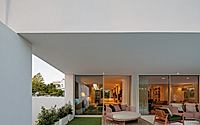
External rooms build on that climatic reading of the site, especially along the southern and western edges. The infinity pool stretches toward the horizon so the waterline fuses with distant land, while terraces run along its length as places for lingering rather than transit. To the west, pergola-shaded terraces give relief from the high sun and keep outdoor living pleasant deep into the afternoon. On the upper floor, the east-facing facade pulls back to form a sheltered terrace screened from the street, balancing openness with much-needed privacy.
Living Between Inside And Out
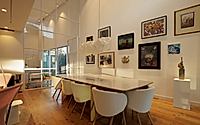
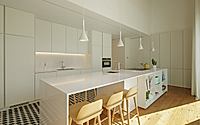
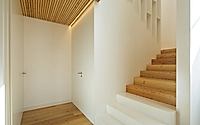
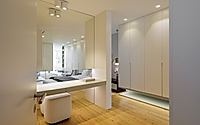
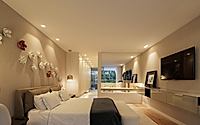
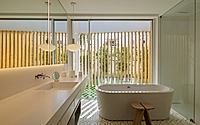
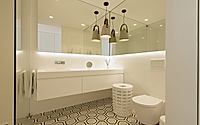
Inside, rooms connect fluidly so daily routines can shift with light, temperature, and season. Social areas open directly to terraces and pool, turning thresholds into wide transitions rather than hard edges between house and garden. Circulation is kept clear, so one continuous movement links shaded outdoor rooms, glazed living areas, and more protected upper-level terraces. That openness gives the house a calm rhythm, with nature always just a few steps and one sliding pane away.
As day fades, the long facades catch the last lateral light, and reflections slip across the water surface at the pool edge. The house holds its low profile against the land, its quiet geometry softened by planted terraces and the changing sky. Comfort here is not just about shelter; it comes from the steady dialogue between form, climate, and the everyday patterns of those who live within it.
Photography by Marcelo Lopes
Visit Visioarq Arquitectos