Casa Grimaldi Layers Retro Warmth into a Refined Italian Apartment
Casa Grimaldi is an apartment in Frattamaggiore, Italy, drawn up by Labia Design as a dialogue between contemporary lines and gentle retro echoes. The project threads a Parisian-inspired elegance through everyday family life, balancing polished marble and brass with warm wood, color, and tactile finishes. Each room extends that narrative with tailored gestures, from sculptural stone in the living area to playful, adaptable rooms for the children.
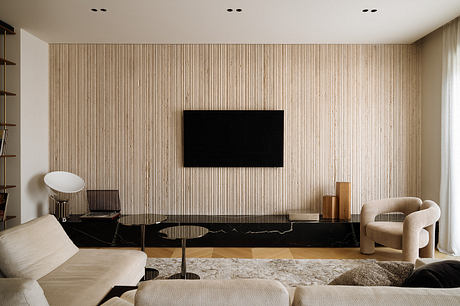
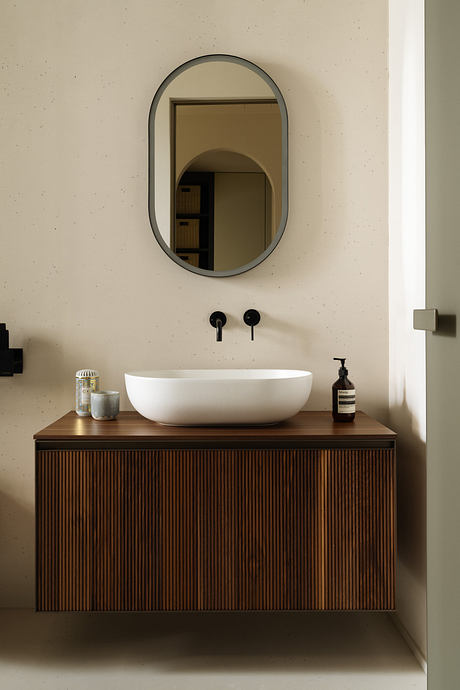
Light filters across stone and wood as the apartment opens from the entry into the living area, where warm surfaces meet cooler, reflective ones. A subtle Parisian inflection runs through the rooms, from soft arches to expressive materials, grounding daily routines in a composed visual rhythm.
Casa Grimaldi is a 2024 apartment in Frattamaggiore, Italy, shaped by Labia Design as a home where modern living coexists with retro references. The interior centers on material contrast and layered finishes, using travertine, marble, brass, and wood to build a cohesive palette that threads through living, sleeping, and outdoor areas. Every zone responds to how the family gathers, rests, and plays, with each finish chosen to support that daily choreography.
Staging The Living Heart
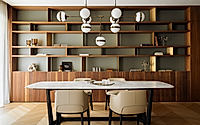
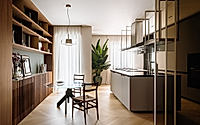
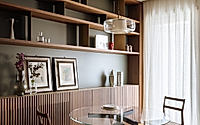
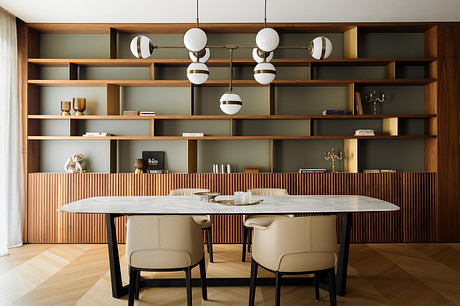
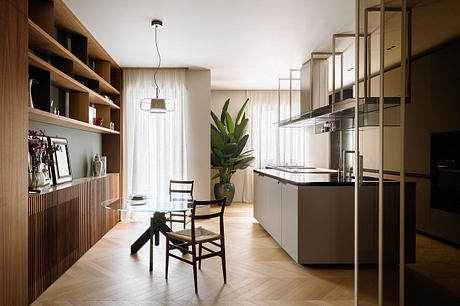
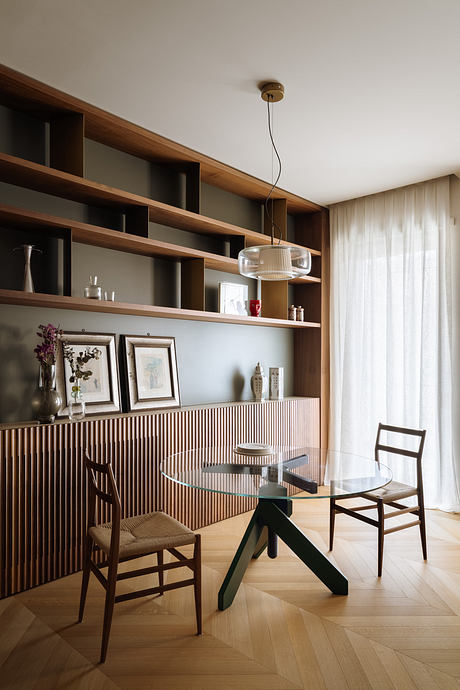
The entrance leads directly into a day area composed as a rich visual stage, where the warmth of wood meets the gleam of brass and the depth of marble. A stainless-steel kitchen runs as an essential, contemporary volume, its cool precision offset by the tactile surfaces that surround it. At the center, a Calacatta Oro marble table anchors the room as a place for meeting, conversation, and shared meals, giving the family a clear focal point. Nearby, a ceramic installation by De Marchi Verona introduces color and texture, adding a refined artistic charge to the living zone.
Travertine As Core Element
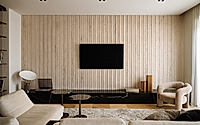
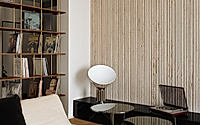
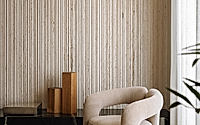
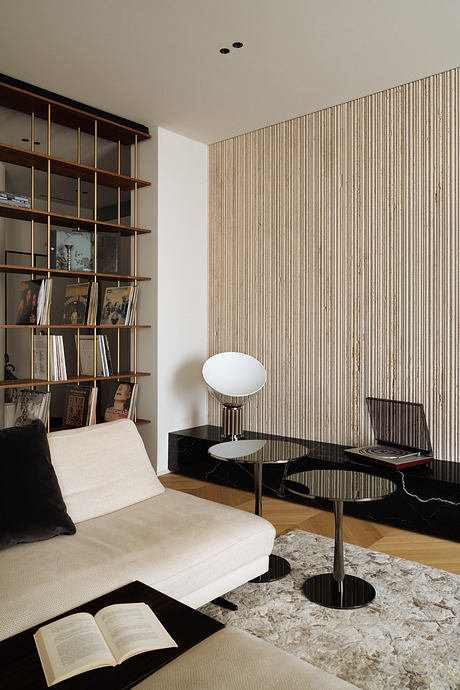
A large travertine wall forms the material heart of the apartment, a solid and sculptural presence that defines circulation and amplifies visual strength. This surface reads as both backdrop and built-in architecture, giving depth to the living area and tying adjacent rooms into a single narrative. Light grazes its grain and voids, drawing out the stone’s natural rhythm and setting up a calm counterpoint to the polished metals and smooth lacquered pieces nearby. The result is a clear hierarchy of surfaces, with travertine acting as a continuous anchor.
Private Rooms With Drama
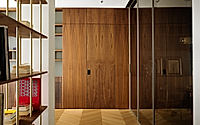
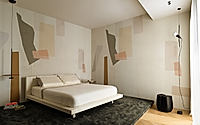
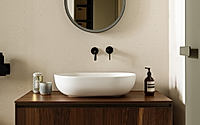
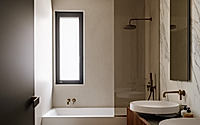
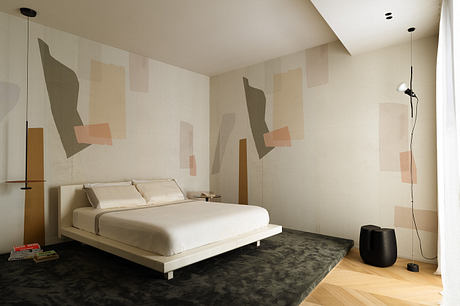
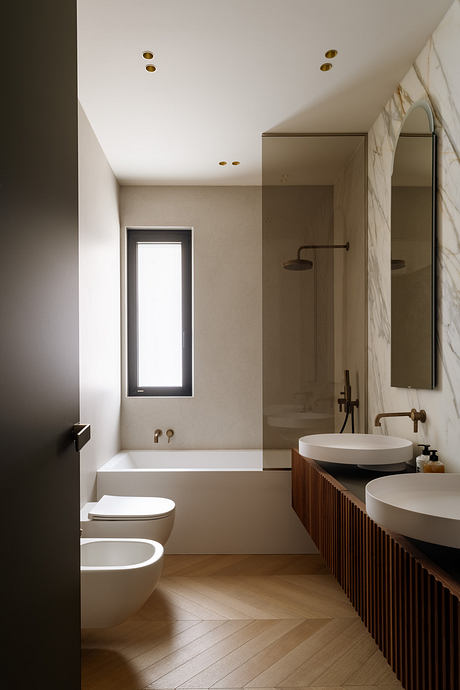
A concealed wooden door leads from the social areas to a quieter hall, where a finely detailed wardrobe hides a fully equipped laundry behind flush panels. In the night zone, refinement shifts toward intimacy through focused moves: a guest bathroom wrapped entirely in marble conveys a sense of prestige without needing ornament. The main bedroom rises slightly on a soft carpeted platform, turning the act of stepping up into a small daily ritual. A patterned wallcovering reinforces the room’s scenographic quality, while two arches mark the passage to the walk-in closet and en suite bathroom, adding architectural rhythm and a hint of theatricality.
Rooms That Grow With Children
Children’s rooms complete the interior with a more vivid and contemporary language, tuned to changing needs over time. Built-in elements and tailored layouts are planned to adapt as habits shift, supporting study, play, and rest without rigid zoning. Surfaces stay expressive yet controlled so furniture, toys, and textiles can evolve without disrupting the apartment’s overall material coherence. Each room reads as part of a larger story, not a separate world.
Outdoor Color And Light
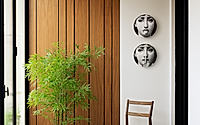
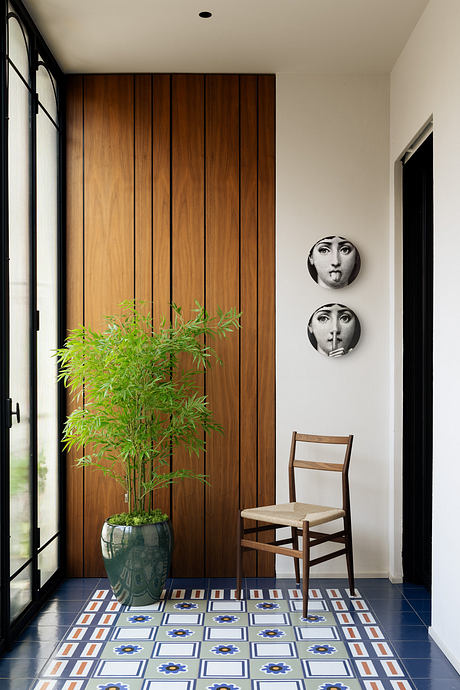
Outside, the project extends onto an open-air area set over a floor from Mutina’s Margherita collection, which brings a field of color underfoot. Ribbed glass in the window wall catches sunlight and scatters it into shifting reflections, softening the boundary between interior and terrace. Wooden wall cladding conceals technical equipment and storage, maintaining visual calm while wrapping the outdoor room in a warm, continuous surface. Evening light moves across these materials, folding the exterior back into the apartment’s interior palette.
From the travertine wall to the Margherita tiles, the apartment relies on material nuance more than gesture for its quiet drama. Domestic routines unfold across stone, metal, textile, and wood, each finish doing its work without noise. Casa Grimaldi settles into its setting with a composed ease, where every surface contributes to a measured, liveable elegance.
Photography by Carlo Oriente
Visit Labia Design