Cabedelo Apartment by Ricardo Azevedo Arquitecto
Cabedelo Apartment is a reimagined apartment in Viana do Castelo, Portugal, by Ricardo Azevedo Arquitecto. The project turns an anonymous seaside dwelling into a coherent arrangement of interior rooms and large exterior terraces, calibrated to daily rituals and social life. Across indoor volumes and generous outdoor platforms, it reframes a familiar housing model into a home oriented toward shared meals, leisure, and the long coastal horizon.


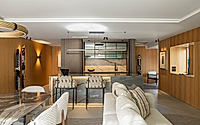
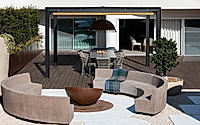
Light falls across the apartment and runs out toward the terrace before dissolving at the edge of the sky. From inside, the eye moves past cooking and dining to an exterior deck that stretches domestic life outward in one continuous gesture.
This apartment in Viana do Castelo, Portugal, is an ordinary unit recast by Ricardo Azevedo Arquitecto as a home organized around shared routines and a generous outdoor realm. The project concentrates on how people circulate between interior rooms and exterior platforms, how they cook, eat, bathe, and rest across a plan that privileges connection. Rather than treat the large terrace as leftover bonus area, the intervention treats it as a second living core, equal in weight to the rooms inside.
Recentering The Home
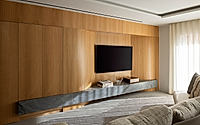
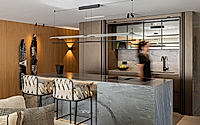
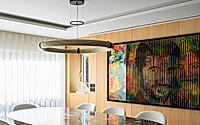
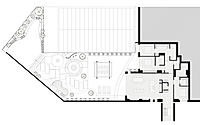
The original layout follows a familiar seaside apartment formula, with rooms strung along corridors and little sense of hierarchy. Here, the social zone sits at the heart of the dwelling, with living, dining, and kitchen areas bracketed together as a single, legible core. From this center, circulation becomes clear and compact, tying directly into the sleeping quarters on one side and the exterior extension on the other. Everyday routines pivot around this hub, so moving from morning coffee to evening gatherings reads as a simple, direct sequence rather than a series of disconnected episodes.
Extending Life Outdoors
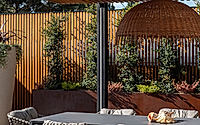
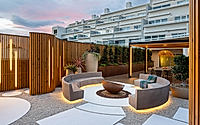
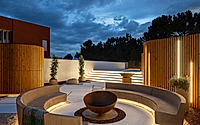
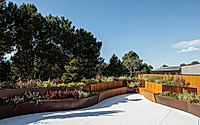
Outside, the project treats the terrace as both garden and leisure ground, so the plan of the home effectively doubles. Around 100 m² (1,076 ft²) of covered exterior area and 200 m² (2,153 ft²) of open-air surface are arranged for living, dining, and cooking, mirroring the program inside. Wooden decking sets out paths and platforms, organizing zones for bathing, lounging, and social gatherings without enclosing them. The result is a daily rhythm where doors open, people drift outside with meals or conversation, and the boundary between interior and exterior loosens into a single continuous setting for life.
Balancing Public And Private
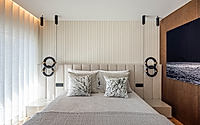
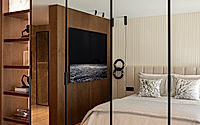
Within approximately 160 m² (1,722 ft²) of interior area, the project balances communal energy with quieter rooms for rest. Three bedrooms sit in direct relation to the central living core, close enough for easy access yet clearly held as more intimate territory. Circulation is streamlined so movement from bedroom to kitchen, or from bath to terrace, follows short and understandable routes. Social life can swell around the central rooms and exterior decks while private zones remain legible and calm, encouraging different modes of use across a single day.
Materials Shaping Atmosphere
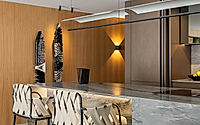
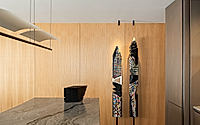
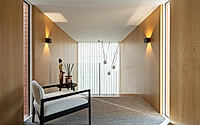
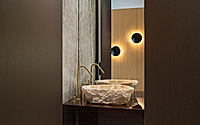
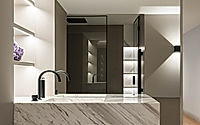
Material choices reinforce this programmatic clarity rather than compete with it. Marble and porcelain form robust surfaces for cooking and bathing, while plaster and drywall keep walls and ceilings visually quiet. Raised flooring negotiates thresholds and levels, and moments of carpet soften specific areas (a corner for reading or quiet rest, for instance). Outside, timber underfoot warms the terrace and links the various leisure areas so lounging, bathing, and gathering feel tied into a single, legible ground plane.
Light, Comfort, And Routine
Natural light shapes much of the experience, tracking from interior rooms out across the decks and back again. Carefully planned artificial lighting then extends use into evening, supporting meals, bathing, and quiet conversation without breaking the sense of continuity. Across both interior and exterior, the apartment holds a mix of comfort and visual refinement, built around specific activities rather than abstract form. It becomes not only a dwelling but a way of inhabiting the coast, with architecture framing daily routines against the open blue sky.
From morning sun on the wooden decking to nightfall in the interior living core, the project reads as a loop between rooms and terrace. People cook, talk, rest, and bathe across a plan that constantly refers back to that indoor-outdoor link. In this measured transformation, architecture steps forward as the quiet structure that holds a life in balance.
Photography by Ivo Tavares Studio, Ricardo Azevedo Arquitecto
Visit Ricardo Azevedo Arquitecto