Pinhal Conde da Cunha House by Estúdio AMATAM
Pinhal Conde da Cunha House stands in Seixal, Portugal, as a compact house by Estúdio AMATAM that turns a constrained plot into an articulated ensemble of volumes. The project pulls interior and exterior into a single gesture, using a continuous ribbon, a dark ceramic base, and a central void to choreograph how light, movement, and daily life unfold throughout the home.
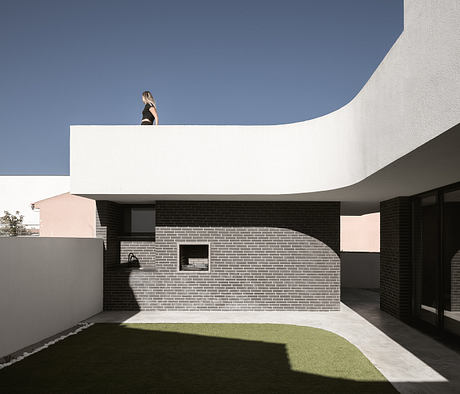

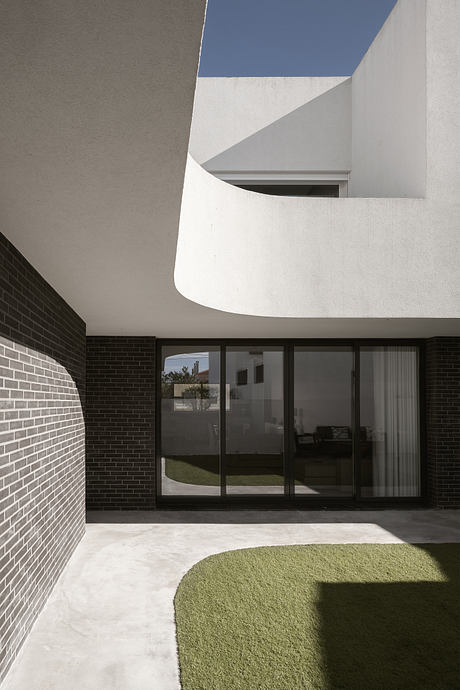
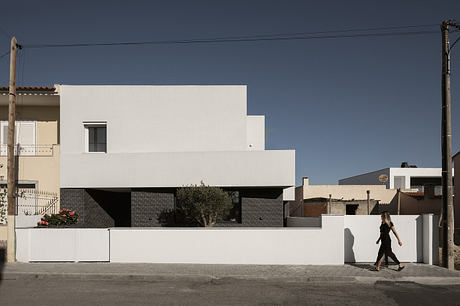
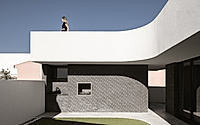
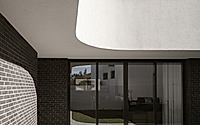
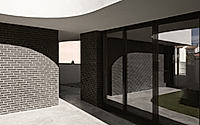
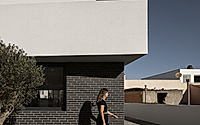
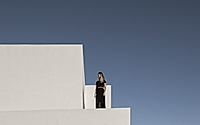
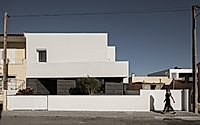
Light cuts along a dark ceramic base as the house lifts slightly from the ground, so the street edge reads as one confident, hovering line. A continuous ribbon folds around the compact plot, catching sun and shadow in a steady rhythm that guides the eye toward the entrance.
Within this tight suburban setting, Pinhal Conde da Cunha House in Seixal, Portugal, by Estúdio AMATAM works as a carefully composed house that resists repetition. The project responds to rigid subdivision rules with a single volume shaped by subtraction, openings, and a central void that structure circulation and daily routines. Interior and exterior moments align along this ribbon, so thresholds, courtyards, and rooms link through light, not just through doors.
Shaping A Compact Volume
The house begins as a compact mass, then is carved to admit air, sun, and layered views. Cuts and recesses puncture the envelope, pulling exterior pockets into the depth of the plan and preventing any facade from reading as a flat curtain. What first reads as monolithic gives way, as movement continues, to a sequence of varied heights, narrowed passages, and widened rooms where shifts in light register each turn.
Ribbon Binding House And Annex
Instead of separating the main dwelling and garage into two isolated blocks, the architects fuse them into one continuous gesture. A sinuous ribbon wraps both elements, folding around corners and bridging between them so the eye reads one elongated form rather than two competing pieces. This move streamlines circulation across the plot and sets up a clear order for entrances and outdoor zones, while the dark ceramic base anchors the composition and strengthens the horizontal line.
Central Void As Organizer
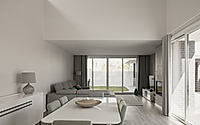
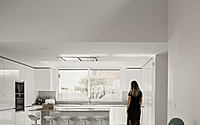
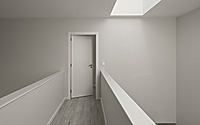
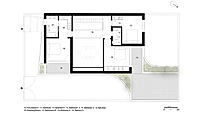
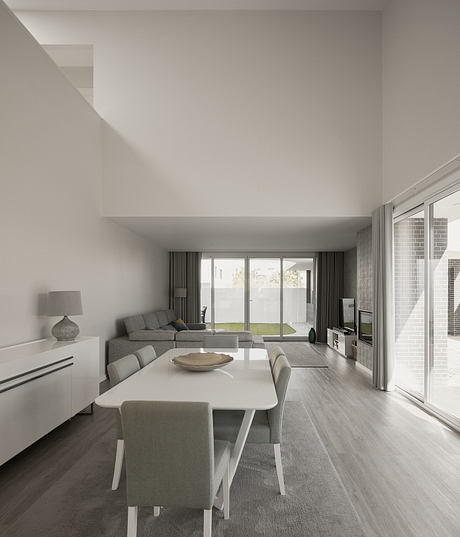
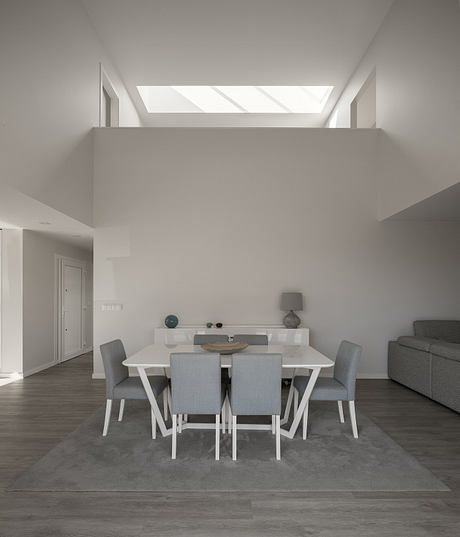
Inside, a vertical void cuts through the house and becomes its primary organizer. The atrium separates private rooms above from social and working areas below, yet visual connections run across levels through this shared core. Zenithal light drops into the heart of the plan, washing surfaces and shifting throughout the day to register time and use. Circulation traces the edges of this void, so every ascent or descent passes near daylight and maintains an awareness of the whole.
Monochrome Rooms And Light
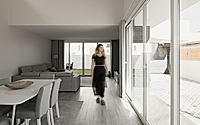
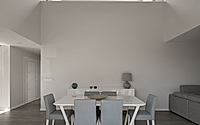
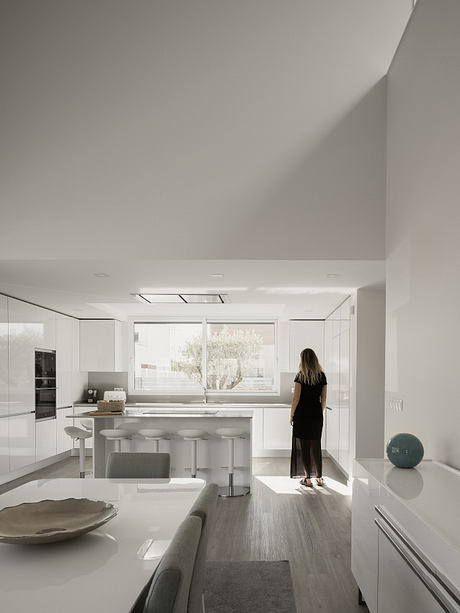
A monochromatic palette of whites, soft greys, and quiet textures steadies the interior sequence and lets light do most of the expressive work. Social rooms open toward the void and selected exterior frames, while the upper level tightens into calmer, more intimate zones that still borrow brightness from the central atrium. Surfaces read as continuous planes rather than isolated accents, so the house relies on shadow lines, reveals, and changing daylight to mark transitions and degrees of privacy.
From Street Edge To Inner Calm
Approach from the street moves from the perceived weight of the dark base to the lighter sweep of the ribbon overhead. Once inside, the route bends around the void, past framed glimpses of the exterior and back again to the central light well. In this way a constrained suburban plot supports a layered journey, where each turn is calibrated by brightness, height, and the measured pull of that internal courtyard.
As day ends, the ceramic base deepens in tone while the interior glows through selective openings. The house reads as one coherent line of movement and light, using constraint as a framework for clear ordering rather than as a limit on experience.
Photography courtesy of Estúdio AMATAM
Visit Estúdio AMATAM