Kensho: Minimalist Zen Home for Quiet City Living
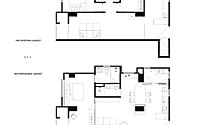
Kensho sets a quiet tone in Jakarta, Indonesia, where Co+in Collaborative Lab reshapes a compact apartment into a measured study in zen minimalism. The 900-square-foot unit shifts from two bedrooms to one, trading excess partitioning for an open kitchen, living, and dining core that foregrounds calm daily rituals. Black and grey surfaces, warmed by wood, hold a restrained mood that suits both the city and the client’s pared-back way of living.
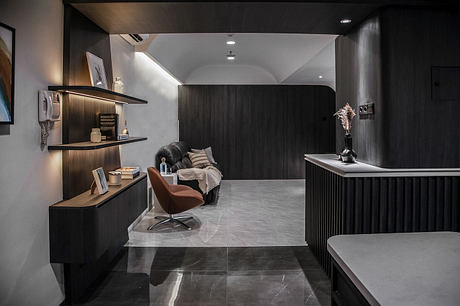
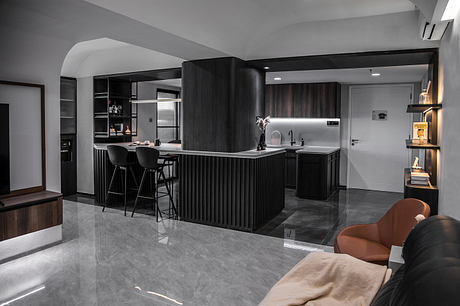
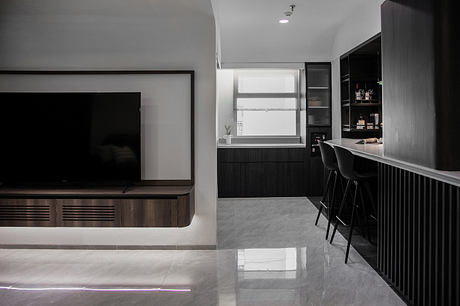
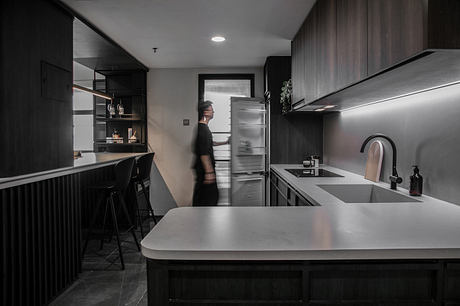
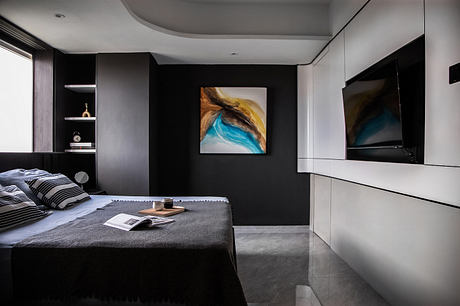
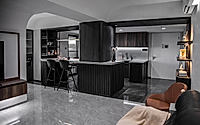
Soft light falls across grey stone and pale wood, catching on the long run of cabinetry and the curve of a darkened ceiling above. In the open kitchen, living, and dining zone, finishes stay quiet so daily movement reads clearly against a restrained backdrop.
Kensho is a 900-square-foot apartment in Jakarta, Indonesia, reworked by Co+in Collaborative Lab into a one-bedroom home centered on calm routines. The project turns a standard two-bedroom layout into a larger communal core, framed by a deliberate palette of black, grey, and wood. Interior decisions lean toward zen minimalism with Japanese and Nordic references, using color, texture, and carpentry to anchor each room.
Composing A Zen Core
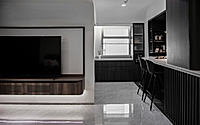
At the heart of the apartment, kitchen, living, and dining share one extended volume, giving the main room a sense of breadth despite its compact footprint. Surfaces stay low and linear so sightlines run unbroken from entry to windows, and the absence of clutter lets black and grey tones read as calm rather than heavy. Warm wood is threaded through cabinetry and furniture to soften the darker fields, so a simple table or storage wall feels grounded rather than stark. Light moves across these contrasting tones through the day, quietly amplifying the apartment’s measured character.
Layering Japanese And Nordic Notes
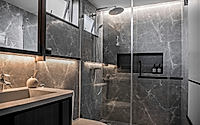
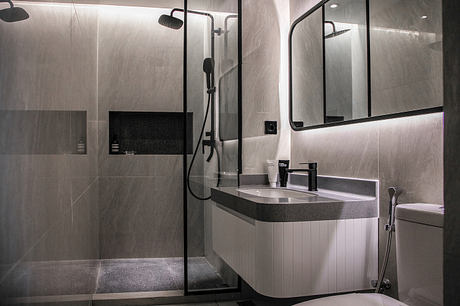
Japanese and Nordic influences meet in the way materials repeat rather than compete, with wood carpentry and gentle grey quartz forming a steady rhythm. Cabinet fronts, door panels, and built-in storage share similar tones and joints, which makes the room read as a single, ordered composition. The quartz surfaces recur across counters and other planes, bringing a subtle stone texture that keeps the palette from feeling flat. Every junction strives for clarity, letting grain, sheen, and shadow carry most of the visual interest.
Defining Zones Through Tone
Rather than rely on partitions, the apartment leans on shifts in floor color and surface tone to mark two distinct communal zones. A change underfoot signals when one moves from the more active kitchen and dining area toward the quieter living portion, with darker hues heightening the sense of intimacy. This tonal threshold brings a subtle sense of drama without interrupting the plan, so furniture can sit freely within each zone. The result is a clear reading of activity and rest while maintaining visual continuity.
Curved Ceilings And Hidden Doors
Over the living area, a curved ceiling wraps across the room, disguising structural beams while giving the main volume a gentle sense of enclosure. The gesture softens transitions between walls and overhead planes, so shadows slide rather than break at sharp corners. Toward the private side, hidden doors in the carpentry layer conceal bedroom and service zones, allowing the open area to hold a clean, Japanese-influenced calm. Handles and frames recede into the woodwork, so what reads first is a continuous surface rather than a corridor of openings.
Camouflaged Bedroom And Calm Surfaces
Within the bedroom, the same material language continues, but storage and openings fold into built-in carpentry to keep visual noise low. Camouflaged doors and window surrounds let the eye rest on grain and proportion instead of hardware, reinforcing the minimalist intent. Repetition of details from the main room strengthens the apartment’s sense of unity, so moving from public to private feels like a soft turn rather than a hard break. The restrained palette holds steady, making small differences in texture and light feel precise and intentional.
As day fades, black and grey planes catch the last reflections from the city while wood surfaces hold a warmer glow. Kensho remains quiet but not blank, tuned to the measured routines of its resident. In this compact apartment, calm is built less through decoration than through careful control of tone, proportion, and material repetition.
Photography courtesy of Co+in Collaborative Lab
Visit Co+in Collaborative Lab