Osprey House by Desai Chia Architecture
Osprey House anchors the tree line of Shelter Island, NY, United States, where Desai Chia Architecture works with a local builder to frame the edge of Mashomack Preserve. The house reverses the usual domestic order, lifting family life toward the marsh and opening broad views over Cedar Island Cove. Inside and out, the project uses material calm and careful sightlines to keep nature in constant view.


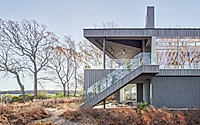
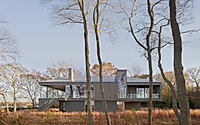
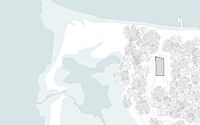
A narrow dirt road curls past the marsh and trees before the house comes into view, folded into the edge of Mashomack Preserve. From the approach, nautical rooflines angle toward Cedar Island Cove and a high terrace reads as a kind of modern nest.
This is a house for living at the edge of a preserve, and for looking outward as much as staying in. Desai Chia Architecture organizes the family retreat on Shelter Island, NY, as an upside-down house, lifting everyday rooms toward the tree canopy and marsh while keeping bedrooms close to the ground. Context drives every move, from vertical siding inspired by bird blinds to glazed facades that track soft northern light.
Living Above The Marsh
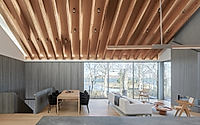
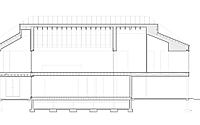
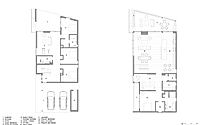
Family life shifts upstairs, in the spirit of the island’s upside-down houses and the osprey nests that dot poles, treetops, and piers. Large communal rooms and a generous outdoor terrace occupy the second level, giving long, unbroken views over the marshland ecosystem and Cedar Island Cove. The primary bedroom suite and a media room share this elevated perch, so quiet moments and social gatherings both lean into the same horizon. Below, an entry vestibule, three bedrooms, and a family room sit among beach grass, gaining privacy while staying wired to the ground.
Cladding With Bird-Blind Logic
The exterior takes its cue from the vertical slats of bird blinds scattered through Mashomack Preserve, translating their language into gray siding that slips into the trees. Boards are lightly charred using shou sugi ban, a traditional Japanese method that hardens the surface against fire, rot, and insects without ongoing maintenance. The treatment leaves a matte, driftwood-like texture that relates directly to the shoreline and brings a muted warmth where it wraps into interior walls. Neighbors on the coast see a quiet silhouette rather than a bright object, while wildlife keeps moving through the lot without harsh visual interruption.
Framing Light And Outlook
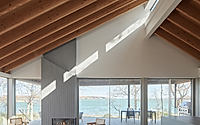
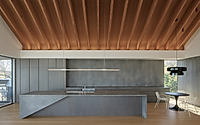
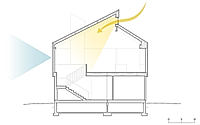
Glazing concentrates along the north facade, pulling in even, gentle light through the day instead of glare. Rooms read as long, open volumes that look out to reeds, water, and distant tree lines rather than inward to corridors. Above, a clerestory along the roof ridge washes exposed beams with southern sun, animating the ceiling as conditions shift from morning to late afternoon. That interplay between low, steady light from the marsh side and higher slices from above keeps the interior bright without losing a sense of enclosure.
Nautical Forms At The Shore
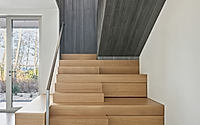
Along the water’s edge, volumes push toward the cove like a ship’s bow, creating covered outdoor rooms on both levels. These overhangs temper coastal weather while still holding close to breezes and salt air. An east terrace acts as the project’s hinge point, tying house to site; from here, a stair drops from the second level and settles lightly on the ground. That single stair links public and private programs, canopy and marsh, making the daily route between them part of the coastal experience.
As day ends, the charred timber softens in the fading light and glazing turns reflective, catching reeds and sky. From inside, the family looks out over the preserve much as an osprey would from its high nest, held just above the tidal ground yet tied firmly to it.
Photography courtesy of Desai Chia Architecture
Visit Desai Chia Architecture