Los Feliz Contemporary by Studio Emblem & Co.
Los Feliz Contemporary anchors a reimagined 1950 house in Los Angeles, United States, reshaped by Studio Emblem & Co. for art-collecting clients seeking a new West Coast chapter. The project turns a once-heavy Spanish Revival interior into a luminous, gallery-caliber home, where California light, contemporary furnishings, and carefully tuned rooms support both daily rituals and a serious collection. Every move reflects a shared desire to root their modern life in the city’s creative energy.


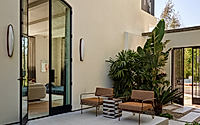
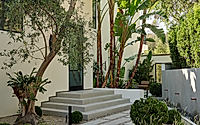
Morning light drifts through enlarged openings and skims across soft plaster walls before landing on a silver travertine threshold. A quiet rhythm builds as oak floors guide movement from entry to garden, with each room unfolding like another page in the same calm book.
This house in Los Angeles takes a once-compromised 1950 structure and recasts it as a contemporary, art-forward residence for a young collector couple. Studio Emblem & Co. handles both interior architecture and furnishings, using a tight palette to unify old bones and new ambitions. The story centers on how material, color, and furniture hold their own beside museum-grade works while still inviting everyday ease.
The original building carries layers of past alteration, from theme-heavy Spanish Revival gestures to 1990s-era finishes that fragment daily life. Rooms feel choppy, windows are underscaled, and decorative beams and terracotta read as set dressing rather than structure. Stripped back to its frame, the house becomes a blank diagram for a more fluid plan that better receives art and sunlight. Every subsequent decision flows from that reset.
Setting A Calm Base
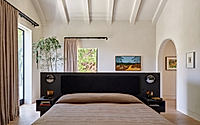
A restrained trio of European white oak, soft white plaster, and blackened steel sets the project’s register. Floors and millwork in oak ground circulation with a warm, even tone, so furniture and art can carry bolder moves without visual noise. Plaster surfaces stay soft rather than glossy, catching shadow and daylight in slow gradations that flatter both sculpture and canvas. Blackened steel threads through openings and details, giving a lean graphic edge that keeps the quiet palette from drifting into neutrality.
Shaping Rooms For Art
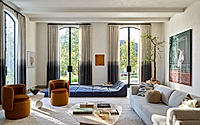
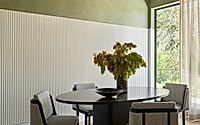
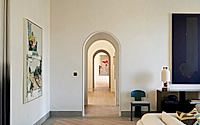
Walls come down on the first level to form an enfilade of living areas aligned to Hollywood Hills views and lush garden foliage. Sightlines now connect rooms so large artworks and sculptural furniture read in sequence, not as isolated moments. Enlarged door and window openings pull daylight deep inside, turning white plaster expanses into active surfaces for the couple’s collection. Each volume reads legibly: living, library, dining, and circulation hold their own character while sharing the same measured material language.
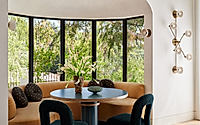
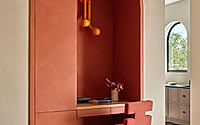
A rebuilt main stair becomes a quiet centerpiece, drawn as a graceful curve rather than a rigid run. Its fluid geometry softens the transition between floors and introduces a sculptural counterpoint to rectilinear walls. Nearby, a once-cramped breakfast nook turns into a sunlit alcove, more sculpted than decorated, where morning rituals sit comfortably under that same overarching palette. Every adjusted room calibrates proportion, light, and wall area so art hangs with breathing room.
Tactile Plaster, Precise Color
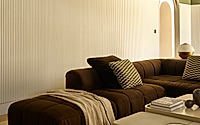
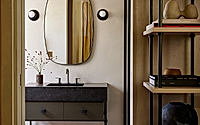
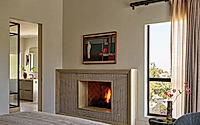
Custom plasters developed with Kamp Studios push the envelope of this otherwise hushed shell. In the entry, hand-raked arching contours carve the walls, catching angled light and throwing gentle shadows through the day. A variegated fireplace in the living room layers tone within a single material, giving the hearth a subtle depth that sits comfortably beneath bold contemporary works. Nearby, a powder room wrapped in moody aubergine plaster takes a more saturated turn, creating an intimate, almost cinematic interlude.
Color gathers intensity in the library, where fluted plaster walls add rhythm and a moss-green ceiling drops the visual horizon. That ceiling color wraps the room with a soft pressure, turning reading and conversation into focused acts rather than pass-through moments. Against these moves, the underlying oak and white plaster stay steady, acting as a visual reset between richer passages. The result is a calibrated sequence of touch and tone, not a flat white-box gallery.
Living With Art And Light
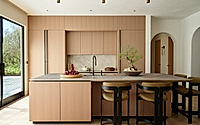
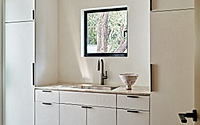
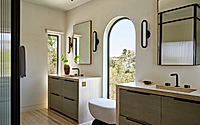
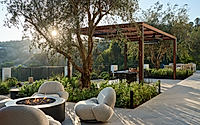
A relocated Boffi kitchen now aligns with the western edge of the house, opening wide to outdoor dining and lounging through bi-fold doors. Cooking and gathering extend toward hillside views, with cabinet lines and surfaces kept clear to frame that long perspective. In the primary suite above, a once-awkward loft layout gives way to a more composed arrangement, where a reconfigured bath in silver travertine and plaster embraces maximal vistas. Bathe, then look out; the order feels natural.
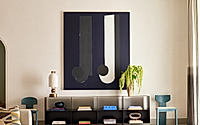
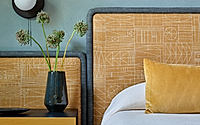
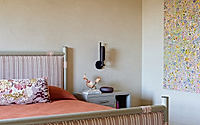
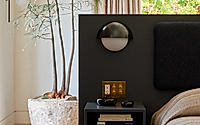
Furnishings and lighting pull from both local artisans and international makers, giving each room a collected, confident voice. Sculptural seating by figures such as Pierre Paulin shares ground with contemporary fixtures that read as floating compositions rather than background equipment. Throughout the house, photographs and paintings introduce wit, color, and tension, particularly a substantial set of Wolfgang Tillmans works and a broad mix of California Contemporary artists. The architecture stays measured so this art-driven life can feel relaxed, not precious.
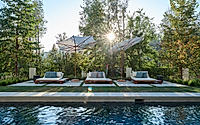
By the time afternoon light slides off the hills and into the garden, the interiors hold a soft glow rather than a sharp glare. Oak floors mute footsteps, plaster edges blur shadows, and artwork gathers in quiet conversation with the rooms around it. Los Feliz Contemporary lands as a house tuned to daily use, yet ready for close looking, where California light and a disciplined palette carry the story forward.
Photography by Roger Davies
Visit Studio Emblem & Co.