REN Apartment: Double-Height Veranda Living Above Nova Lima Skies
REN Apartment crowns the top of a building in Nova Lima, Brazil, where Jacobsen Arquitetura works with horizon-wide views in every direction. The duplex apartment for a young family turns its split levels, broad veranda, and long runs of glass into a continuous social landscape. Generous outdoor living, shaded by timber brise-soleils, anchors daily life high above the city and the surrounding mountains.


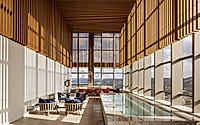
Morning light reaches the upper floor first, sliding across the brise-soleil lattice and touching the veranda before it reaches the long interior rooms. From the edge of the pool to the far end of the living room, views swing between mountain ridges and dense city, giving each level a clear horizon to claim.
This apartment is a two-level penthouse in Nova Lima, Brazil, arranged by Jacobsen Arquitetura for a young couple and their children. The project treats program as a sequence that stretches from the social hall to the veranda, then up to the more protected bedrooms above. Movement, rather than pure form, ties together the double-height veranda, the glazed living room, and the intimate upper floor.
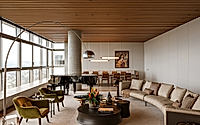
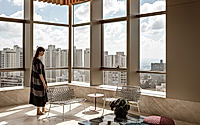
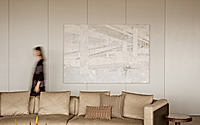
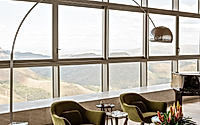
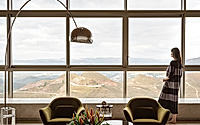
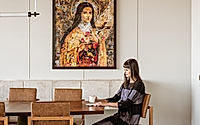
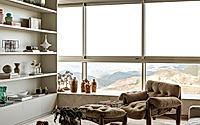
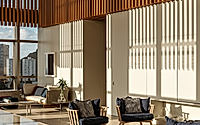
A visitor steps out of the elevator into the lower social hall, where a large tapestry by Norberto Nicola sets a textured introduction. To one side, an elongated living and dining room runs parallel to full-height glass, with the city and mountains framed like a continuous mural along its length. A stone bench tracks this window wall, anchoring the glazing with a solid line where people pause, sit, or lean into the view. Daily life stretches along this axis, so dining, sitting, and circulation share the same panoramic backdrop.
Linking Hall And Veranda
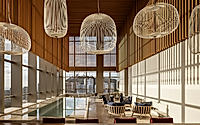
Turning in the opposite direction, the layout opens toward the large veranda that defines the apartment’s social character. This outdoor room rises through a double height volume, so the eye moves up as much as out to the landscape beyond. Wooden brise-soleils wrap the tall glass planes, tempering sun while keeping the visual connection to the mountains and city in constant play. A pool and a gourmet area stretch across the veranda, so cooking, swimming, and gathering remain tightly connected to the skyline.
Continuous Social Floor
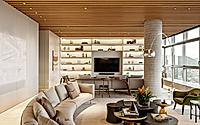
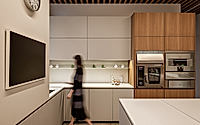
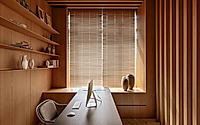
The same brise-soleil system that defines the veranda continues as a ceiling lining, tying together all the social zones on the lower level. This shared surface guides movement from the living and dining room to the kitchen, wine cellar, and office without abrupt breaks. Gray lacquer panels conceal doors, cabinets, and the elevator, so circulation lines stay legible and walls read as calm, consistent planes. People move from one activity to another along clear paths, always with a glimpse back toward light and landscape.
Stair As Vertical Pivot
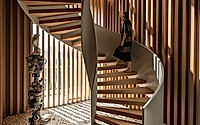
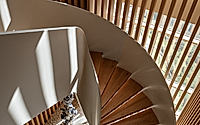
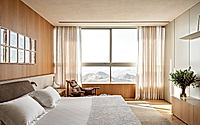
Near the center of the plan, the staircase becomes a vertical hinge between the two floors. Wooden brise-soleils wrap its walls and ceiling, turning the climb into a rhythmic journey of filtered light and moving shadows. Each step connects the animated lower level to the quieter upper floor, where the master suite, children’s suites, playroom, and home theater sit in a more protected band. A separate service stair links directly to the kitchen circulation, keeping back-of-house movement efficient yet discreet.
Daily Life On Two Levels
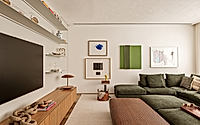
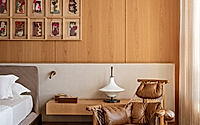
Furniture and art choices support this clear division between social and intimate realms without creating a hard break. Brazilian and Italian pieces by designers such as Jorge Zalszupin, Claudia Moreira Salles, and Roberto Lazzeroni give weight to the living areas, while works by Vik Muniz, Daniel Senise, and Laura Vinci punctuate long walls and quiet corners. The social floor absorbs larger gatherings, meals, and outdoor time, while the upper level concentrates sleep, play, and shared movie nights in closer, more contained rooms. Each day traces a loop between these two layers, always passing through light, shadow, and the long views that define the apartment’s character.
By night, the veranda glows as a kind of bridge between city lights and the dark outline of the mountains. Families drift from water’s edge to dining table, then up the stair toward the quiet of the suites. The project holds together through this steady movement, using level changes and filtered daylight to give structure to life high above Nova Lima.
Photography courtesy of Jacobsen Arquitetura
Visit Jacobsen Arquitetura