PAVILION SESTIG: Concrete Modernism Refined For Work and Home Life
PAVILION SESTIG stands in Belgium as a Modernist pavilion reassessed by architect Glenn Sestig for both work and living. The project turns an existing concrete structure in Deurle into the headquarters for Glenn Sestig Architects and the shared home of Sestig and his partner Bernard. Calm proportions, a restrained material palette, and an inward-looking courtyard bring domestic life and studio practice into a precise, shared setting.


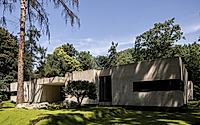
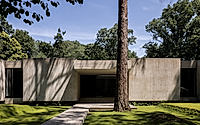
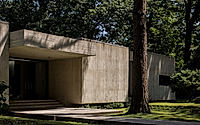
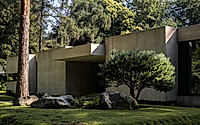
Soft Belgian light moves across the concrete pavilion, brushing its rounded corners and low, horizontal lines. From the garden, a quiet entrance draws visitors toward a shaded opening and into the heart of the building.
Inside, PAVILION SESTIG functions as both home and headquarters for Glenn Sestig Architects, set within the genteel, green municipality of Deurle in Belgium. The former private art pavilion, originally conceived by Ivan Van Mossevelde, is recast as a brutalist shell with a carefully refined interior, where structure and finish merge into one continuous gesture.
All activity stays on the ground floor, reinforcing the pavilion’s long, low stance within its park-like setting. Working with a generous concrete frame and central courtyard, Sestig retains the essential Modernist volume while sharpening its material presence and daily use for studio life and domestic routines.
Grounded In Concrete
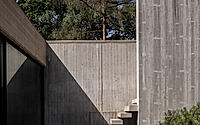
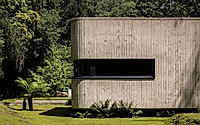
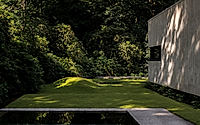
From outside, the building reads as a simple rectangular volume softened by rounded corners and board-textured concrete. Deep reveals and a restrained band of glazing sit within this robust envelope, keeping the silhouette calm against the surrounding trees. New, discreet window frames sharpen the junctions between solid wall and dark openings, so mass and void feel precisely edited. Underfoot, the garden’s sculpted mounds and trimmed groundcover echo the pavilion’s low geometry.
Within the shell, the brutalist character remains, yet every surface is recalibrated. Carpets give way to natural stone floors in soft grey tones, which run from room to room like a single plane. Walls and ceilings stay largely pale and unornamented, allowing the concrete structure to read as background rather than brute force. Light fittings recess into the ceiling, creating an even wash that leaves texture and proportion to do most of the visual work.
Courtyard At The Core
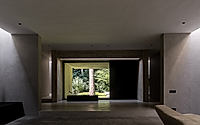
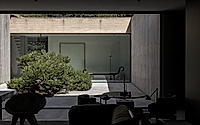
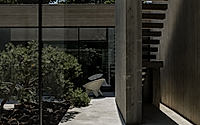
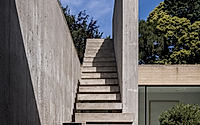
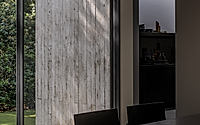
At the center, an open-air courtyard cuts daylight deep into the plan and anchors circulation. Glass walls slide past the concrete perimeter, framing a newly composed landscape of stone surfaces, gravel, and a sculpted tree. A floating concrete staircase rises from this court to the roof terrace, its treads casting sharp shadows across the vertical wall. From the studios and living rooms, the courtyard reads as a still garden, a visual pause between dense woodland and focused work.
Terraces and plinths shape subtle changes of level around the courtyard. One platform holds a single chair, turned toward the planted tree; another edge leads directly toward the stair, turning an everyday route into a spatial event. The careful alignment of openings ensures that, even from interior seating areas, eye lines pass through the court to the greenery beyond.
Monochrome Rooms For Living
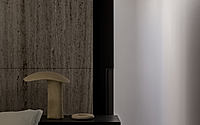
The domestic rooms follow the same quiet material logic. In the bedroom, a tall slab of stone behind the bed acts as headboard and wall, its linear grain warming the otherwise pale envelope. Dark joinery pieces sit low and precise against this surface, carrying lamps and small objects while keeping the field of view clear. Soft textiles pick up the muted greys of the stone and floor, so color recedes and texture carries the mood.
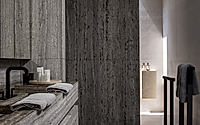
In the bathroom, vertical stone panels wrap the walls and vanity, their mottled pattern catching the light from a narrow opening. Basins, counters, and even the storage volumes feel carved from the same block, reinforcing the sense of a continuous, mineral shell. Black fittings cut crisp lines through the stone, adding contrast without breaking the monochrome rhythm.
Art, Light And Studio
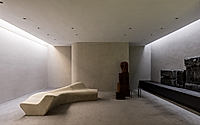
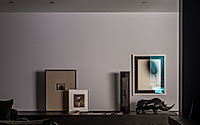
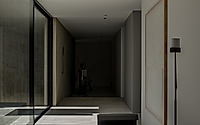
Near the entrance, a reception area named The Situation Room sets the tone for the studio. Long, thin skylights pull daylight across pale walls, creating a soft gradient that shifts over the course of the day. Against one wall, a 3m x 8m Sol LeWitt drawing from 1972 spans the length of the room, grounding the interior in the pavilion’s original life as an art venue. Low seating and sculptural objects sit within this field of light, turning the room into both waiting area and gallery.
Beyond, studio zones and domestic lounges share the same material language yet feel distinct in use. Wide openings link them visually to the courtyard and to one another, so movement between work, reception, and living stays fluid but controlled. Concrete, stone, and glass carry through every sequence, giving the pavilion a steady, tactile continuity.
As day fades, the concrete stair and courtyard walls catch the last sun while the surrounding trees fall into shadow. Inside, the pale interiors hold a measured glow that sits quietly within the heavy shell. PAVILION SESTIG stands as a careful reworking of a Modernist relic into a robust, lived-in headquarters, where material and structure guide both daily rhythms and long views.
Photography by Cafeine
Visit Glenn Sestig