Casa Horizonte by JGStudio
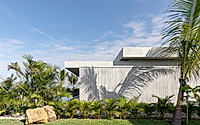
Casa Horizonte sits on the coast of Manabí, Ecuador, as a house whose weight and quiet presence mark the threshold between land and ocean. JGStudio works with exposed concrete and measured sequences of rooms to frame the horizon, letting the sea arrive slowly through filtered light, compressed passages, and open terraces. The result is a coastal dwelling shaped as much by material and labor as by view and air.


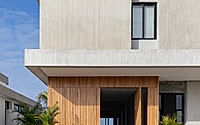
Concrete walls catch the salt air and hold the afternoon shadow. Approaching the house, the ocean stays out of sight while low ceilings, cool floors, and narrow passages tune the body to weight and sound.
This coastal house in Manabí, Ecuador, by JGStudio works as a measured sequence rather than a single view, using exposed concrete and carefully made thresholds to mediate between interior life and the distant line of the sea. The project treats material as structure, finish, and memory, relying on gravity, mass, and the trace of workmanship to construct each room. Architecture here is not an abstract volume but a dense atmosphere where concrete, light, and horizon share the same priority.
Casting With Gravity
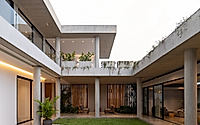
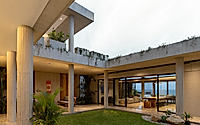
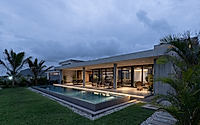
The house stands as a deliberate object, set against the open horizon rather than dissolving into it. Grounded walls and slabs accept their weight, so movement unfolds through a rhythm of compression and release that slows the arrival at the shoreline. Instead of delivering instant ocean panoramas, the plan layers thresholds, small courts, and shaded interiors to delay that final long view. Gravity shapes not just the structure but the pace of daily routines, from morning crossings of shaded terraces to evening walks toward the darkening sea.
Texture As Record
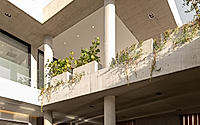
Exposed concrete carries the main narrative, its surfaces reading as pages of the building’s own making. Wooden formwork boards press their grain, joints, and slight misalignments into walls, ceilings, and floors, turning every surface into evidence rather than neutral backdrop. Carpenters and masons work through patient repetition, where each board position and each alignment fix the eventual appearance of a room. Texture becomes a record of labor, so walking through the house is also a slow reading of rhythm, handwork, and the small inaccuracies that give the structure character.
Weathering By The Coast
Life at the shore brings humidity, salt, and wind that constantly alter materials. Instead of resisting this cycle with sealed finishes, the project accepts staining, hairline marks, and subtle color shifts as part of its ongoing construction. Concrete surfaces take on the climate day after day, allowing the building to age into its site rather than hold a pristine image. Permanence is measured in endurance and repair, not in untouched surfaces, so the house stays open to time and to the changing tones of air and water.
Calm Rooms, Measured Views
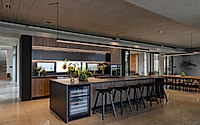
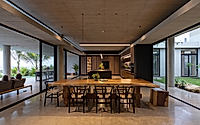
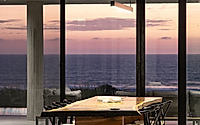
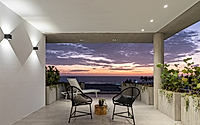
Inside, mass and shadow work together to keep the atmosphere quiet while the horizon remains the only ornament. Rooms stay simple and precise, letting the eye move from rough concrete grain to framed slices of sky before reaching the full breadth of the ocean. Light enters as narrow rays at entries, softens across ceilings, then spills toward terraces where air moves more freely. Daily life unfolds through that steady calibration of enclosure and exposure, so inhabiting the house becomes a gradual awareness of light, air, and time.
By the end of the path, the horizon reads as part of the architecture rather than scenery. Concrete, craft, and coastal weather weave into a single continuous experience, where material remembers its making and the sea completes the composition.
Photography courtesy of JGStudio
Visit JGStudio