Mission Canyon Residence by NMA Architects
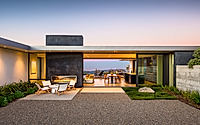
Mission Canyon Residence sits high above Santa Barbara, CA, United States, where NMA Architects align coastal light, ocean air, and mountain views around a resilient hillside house. The project replaces a home lost in the 2009 Jesusita Wildfire and rethinks indoor–outdoor living through careful siting, fire-conscious construction, and climate-responsive comfort. Every room leans into a distinct panorama while maintaining year-round livability and safety.


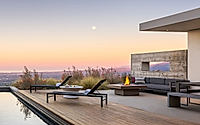
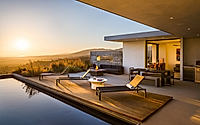
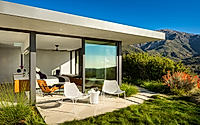
Morning light brushes the foothills as the house opens toward the horizon, and glazed walls pull the coastline, harbor, and mountains into daily routines. A quiet terrace edges the pool, where the line between living room and landscape narrows to a single threshold.
Mission Canyon Residence is a hillside house in Santa Barbara, CA, United States by NMA Architects, organized around the Central California Coast’s indoor–outdoor lifestyle and far-reaching views. The project rebuilds on a foothill site burned in the 2009 Jesusita Wildfire and concentrates on climate, comfort, and safety in equal measure. Orientation, material choices, and landscape strategy work together to harness light, breezes, and views while managing fire risk and water use.
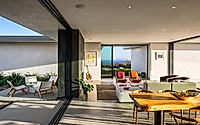
From every main room, a different horizon anchors daily life, tying sunrise, city lights, and mountain ridges into a single domestic sequence. Large terraces extend living areas outside, so circulation flows across thresholds rather than stopping at them.
Shaping Views On The Ridge
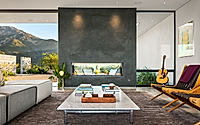
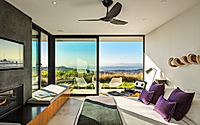
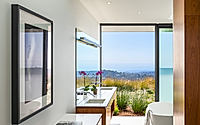
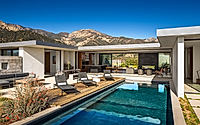
Perched in the dramatic foothills above Santa Barbara, the house sits where the city gives way to chaparral and broad Pacific views. Each primary living area is set to capture a specific vista, from Rincon’s sunrise coastline in the east to the Los Padres mountain range that rises to the north. Southward, the city and harbor unfold below, while to the west the sun drops over the ocean, giving the house a continuous visual loop through the day. Outdoor terraces continue these sightlines, so rooms spill outward without losing their distinct orientations.
Opening The Great Room
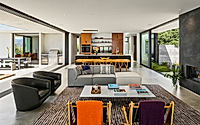
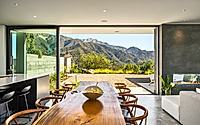
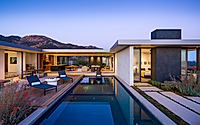
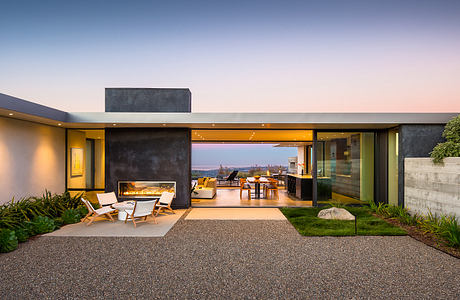
At the heart of the house, the great room turns into an outdoor pavilion when a fully pocketing glass wall disappears into the structure. The 35-foot-wide, floor-to-ceiling opening connects directly to the pool terrace, so conversation, breezes, and reflections move freely between interior and exterior. Concrete floors run toward the water, reinforcing that shared ground between domestic life and the landscape. When the wall is closed, large panes still hold the wider panorama, keeping the room tied to the horizon even in quieter moments.
Tuning Light And Air
Roof overhangs are calculated to block harsh summer sun yet allow low winter light to warm interior surfaces. High-performance windows and doors are placed for cross-ventilation, drawing cooling ocean breezes through the house so mechanical systems can stay secondary. Concealed roll-down shades temper daylight and privacy without interrupting the clean openings when they’re raised. Courtyard walls protect outdoor rooms from hillside winds and nearby properties, turning what could be exposed edges into sheltered extensions of everyday living.
Building For Fire And Drought
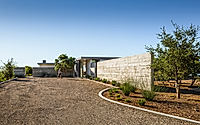
Fire resilience shapes the construction from the roof down, responding directly to the previous home’s loss in the Jesusita Wildfire. A high fire-rated roof, plaster eaves and walls, metal fascias, and concrete floors and patios build a hardened shell around more transparent elements. Fire-rated hardwood decking and dual-laminated glazing in metal-framed openings strengthen vulnerable edges where heat and embers might collect. An automated sprinkler system, dedicated fire-truck access with a turnaround, and a defensible landscape of native and fire-retardant species deepen that protective stance.
Working With Water And Sun
On a site shaped by a Mediterranean climate, the house treats water and energy as everyday concerns rather than special features. A discreet solar thermal system heats the pool, using the abundant coastal sun without introducing mechanical clutter into the views. Around the house, drought-tolerant planting, drip irrigation, and low-flow fixtures trim consumption while keeping terraces and paths green enough to soften the concrete and plaster. Every measure brings the hillside context into balance with long-term resource use.
As the day turns and light shifts across the ridgeline, the house stays closely tuned to its exposed foothill setting. Views remain open, air moves easily, and robust construction lies quietly behind the glass and concrete. The residence stands as a careful response to climate and history, grounded in the everyday act of living between mountains and sea.
Photography courtesy of NMA Architects
Visit NMA Architects