Lakeside Villa by WJ STUDIO
Lakeside Villa unfolds as an art-inflected house in Shanghai, China, shaped by WJ STUDIO as both home and private gallery. The project treats collecting as a way of living, drawing lakeside greenery, structural clarity, and curated light into a calm domestic setting. Across its rooms, museum-like restraint meets everyday ease, allowing art, furniture, and family rituals to carry equal weight within a quietly immersive interior.


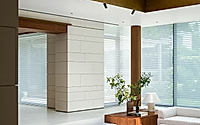
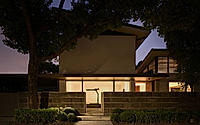
Filtered daylight brushes across glass, timber, and polished surfaces as the house opens toward the lake. A low boundary and tall trees pull the landscape close, so the first impression is more gallery threshold than suburban front yard.
Behind this quiet arrival, the house balances two agendas: it works as a calm family house in Shanghai and a private gallery shaped by WJ STUDIO around collecting as a way of life. Rooms are arranged as a slow sequence, from public to intimate, using structure, light, and subtle changes in level to choreograph how people move and pause. Plan becomes the main instrument, turning circulation into a daily ritual of viewing, gathering, and retreat.
At the edge of the plot, the boundary wall drops to borrow views of lakeside greenery, softening the line between garden and interior. A floor-to-ceiling glass curtain wall defines a minimalist art room, read from outside as a lantern-like volume and inside as a transparent enclosure for decades of collected work. Negative volume does as much work as the objects themselves; open floor area and clear sightlines give each piece breathing room while still leaving space for conversation and lingering. The foyer stretches alongside this gallery, so arrival can bend toward art or pivot toward the warmth of the front hall.
Reframing Threshold And Flow
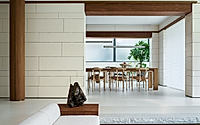
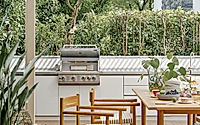
Once past the entrance, the route shifts from cool observation to lived experience. The original sunken footprint becomes a recessed lounge, now wrapped by an expansive open plan that holds living, dining, and adjacent rooms in an easy gradient. Above, tiered skylights step upward, their layered openings carving a sense of shelter without cutting off height or air. Eye level aligns with the courtyard outside, so seated bodies share a horizon with planting, water, and sky.
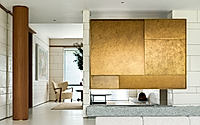
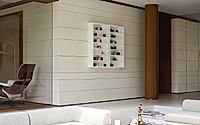
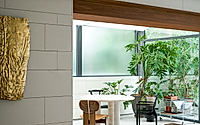
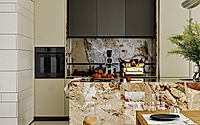
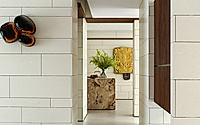
Traditional doors almost disappear on the ground level. Instead of framed openings, dry-hung wall planes and raw timber beams carve volumes, turning thickness and depth into quiet dividers. Movement from living room to dining area to sunroom and out to the courtyard happens in gentle bands, each zone distinct yet visually continuous. As people walk the loop, they always keep one or two rooms in view, which anchors orientation and encourages slow wandering.
Structure As Interior Rhythm
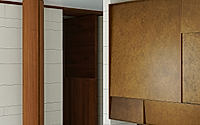
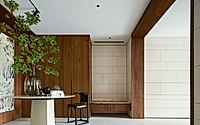
In the main living room, four steel columns mark the corners and remain legible. Rather than hiding them, the scheme wraps each one in teak veneer, finishing the edges with slim copper inlays that catch light. These verticals read as interior sculptures and as a clear structural grid, giving the room an upright, measured character. Copper tones reappear at the skylights above, tying ceiling and floor into one calm composition.
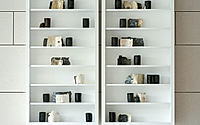
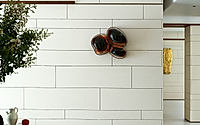
This honest stance toward structure supports the gallery ambition. Furniture and art can move or change over years, yet the column rhythm stays constant, providing an internal order that residents instinctively read. Surfaces stay mostly quiet—walls as pale planes, floors with gentle texture—so the strongest visual beats come from objects, silhouettes, and people in motion.
Curating Light Vertically
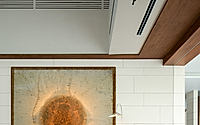
Light is treated as a material in its own right. In the study, a specially engineered skylight filters daylight through grilles and structural members, turning harsh sun into soft, layered beams. As the hours pass, shifting patterns slide across walls and tabletops, giving a daily reading of time without any device. This quiet choreography recalls exhibition halls, yet here it frames reading, work, and private reflection.
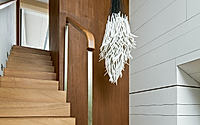
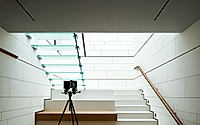
The stair to the lower level pursues a different strategy. To counter the weight of a partially subterranean floor, the first flight is built in frosted glass that transmits glow downward while blurring the view. Deeper below grade, the second run widens into a built-in seating ledge, so circulation and gathering overlap at a natural pause point. Midway up, a turn in the stair carves an alcove for art, washed in natural light that spills from above and keeps the descent from feeling remote.
Everyday life closes the loop between gallery and home. Family film nights, children’s hobbies, solitary reading, and informal meals all happen within sight of collected works and considered light. Over time, new objects, memories, and routines fold into the sequence, extending the idea of collection from framed pieces to lived moments.
By the lake, under the trees, the house holds this layered program quietly. Structural cadence, borrowed landscape, and tuned skylights give residents a steady framework, while movement through the rooms remains loose and personal. As evening falls, the glass-walled gallery glows toward the water, and the project resolves back into its first premise: life and art sharing one calm path.
Photography by BIJISPACE
Visit WJ STUDIO