Architectural Warehouse Studio — Reviving Warehouse for Creative Work
Architectural Warehouse Studio anchors an industrial stretch of Goiânia, Brazil, as the new home for Studio Andre Lenza. The warehouse conversion reshapes an existing structure into a contemporary corporate workspace that still speaks the language of its neighbors. Inside, the office leans into generous height, daylight, and art to frame daily practice in a setting that feels both robust and refined.


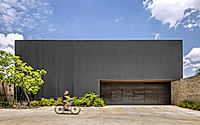
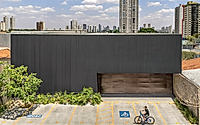
Afternoon sun drops behind the industrial roofs of central Brazil and washes the black aluminum facade in a soft matte glow. Under the covered forecourt, kids pause their improvised soccer game as cars pull in and out during office hours, then reclaim the concrete once the workday ends.
This former warehouse now operates as a corporate workspace in Goiânia for Studio Andre Lenza, recast as a contemporary industrial typology that engages both climate and neighborhood life. The conversion holds onto the industrial bones while inserting a calmer interior world organized around light, height, and a planted garden. What emerges is a working environment tuned to the harsh Central Brazilian sun and the looser rhythms of the surrounding streets.
Forecourt As Threshold
The main volume sits back from the street, creating a deep covered apron that mediates between roadway, sidewalk, and office entry. This setback does climate work first, shading the facade from intense sun and catching seasonal rain before it hits the door. During the day, the area doubles as parking and a sheltered drop-off zone that keeps interiors calmer and drier. When business winds down, neighborhood children turn the concrete into an informal court, giving the building a civic role without any added infrastructure.
Metal Frame, Concrete Skin
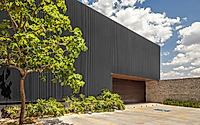
The warehouse keeps to a metallic structure with concrete block enclosures that echo the neighboring sheds. This straightforward shell grounds the project in the local industrial fabric while allowing the facade to take on a sharper identity. Black aluminum slats wrap the street face, filtering glare and sharpening the warehouse outline against the sky. Behind them, the more muscular frame and block walls register as a second layer, so the building reads tough enough for its context yet controlled toward the public realm.
Tree And Climate
A single pequizeiro stands at the front, tying the office to the Cerrado vegetation of the Goiás region. Its canopy softens the hard edge of concrete and metal, adding shade and a seasonal marker right at the entry. The tree works quietly with the setback and slatted facade to cool the approach, tempering heat before people cross the threshold. That small pocket of landscape signals that climate and local ecology register as more than background scenery here.
Interior Light And Height
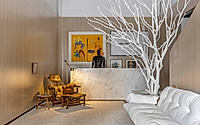
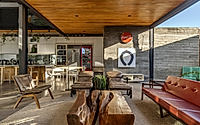
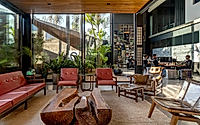
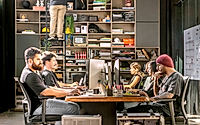
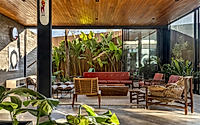
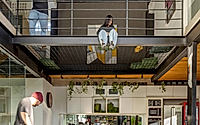
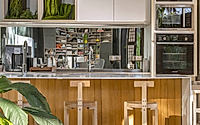
Past the dark exterior shell, the reception opens into a brighter, more intimate room anchored by modernist furniture and works by local artists. This front zone sets a cultural tone and softens the transition from street grit to studio life. Beyond it, the main workroom stretches under seven-meter-high ceilings, using volume as a form of environmental comfort. Wide openings face a garden, drawing in daylight, encouraging cross-ventilation, and pulling long views of the city into daily routines.
Garden Edge Workplace
The garden along the main work area acts as a green edge that steadies temperature swings and gives staff a constant visual counterpoint to screens and drawings. Large apertures open toward this planted strip, so breezes move laterally through the room instead of relying solely on mechanical systems. That connection lets the warehouse function as part of its larger urban and climatic field, not a sealed interior bubble. Work happens in step with air, light, and the slow movement of shadows across concrete and metal surfaces.
As evening settles, the black facade recedes and the lit interior reads as a quieter lantern within the industrial block. Kids finish their game under the covered forecourt while the last staff gather their things and step out toward the pequizeiro. The warehouse stays what it has always been—a straightforward structure in a working district—but now tuned to climate, city life, and the daily patterns of a design office.
Photography by Edgard Cesar
Visit Studio Andre Lenza