The House of Time by Natura Futura
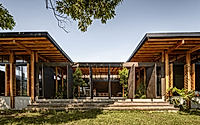
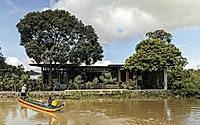
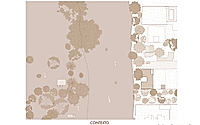
The House of Time is a research facility in Babahoyo, Ecuador, by Natura Futura. Set on a river-linked site, it treats domestic life and collective learning as parts of the same routine. Courtyards, timber, brick, and changing light give the project a measured rhythm that responds to heat, humidity, and the work of local craft.


About The House of Time
The House of Time takes shape in Babahoyo, Ecuador, where river rhythms, humidity, and heat remain part of everyday life. The project turns those conditions into a framework for domestic life and collective learning, using light, air, and material to organize the house.
Contextual Time
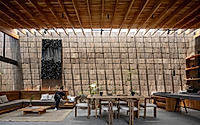
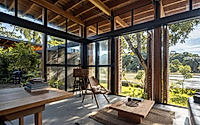
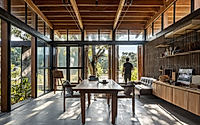
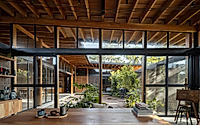
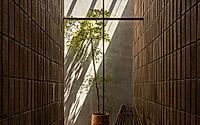
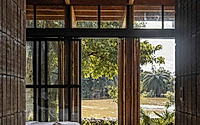
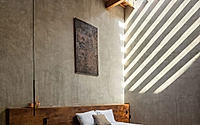
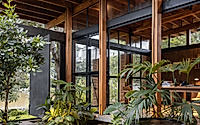
Seasonal changes in the river, along with humidity and heat, shape how the house is inhabited. Interior courtyards and a body of water help regulate temperature, while wooden lattice screens filter solar radiation and allow cross-ventilation. Skylights mark the rhythm of daylight and bring shifting light deeper into the rooms.
Artisanal Time
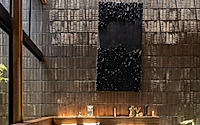
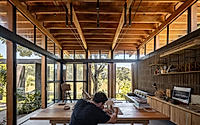
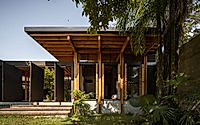
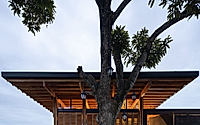
The project also reconsiders local building knowledge. Brick is treated as a modular element and appears in walls, floors, and lamps, while local wooden beams extend outward to support a roof that guards against seasonal rain. Carpenter and mason techniques are not presented as remnants, but as active methods that shape the house’s construction and character.
Shared Time
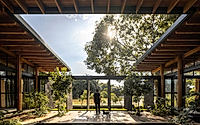
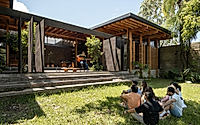
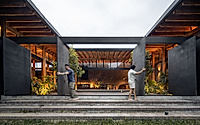
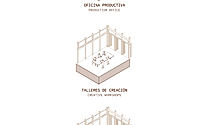
Shared rooms shift with use. The creative studio becomes a multidisciplinary workshop, and the courtyard boundary wall folds into pivoting doors that work as a projection screen for documentaries; when opened, they mark the threshold between the house and the front patio. Stepped platforms descend toward the river and serve as seating for theater and music.
Plan To River
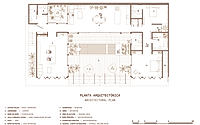
The plan arranges the program around a central courtyard that opens toward the river. Productive spaces for creative work and workshops sit to the left, living and leisure areas occupy the center, and resting rooms line the right side. The building stands on a 23 x 13 meter plot and is raised 1.4 meters above river level, with paired wooden columns set 1.75 meters apart supporting a single-sloped roof. Metal plates separate the beams from the walls, creating skylights and reinforcing the house’s clear structural order. The result is a place shaped by time in several forms: weather, labor, use, and the slower pace of shared experience.
Photography courtesy of Natura Futura
Visit Natura Futura