KSANA tea house: A Cave-Like Matcha Retreat in Central Bangkok Plaza
KSANA tea house lands in Bangkok, Thailand as a compact restaurant by Juti Architects, tucked beneath the public stairs fronting the OCC office tower. The project draws on the brand’s Kyoto-sourced matcha and the nearby plaza’s water feature to frame a quiet urban pause. Visitors slip from the bustle into a crafted interior that reads more like a gorge than a shop, with material choices steering the mood and the ritual.


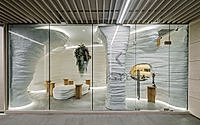
The stair shadows cast a cool edge across the entry. Beyond the plaza’s water and city glare, a low opening pulls visitors toward a quieter register.
This compact restaurant sits under the public steps at the OCC complex in central Bangkok, designed by Juti Architects as a retreat for matcha. The concept treats time and place as one measure—an interior set to hold a moment—while the palette does the real narrative work.
Enter The Gorge
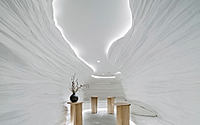
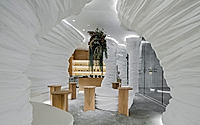
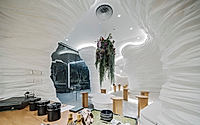
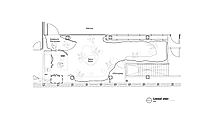
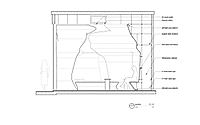
A double glass door stages the shift from plaza noise to hushed ritual. The first vestibule handles takeaway and delivery pickup, peeling off foot traffic to keep the main room still. Past that threshold, the sit-and-drink area opens low and sheltered, the ceiling stepping with the underside of the stair. It feels tucked, like a small gorge held within a city block.
Cave Walls, Tactile Calm
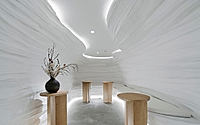
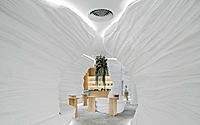
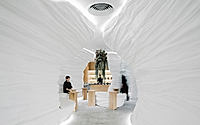
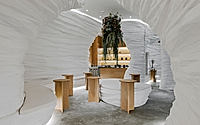
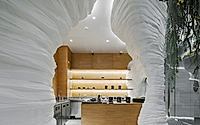
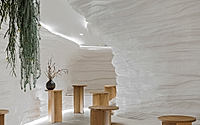
Fiberglass walls, shaped over CNC-milled foam and then hand-scraped by artisans, form the cave-like envelope with subtle ridges that catch light and shadow. The skin reads continuous but alive, a textured field that softens sound and guides the eye toward the tea counter. Oak-colored tables and countertops warm the cool shell with a grounded, familiar tone. Black stone teacups and dessert plates sit against that palette with a deliberate contrast.
Two-Part Tea Ritual
The plan breaks the visit into two beats: quick handoff, then linger. By separating pickup from the seated room, the service rhythm stays calm and the pour remains the focus. Seating follows the site’s gentle slope under the stair, giving a few low, deeper nooks for more private sipping. It’s measured and direct, a functional choreography for a tight footprint.
Under-Stair Atmosphere
Outside, a broad water feature mirrors the surrounding towers, turning the plaza into a basin framed by concrete and glass. Inside, that urban drama flips into inwardness, with controlled lighting and sound shaping a surreal-minimalist mood (a clear break from the rush above). Small speakers accented with artificial flowers by a Japanese floral artist add a quiet, theatrical touch. The room holds steady so the aroma and temperature of matcha carry.
Material Notes
The fiberglass shell keeps weight down while allowing compound curves and crisp joins at door frames and counters. Hand finishing leaves subtle tool marks that read human, not machine, which suits a drink built on precision and feel. Timber tones balance the cool cast of the shell and the dark stone vessels, rounding out a palette that is minimal yet sensory. Every element points back to the cup.
At closing light, the plaza cools and the water flattens. Inside, the cave holds a steady twilight for one last pour—an urban pause measured by taste and shadow.
Photography courtesy of Juti Architects
Visit Juti Architects