GO HQ: Adaptive Office Living Inside A 17th-Century Convent Complex
GO HQ sets a contemporary office within the historic center of Morelia, Mexico, reworking a former 17th-century convent into a new corporate home. Designed by FMA, the project trades fixed cubicles for shared rooms, gardens, and leisure areas that support changing rhythms of work. Historic substance, regional materials, and a soft interior palette come together to frame how people now gather, focus, and unwind on the job.


Morning light crosses old plaster and oak, tracing the cloister walls and the quiet courtyard that now hums with laptops and low conversation. Orange trees rise from generous planters, turning a once enclosed religious court into the company’s informal dining room and outdoor desk cluster.
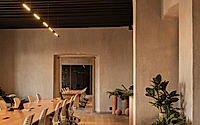
GO HQ occupies a former 17th-century convent in central Morelia, converted by FMA into a contemporary office that leans on shared rooms rather than fixed desks. The project reshapes daily work by treating each level as a sequence of lived-in environments, from garden dining at ground level to layered activity zones above. Gesture by gesture, the plan focuses on how people eat, meet, rest, and reset together.
Below, historic bones still guide movement through the building, but the program now answers to corporate life, not monastic routine. Above, flexible rooms double up on use, weaving library, auditorium, meditation, and leisure into an everyday circuit of work.
Reworking The Ground Level
The ground floor intervention centers on the cloister, which becomes a corporate dining hall and informal open-air studio. Five large planters with orange trees cut through the former circulation ring, turning static paving into a gentle grid of shaded nooks and social tables. Employees drift between coffee, conversation, and laptop work, using the planters as both seating and boundary, so eating and working share the same generous court. Historic walls remain as a calm frame; daily life now activates the void.
Flexible Rooms Upstairs
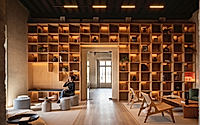
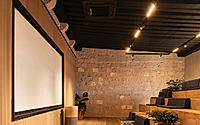
On the upper level, the office reads more like a series of living rooms than a row of conventional workstations. One idea guides the program: every room can shift function through the day. An auditorium with bleachers doubles as a meeting room, trading stackable chairs for stepped seating where presentations, quick stand-ups, and informal huddles all unfold. Nearby, the library welcomes visitors as reception and waiting room, inviting people to work quietly between shelves or simply pause with a book before their next task.
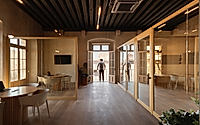
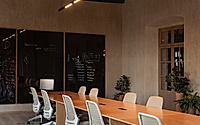
Circulation threads these rooms together so that moving from desk work to group sessions feels like walking through a house rather than an office corridor. Variety becomes a tool for focus, with each room tuned to a different level of noise, posture, and interaction.
Rhythms Of Rest
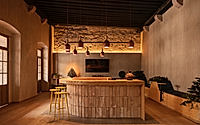
Work at GO HQ folds rest into its schedule instead of banishing it to the margins. A dedicated leisure room gathers a coffee bar, TV area, and Ping-Pong table, giving staff a place to decompress in short pulses throughout the day. The meditation room, known as the “nest,” adds another layer of stillness, carved out specifically for introspection and mental reset. Here, quiet becomes part of the office rhythm, a counterpoint to the more social zones and a resource for long-term productivity.
Lighting and building systems support these shifts in tempo with a measured hand. Circadian-responsive lighting adjusts through the day to maintain alertness while cutting unnecessary energy use, and double-glazed windows temper the avenue outside, softening both noise and heat so rooms stay focused and comfortable.
Material Warmth At Work
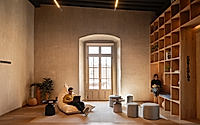
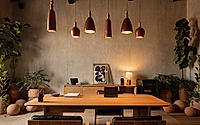
Interior choices lean toward warmth and tactility, reinforcing the lived-in quality of the office. Sand-colored plaster settles over the walls, holding light in a gentle way and letting foliage and oak stand out without glare. Oak woodwork with a natural lacquer finish shapes doors, shelving, and built elements, while white oak stave flooring ties circulation paths and rooms into a coherent, grounded whole. Clay lamps, planters, and small objects from Michoacan artisans punctuate the rooms, pulling local craft directly into daily routines.
Vegetation plays a practical role in the working environment beyond the courtyard trees. Plants are chosen for thermal comfort and air purification as much as for their leaf texture or color, so desks, lounges, and walkways share a cultivated microclimate. Warm, earthy tones in furnishings and finishes repeat this sense of ease, encouraging people to linger in shared areas rather than retreating to isolated corners.
As evening falls, the former convent settles back into quiet, its cloister now lit for informal dinners and late conversations. Workers step through oak-framed doorways, past clay lamps and soft planting, retracing paths that once served a very different daily ritual. GO HQ keeps that layered history in view while aligning every room, court, and stair with how people actually work, gather, and recover today.
Photography courtesy of FMA
Visit FMA