Reconstruction of a Writers’ Colony Villa Revives Prague Craft Living
Reconstruction of a Writers’ Colony Villa returns a semi-detached house in Prague, Czech Republic, to dignified use under the careful hand of Atelier Hajný. The house, part of an early 20th-century colony for journalists and writers, shifts from a deteriorated structure into a renewed home that balances preservation rules with current expectations for comfort. Across garden, envelope, and rooms, the project quietly rebuilds its material story rather than rewriting it.
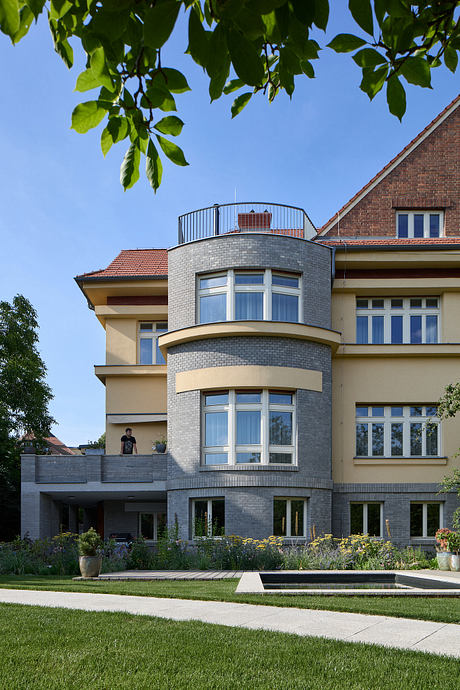
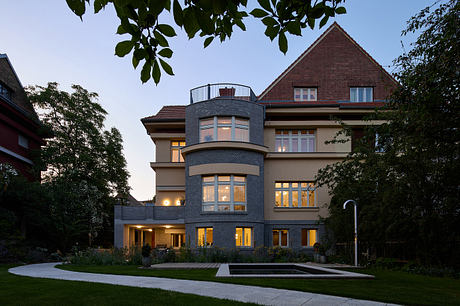
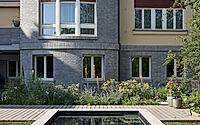
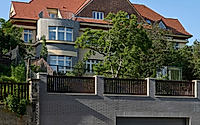
From the street below, the rebuilt garage and retaining wall step out of the slope with the quiet weight of new concrete brick. Above, the villa’s ochre plaster and tiled roof catch western sun, tying a renewed house back into its early 20th-century colony.
This is a house renovation in Prague, Czech Republic, where Atelier Hajný reworks one half of a semi-detached villa for contemporary living standards. The project moves through structure, envelope, and interior joinery with a clear material agenda: retain what can be saved, reconstruct what has failed, and reinsert modern systems without erasing the original character. Every decision tracks a conversation between ageing fabric and new construction.
Rebuilding The Garden Edge
At the lower address on Benešovská Street, the original garage embedded in the southern slope had reached the end of its life. It lacked structural integrity, it was undersized, and it no longer met the expectations of a contemporary household. Atelier Hajný replaces it with a larger reinforced concrete volume that acts both as garage and as retaining structure for the terraced garden above.
The roof of this new structure becomes an extended garden plane, stitched back into the slope so the house still reads as part of a planted hillside. An elevator connects garage level to the garden, turning what used to be a difficult vertical journey into an easy everyday link. At the same time, the concrete garage aligns its façade to the villa through exposed brick masonry, continuing the colony’s material order at street level.
Recovering A Historic Façade
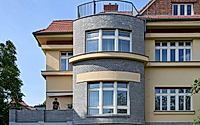
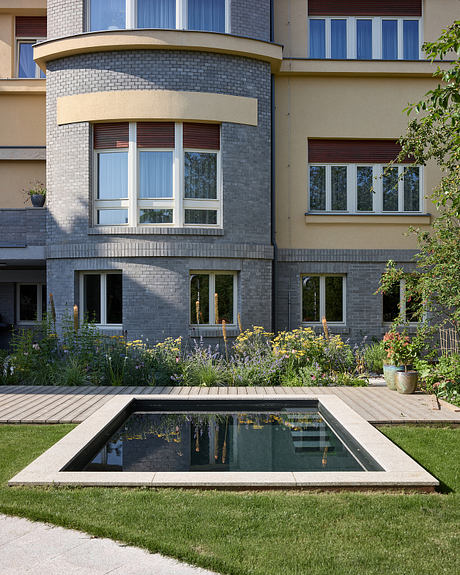
Exposed concrete brick once defined the character of the villa colony, but decades of paint and weather damage left the original units beyond repair. Rather than abandoning that surface, the architects work with conservation authorities to build a new skin that respects the historic pattern. A two-centimeter layer of brick slips, cut on-site from full concrete bricks, is laid over the damaged masonry to recreate the robust texture.
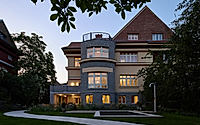
Elsewhere, material substitutions stay close to the early 20th-century palette. Rough ochre plaster returns to the rendered portions of the façade, and traditional beaver tail roof tiles again cap the roof profile. Windows are remade with the original pane division yet upgraded with insulating glass, improving performance while preserving rhythm. On the southern face, new wooden exterior blinds reproduce the historic shading devices, adding depth and shadow to the elevation.
The client’s desire for an extension above the original terrace introduces a clear contemporary layer. Instead of imitation, the addition lightly edits the existing massing by omitting the cornice and recessing access to the extension roof at attic level. The volume reads as a careful graft, recognizable as new but measured against the old.
Reordering Levels And Light
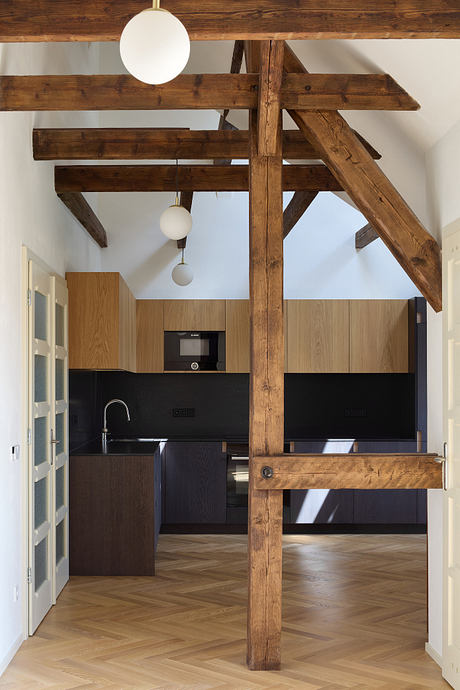
Inside, the house shifts from a single-family layout spread over four floors into a building with multiple apartments. The basement and attic, once relegated to storage and marginal use, become independent dwellings. To achieve this without breaking the existing hierarchy, the original wooden staircase continues to connect only the ground and first floors, anchoring the main apartment.
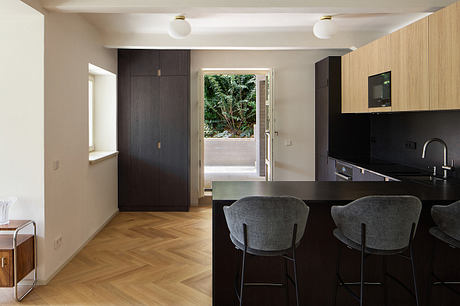
A new staircase in the northeastern corner climbs from the lower levels directly to the attic, giving the top apartment its own route. The basement gains generous daylight through a new window well and inserted windows tied to it, turning what had been a cellar into habitable rooms. Entry from both the southern and northern gardens reinforces a dual orientation and makes the lower apartment feel less subterranean.
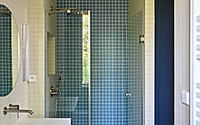
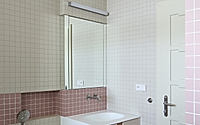
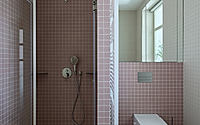
On the ground and first floors, structural moves remain minimal so the original room proportions stay legible. Bathrooms and utility zones are added, but the number and relative size of rooms hold close to the inherited plan. This approach keeps the material focus on surfaces, doors, and built-in elements rather than on dramatic new openings.
Crafting New Interiors
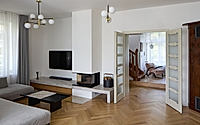
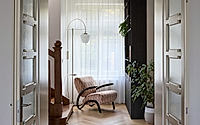
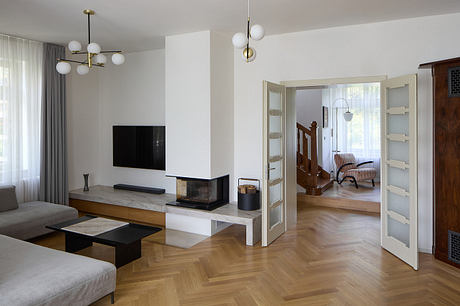
Wherever original interior elements retain integrity, the project leans into repair rather than replacement. The partition wall between living room and kitchen, with its original sliding doors and adjacent built-in cabinet with display cases, stays in place and is carefully restored. This single assembly carries a great deal of memory.
Other doors could not be saved, but the studio commissions exact copies so the thickness, paneling, and proportion remain consistent throughout the house. The main internal staircase is treated for dry rot, renovated, and left beside the two-storey window that faces the garden, where western light washes the treads each afternoon. These retained pieces hold the thread of the house’s construction history.
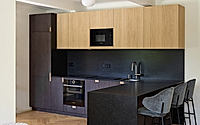
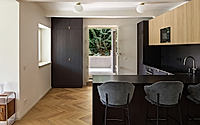
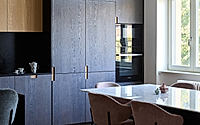
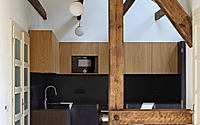
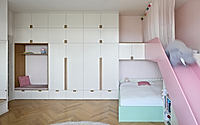
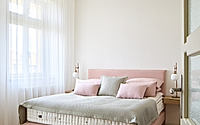
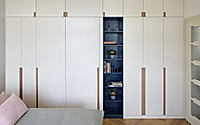
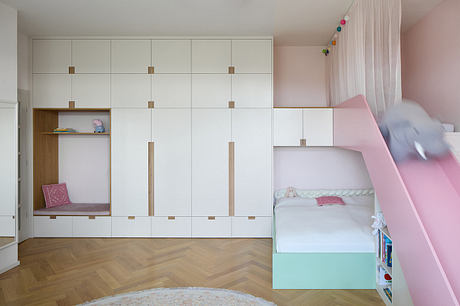
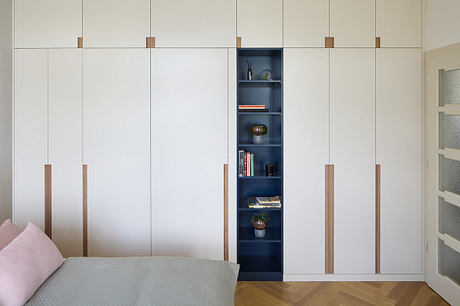
New built-in furniture introduces a contemporary layer with clear material discipline. Dark surfaces receive stained oak veneer, while handles are hand-finished plates of solid oak, giving each door and cabinet a tactile edge. Ivory-toned joinery nods to traditional interior colors without slipping into pastiche. Underfoot, parquet flooring and hidden underfloor water heating connected to a geothermal heat pump work quietly together, with two 200-meter-deep wells drilled under the garage supporting the system.
Furniture As Time Bridge
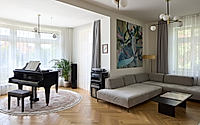
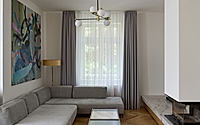
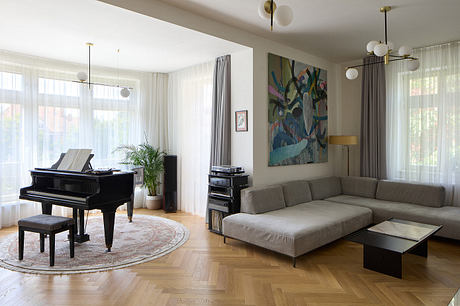
Freestanding furniture sharpens the dialogue between construction eras. Pieces from Modernista, produced as exact replicas of Czech Cubist, Functionalist, and Art Deco models, stand beside restrained contemporary objects. A dining table with a marble top and a minimalist sofa in the living room sit against the renewed fabric without competing with it.
The intention is not a period set but a measured contrast between historic references and present-day comfort. Materials carry much of that work: solid timber, stone, veneer, and carefully reconstituted masonry form a common ground. By allowing old and new elements to sit side by side, the project tests how robust early 20th-century ideas remain when paired with current construction techniques.
By the time the sun drops behind the garden, western light still pours through that tall window onto restored stair rails and fresh oak veneer. The villa reads as both repaired object and updated home. Its material story does not end; it simply continues with clearer layers.
Photography by Radek Úlehla
Visit Atelier Hajný