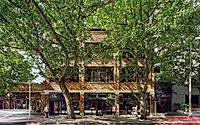
Vitus Headquarters / 2607 2nd Avenue: Community-Minded Worklife
Vitus Headquarters / 2607 2nd Avenue brings an adaptive office renewal to Seattle, WA, United States, shaped by Graham Baba Architects for a mission-driven housing company. Inside the former 1920s timber-and-masonry structure, the firm organizes retail, workplace, and penthouse levels into a cohesive daily environment that balances work, art, and gathering across four floors. The result is a workplace that reads as both civic and personal in tone.
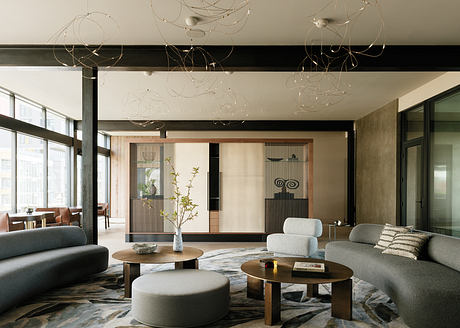
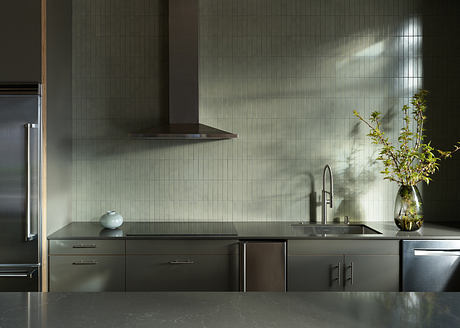
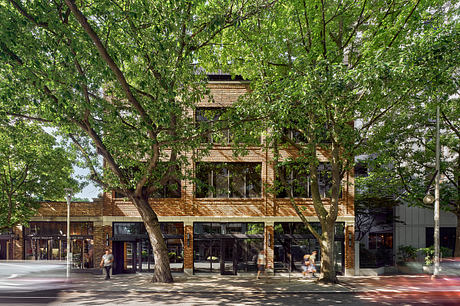
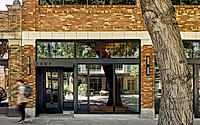
Morning light catches the brick and timber as staff step in from Belltown’s sidewalks, moving from the city’s grain into the depth of the old structure. Overhead, the new elevator and stair hall draw them upward toward a workplace that connects offices, art, and roof decks in one continuous vertical journey.
Within this four-story office building, Graham Baba Architects organizes retail and work rooms around a revitalized core that now holds a broad stair, elevator, and motion-activated light sculpture. The project serves Vitus, a company focused on affordable housing, by turning an overlooked 1920s shell into an environment where daily routines span open offices, library-like lounges, and a penthouse set up for meetings and philanthropic events. Program drives each architectural move, from exposed timber structure to the operable façades that link interior rooms to terraces.
Stair As Social Core
One of the existing egress stairs is removed to make way for a new primary stair and elevator at the heart of the building. The architects set a generous steel stair within a core of exposed board-formed concrete, turning a code requirement into a daily ritual of movement and encounter. A custom motion-activated light fixture drops through the center of all four levels, inspired by the 1967 Jacques Tati film Playtime and the Citroën DS Presidentielle. Cylindrical elements pulse to life as people pass, and a large skylight above pulls daylight down so the stair reads as a vertical room rather than a mere passage.
Working On The Third Floor
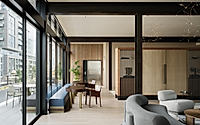
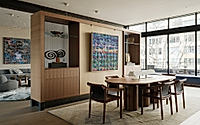
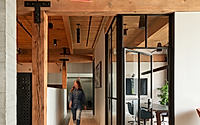
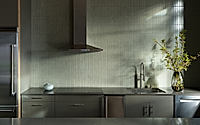
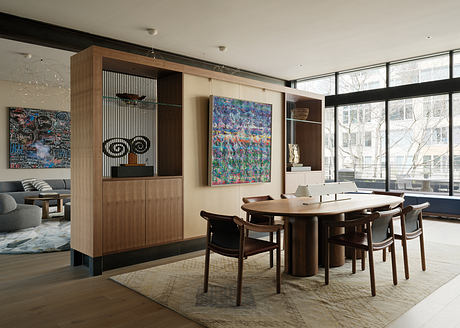
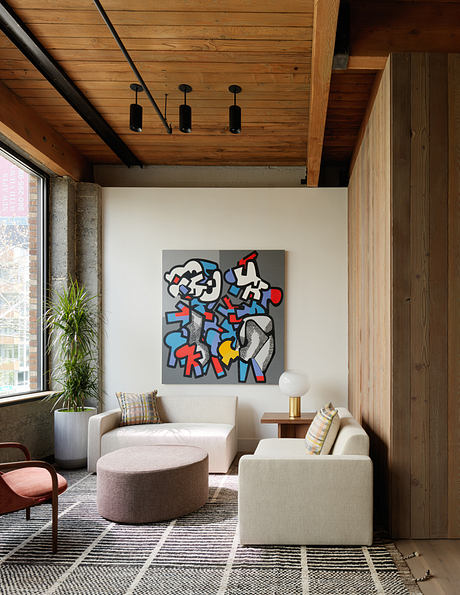
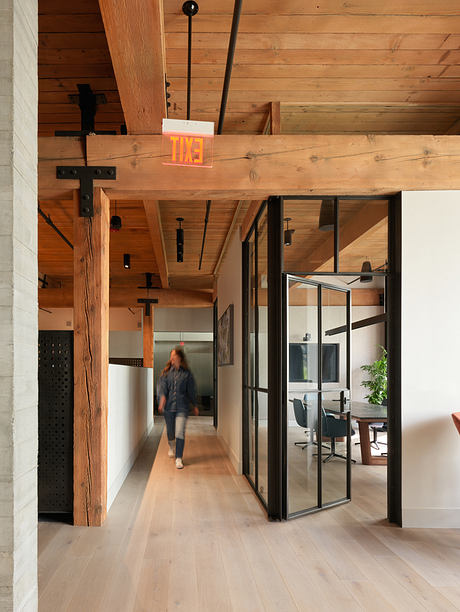
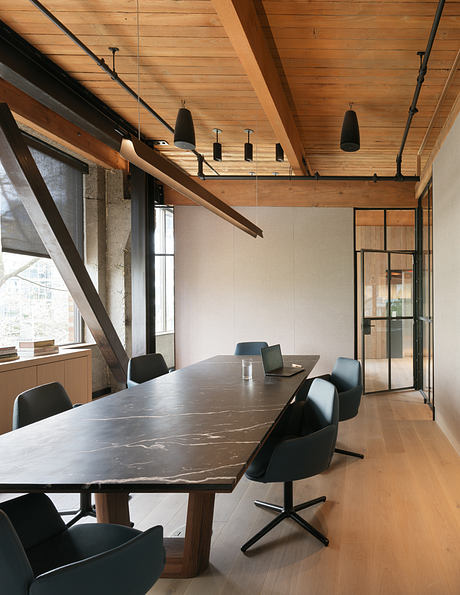
Visitors bound for Vitus arrive at the third floor, where a small lobby with comfortable furnishings and art sets a calm tone. Beyond that threshold, the company’s office is arranged as a warm, muted environment with a mix of residential and commercial furniture that encourages both focused work and informal conversation. Workstations, conference rooms, and amenity areas are distributed so staff can shift easily between heads-down tasks, group meetings, and quick huddles. Casework doubles as storage and display while also carving the open floor into zones (a quiet way of giving each team a clear home base).
Library And Everyday Pause
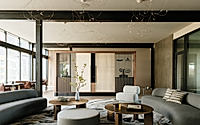
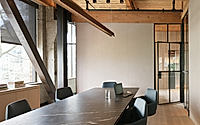
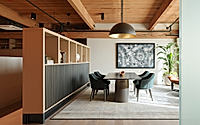
At the center of the office level, a library volume splits a generous sitting area into two distinct yet connected realms. Shelving and integrated surfaces create a place for books and art, but also for informal conversations that slow the day’s pace. The library table holds custom lighting that casts a warm glow downward, avoiding harsh overhead fixtures and making the room feel closer to a domestic reading room than a corporate lounge. Staff and guests move through this zone on the way to meeting rooms, turning it into a natural point for lingering and informal exchange.
Penthouse For Gathering
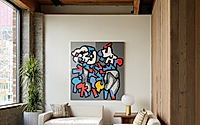
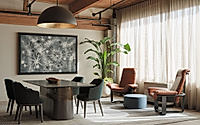
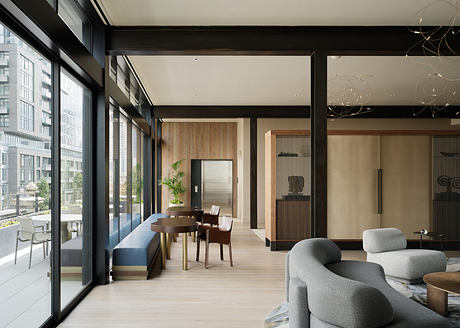
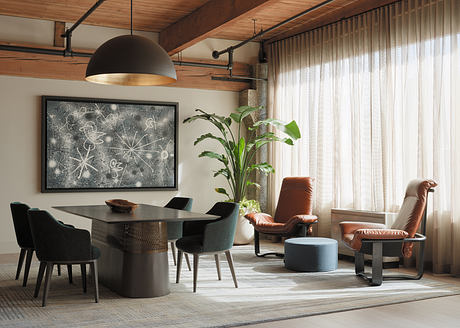
Above, a new penthouse level adds about 3,000 square feet of executive and shared program, tuned for both workday meetings and after-hours events. Conference rooms range from formal, such as the board room, to more relaxed settings that support smaller groups and visiting guests. Art appears in niches, within cabinetry, and across walls, and a custom rug inspired by kingfisher feathers grounds the primary meeting area with color and pattern. Sheer window coverings temper sun, especially from the west, so rooms stay comfortable while preserving views during daytime sessions.
Roof Terraces In Daily Use
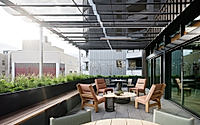
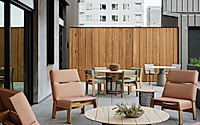
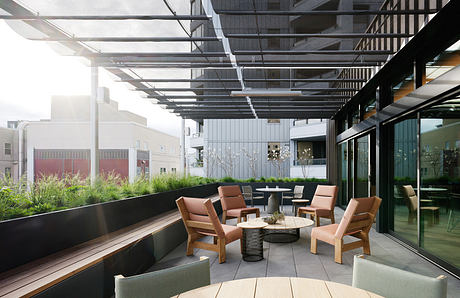
New terraces on the east and west sides extend penthouse life outdoors, giving staff and visitors a choice of light and orientation throughout the day. Large operable façades and sliding doors maintain a strong path from the west deck, through the penthouse, to the east deck, so circulation ties interior rooms to fresh air and city views. These outdoor areas support philanthropy events, parties, and casual gatherings with out-of-town guests, turning the upper level into more than an executive enclave. They become part of how the office works, not just an occasional backdrop.
By stripping back the interior to its heavy timber frame and brick enclosure, the renovation keeps the building’s structure in daily view. Art, custom lighting, and carefully scaled furniture then layer over that framework, giving staff and visitors a series of moments that punctuate movement from street to stair to office to roof. The result is a workplace that folds focused tasks, hospitality, and community-minded gathering into one continuous vertical experience.
Photography courtesy of Graham Baba Architects
Visit Graham Baba Architects