Lakeside by Disbrow Iannuzzi Architects
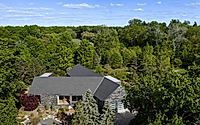
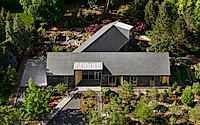
Lakeside stands in Birmingham, United States, where Disbrow Iannuzzi Architects shape a Y-shaped house along the River Rouge and its mature gardens. The 4,000-square-foot residence channels the client’s background as a curator of Asian art into a quiet composition of white ash and black slate, tuned to long-framed views and changing light. Inside, the rooms read like a lived-in gallery for handcrafted objects and decades of landscape care.


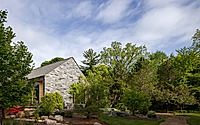
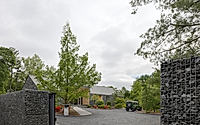
Slate walls catch the Michigan light as it slips across cleft stone and honed edges. From the driveway, crushed slate underfoot leads to darker planes of masonry and the soft glow of timber beyond each opening.
This house is a 4,000-square-foot Y-shaped residence in Birmingham, United States, designed by Disbrow Iannuzzi Architects as a precise study in ash and slate. A former curator of Asian art commissions a home that can receive her collection of handcrafted objects while honoring a family history in lumber. Material character drives the architecture, from roof and walls to driveway and gabions, and guides how daily life meets the broad landscape.
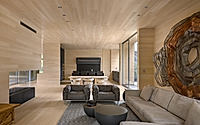
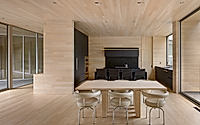
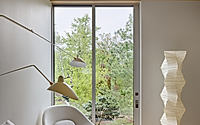
Inside, the sequence unfolds as a series of warm volumes where wood, stone, and glass work in clear, legible roles. Rooms stay calm and consistent so the eye rests on crafted objects and layered gardens rather than decoration.
Working Slate In Depth
Black slate carries most of the load here, both literal and atmospheric. Drawn from a single quarry, it shifts from split roof shingles to cleft wall stone, honed slabs underfoot, crushed driveway surfacing, and scraps locked into gabion baskets that hold the terrain. Each treatment exposes a different texture and edge, so the house reads as one material explored in stages rather than a collage. As the sun moves, veining flashes, shadows sharpen across the wall, and the exterior trades between quiet depth and high contrast relief.
Even the approach tells that story in miniature. Crushed slate compacts at the drive, then vertical stone rises beside it, before the eye lands on the slate shingles above and gabions that brace the ground.
Shaping A Wooden Interior
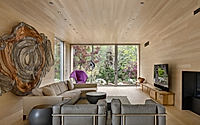
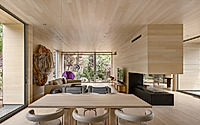
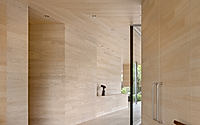
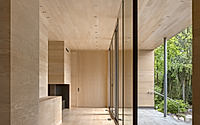
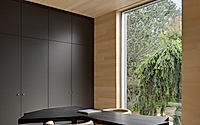
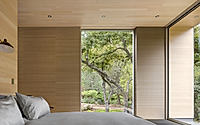
If the exterior leans on shadow, the interior leans on grain. White ash runs across ceiling, wall, and floor surfaces in boards selected for a measured, linear figure, which gives the rooms an even, steady rhythm. At thresholds and moments of transition, the cut quietly shifts from quarter-sawn to plain-cut within the same 4-inch pattern, signaling change without visual noise. A fifteen-foot ash plank with bold cathedral grain becomes a long bench for bronze castings, a clear pivot from the restrained field of boards to a single dramatic surface.
That bench reads almost like a wooden plinth. It gathers the client’s bronze work in one line, tying the interior back to her gallery past and to the lumber story in the family.
Carving Openings In Stone
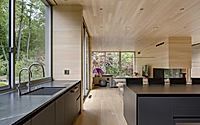
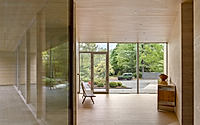
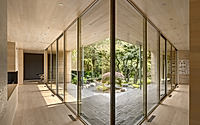
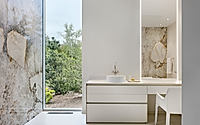
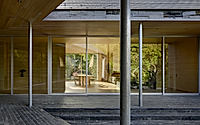
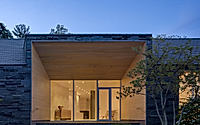
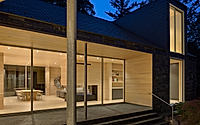
Every cut through the slate envelope reveals the warm core, like slicing open an apple to expose lighter flesh. Window and door openings sit deep within the wall, creating shade pockets that temper summer sun while still framing views out. The south-facing entrance tracks the solar path so winter light pours inside when it is wanted and a protective overhang guards the same threshold in hotter months. Floor-to-ceiling glass runs from wall to wall at key elevations, turning each room into a lookout toward the River Rouge and the shaped topography around it.
From within, the dark stone reads as a firm edge, while the ash and glass stretch to the landscape as if the interior extends into the garden rooms.
Landscape As Daily Gallery
The homeowner has tended this parklike site for over forty years, and the house is tuned to that long work. Layered plantings, ground surfaces, and sculptural pieces outside align with interior vantage points, so each room frames a composed view akin to a Japanese woodblock print in her collection. Interior volumes stay quiet and warm, which lets the foliage, river, and artworks outside read as the most active elements in daily life. The landscape does not sit beyond the threshold; it threads into the routine of moving, sitting, and looking.
Even on an overcast day, that relationship holds. Stone, ash, glass, and garden trade roles between foreground and backdrop as light shifts across the plan.
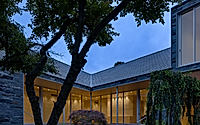
By dusk, the slate recedes into cool shadow while the ash interior glows against it. The house settles back into the trees and river bends, its materials still legible in the last light. What remains is a clear impression of one material cut many ways, another tuned for warmth, and a cultivated landscape that turns each view into a lived-in composition.
Photography by Rafael Gamo
Visit Disbrow Iannuzzi Architects