Clay Rise: Multigenerational Living Rooted in Sussex Craft Traditions
Clay Rise sits in the village of West Hoathly in West Sussex, United Kingdom, as a new three-bedroom house by architecture and interior practice Templeton Ford. The project grows from the hillside next to Andre Templeton Ford’s childhood home, translating the brick cottages and clay tiles of the area into a contemporary dwelling shaped for shared and evolving family life. Its calm presence masks a highly tuned, flexible arrangement within.


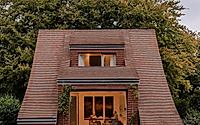
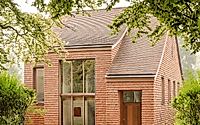
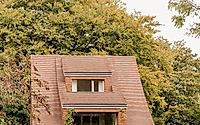
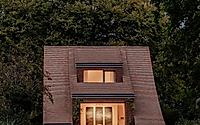
Morning light slides across the tiered roofline, catching the red clay tiles where brick gives way to handmade curves. From the lane, the house reads as both familiar and new, a compact form that steps with the slope and looks out toward open fields and the distant South Downs.
Clay Rise is a three-bedroom house in West Hoathly, West Sussex, conceived by Templeton Ford as a contemporary take on the local rural home. The practice draws together architecture and interiors, so structure, material, and daily life sit closely aligned. Program, craft, and the surrounding village fabric define every move, from the split-level plan to the smallest piece of joinery.
Set beside the architect’s childhood home, the dwelling returns to the vernacular clay-tiled cottages and handmade brickwork of the village, but with a different rhythm. The result is a modestly scaled yet carefully tuned family house that can shift between multigenerational living, independent accommodation, and future work or care arrangements without losing its sense of cohesion.
Tiered Form, Embedded Home
The house is dropped 1.5 metres into the hillside, so the entry meets the terrain while the rear steps down to a grassy slope and wider views. This move sets up a subtle drama: from the road the volume feels grounded and compact, while the back opens out, revealing the full sweep of the curved roof and the layered storeys. Local brick made from the same clay under the site wraps the lower levels, while a datum line marks the shift to red clay tiles above. That simple band ties the volumes together and lets the tiered roofline sit comfortably among Sussex brick homes.
Behind the crafted skin sits a prefabricated panelised timber frame chosen for speed, precision, and environmental performance. Erected in two weeks, the structure supports an ambitious profile without overpowering the village scale. Brick thickens at the rear where the house cuts deeper into the slope, giving the everyday rooms a sense of solidity and shelter.
Split Levels, Dual Life
Inside, the split-level arrangement is the project’s quiet engine. The lower floor can function as a self-contained two-bedroom apartment, suitable for extended family, guests, carers, or lodgers. Above, the main living quarters gather a large living room, kitchen, and primary bedroom suite along the upper levels, so the household can expand or contract without disruptive change. Doors, stairs, and services are planned to let the two zones run together as one home or peel apart into independent quarters.
This flexibility starts with basic needs rather than accessories. Key services such as underfloor heating, lighting circuits, and wiring routes are set out to allow future subdivision, additional rooms, or reorientation of living areas. The same ground floor that now holds a compact apartment can flip to become a generous home office or a main bedroom level with ample storage, depending on how family life unfolds.
Curved Interiors For Everyday Use
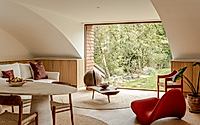
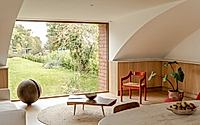
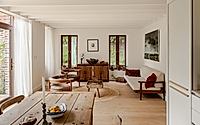
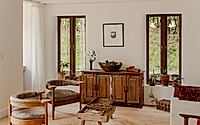
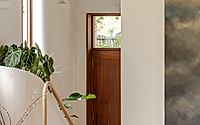
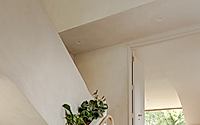
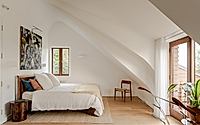
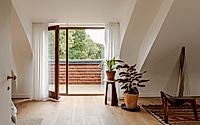
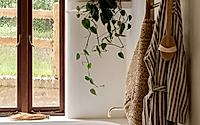
A curved CNC-cut stair finished in lime plaster greets visitors at entry and pulls them upward to the principal living area. That single element ties structure and circulation together, echoing the sweep of the roof overhead and softening the movement between levels. Lime-plastered walls continue through the rooms, meeting exposed timber and stone floors that carry everyday wear with ease. Deep sapele window reveals draw attention to views of fields and sky rather than the thickness of the wall.
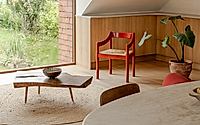
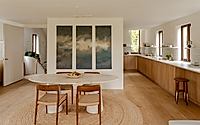
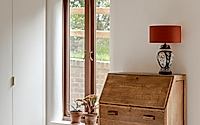
Curves continue in built-in joinery and handmade plaster wall lights, so daily routes through the house pass along rounded corners, not sharp thresholds. The rooms hold a mix of bespoke and found furniture, guided by Jessica Templeton Ford’s work in antiques and auctions, which gives the interior a lived-in richness from the outset. Light, texture, and circulation work together to keep the plan legible, whether one household or several are using it at a given time.
Comfort Through Passive Planning
Passive environmental strategies are not treated as add-ons but as drivers of orientation and room layout. The house turns toward the sun with deep south-facing openings that admit low winter light while shading high summer rays. Cross ventilation is encouraged through operable east-west windows, so everyday comfort often comes from breeze and stack effect rather than mechanical systems. At the center, the stair atrium acts as a thermal chimney that draws warm air upward and keeps lower levels cooler.
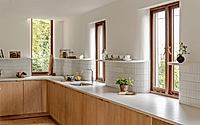
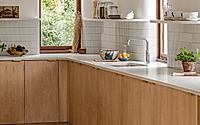
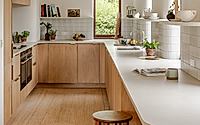
An air source heat pump delivers efficient heating and hot water, working with high insulation levels and double-glazed openings to reduce energy demand. Material reuse plays a role in how people inhabit the house as well: a secondhand kitchen and utility fittings slot into the new shell, and timber frame off-cuts reappear as custom joinery pieces. These decisions keep waste down and lend a sense of continuity between construction and daily routines.
Rooms That Can Change
From the outset, the plan is drawn to evolve. The main bedroom on the upper level can be divided to create an extra room when children arrive, relatives move in, or care needs shift. Living areas are arranged so that each level can run as a complete home, with privacy where needed and shared moments where possible. That arrangement supports multigenerational family life without resorting to temporary partitions or awkward additions.
Flexibility extends beyond bedrooms. Service routes and storage are placed so that future residents can reconfigure uses—turning a ground floor apartment into a quiet working zone, or rebalancing sleeping and living areas as circumstances change. The building’s character remains consistent while the internal pattern of daily life adjusts around it.
In the end, Clay Rise feels anchored to its hillside and to the brick-and-tile language of West Hoathly. Light tracks across the curved roof and down the lime-washed stair, marking out the passing day. As households change and needs evolve, the house is set up to adapt in program and use while keeping that steady relationship to craft, landscape, and village street.
Photography by French+Tye
Visit Templeton Ford