Seis Patios House by VOID
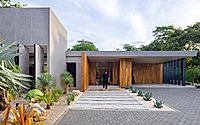
Seis Patios House sits in Guanacaste Province, Costa Rica, as a single-family residence by VOID that turns everyday life toward patios, air, and vegetation. Organized as a livable gallery for an art enthusiast, the house threads color, local materials, and six planted courtyards into a fluid daily routine where rooms open to water, shade, and art-filled walls. Light and ventilation guide how the home is used, not just how it looks.


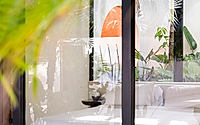
Morning light cuts across the patios, touching concrete, water, and leaves before it reaches the interior rooms. Doors slide open and the house breathes to the garden and pool.
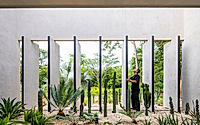
This is a single-family house in Guanacaste, Costa Rica, planned by VOID around six patios that choreograph daily living through air, light, and vegetation. The residence is conceived as a livable gallery for an art enthusiast, so circulation and rooms double as exhibition surfaces and quiet viewing moments. Patios act as strategic voids that keep the home connected to the landscape while sustaining cross ventilation and gently shaded everyday routines.
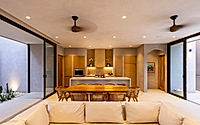
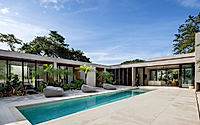
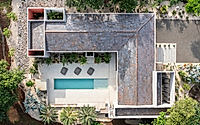
As a house, it works less like a compact object and more like a loose sequence of courts and rooms that pull the outdoors inward. The six patios distribute natural light, fresh air, and planting so that almost every room maintains a direct relationship with climate and vegetation. At the center, the main patio opens to a pool that anchors social life, turning the core of the volume into the preferred gathering point where people move easily between water, terrace, and interior rooms.
Living Around Six Patios
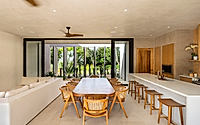
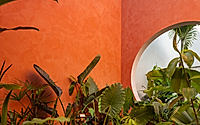
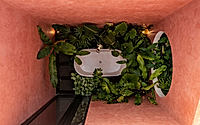
Each patio sets a different rhythm for everyday use, from quiet corners for reflection to lively areas connected with shared rooms. Strategic placement of these voids allows cross ventilation to pass through living areas and more private zones, so routine activities unfold in moving air rather than sealed interiors. Vegetation grows directly inside these courtyards, softening edges and bringing shade to thresholds, which encourages residents to leave doors open and drift between inside and out. Daily routes are short yet varied, turning circulation into a series of brief pauses with sky, foliage, and art.
Courtyard As Social Heart
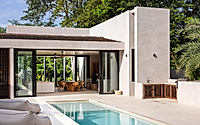
At the heart of the plan, the main patio gathers family and guests around the pool and adjacent rooms. This central court concentrates social energy so cooking, lounging, and swimming remain visually and physically connected throughout the day. Large openings allow the house to unfold toward the water, making the pool not just a recreational element but the hinge between interior rooms and the open air. Even quiet evenings pass within sight of this court, tying private routines back to the shared center.
Artful Daily Routines
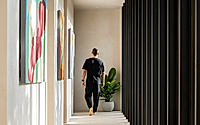
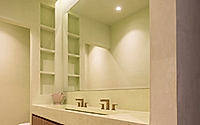
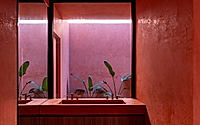
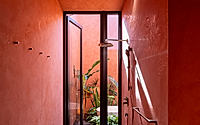
Conceived as a livable gallery, the house treats ordinary movement as a way to encounter art. Walls, passages, and even service areas become surfaces for color and artwork, so daily paths double as viewing routes. Chromatic exploration reaches into unconventional places such as bathrooms, where bold tones lend each room a distinct visual identity that breaks from neutral domestic norms. Everyday rituals like bathing or washing hands gain a new intensity through this interplay between color, light, and material.
Adapting To Climate And Habit
Along the main façade, a system of pivoting panels lets residents tune openness according to time of day, weather, and privacy. When the panels swing open, cross ventilation strengthens through public rooms, cooling gatherings without mechanical reliance and extending daily use toward the exterior. Closing them gives shade and seclusion while still allowing the courtyards inside to maintain a sense of air and greenery. This adjustable layer supports different patterns of occupation, from quiet afternoons to wide-open evenings with friends.
Material Warmth And Transitions
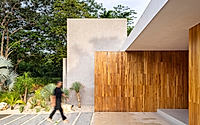
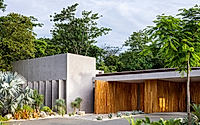
Local wood, exposed concrete, metal, and glass establish a sober yet warm palette that stays grounded in the surrounding landscape. These materials handle the shifts between patios and interior rooms, giving thresholds a clear tactile identity that residents encounter many times a day. Carefully handled transitions modulate light and shade so that moving through the house feels gradual rather than abrupt, even when stepping from bright courts into deeper interiors. Art, vegetation, and structure align in everyday use, producing a lived environment that balances intimacy, comfort, and climatic responsiveness.
As day ends, air still moves freely through the patios and along the planted edges. Rooms withdraw toward softer light while the pool and main court remain gently active. Life in the house settles back into the landscape, guided once again by courtyards, art, and the steady presence of tropical vegetation.
Photography courtesy of VOID
Visit VOID