Scamander Passivhaus A: Low-Energy Coastal Retreat on Tasman Coast
Scamander Passivhaus A stands on the eastern Tasmanian coast as a rigorously sustainable house in Scamander, Australia, by Spectura Studio. The single-level home pairs Passivhaus performance with a relaxed coastal setting, creating a calm domestic rhythm tuned to local light and weather. Inside and out, the project frames a lifestyle where comfort, environmental responsibility, and easy coastal living move together rather than compete.


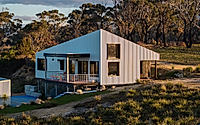
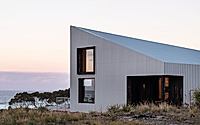
Soft coastal light settles on Scamander Passivhaus A as wind comes in off the Tasman Sea. The low house stretches across its generous site, holding a clear horizontal line against sky and dunes while drawing that light deep inside for steady, even comfort.
This single-level residence in Scamander, on Tasmania’s east coast, is conceived by Spectura Studio as a Passivhaus-certified home focused on environmental performance and daily ease. The project is a detached house, yet it behaves more like a precise instrument tuned to local climate, regulating heat, glare, and airflow rather than chasing views alone. Its architecture treats sustainability not as an add-on but as the central organizing logic for how each room feels throughout the year.
Shaping A Coastal Envelope
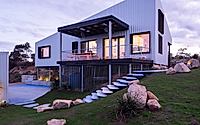
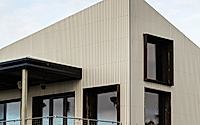
From the outside, the low-slung volume reads as a measured response to the windswept shoreline and open Tasmanian sky. Massing stays compact and efficient, reducing exposed surfaces while still allowing generous glazing toward key outlooks and garden edges. The envelope is planned to keep heat loss in check, with thick insulated walls and high-performance openings working together to maintain interior stability.
Orientation privileges sunlight during cooler months without overexposing rooms to harsh summer glare. Deep overhangs, considered window placement, and a disciplined façade rhythm balance access to views with shade and privacy. The result is a coastal home that faces the elements with control rather than bravado.
Passivhaus Performance In Practice
Scamander Passivhaus A meets the stringent requirements of Passivhaus certification, pushing far beyond conventional energy-efficient housing. The building fabric is tightly sealed and carefully insulated, reducing unwanted drafts and heat bridges that typically undermine comfort in coastal climates. Mechanical ventilation with heat recovery (a Passivhaus cornerstone) keeps indoor air fresh while minimizing energy loss.
Glazing is specified to limit heat gain and loss, supporting consistent temperatures across seasons without heavy reliance on active heating and cooling. Every element, from envelope continuity to controlled ventilation, contributes to low energy consumption and reduced carbon emissions. Comfort is measured not only in kilowatt-hours saved but in even temperatures, quiet interiors, and clean air.
Living On One Level
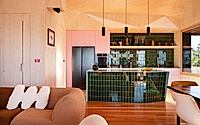
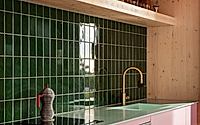
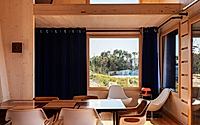
The house unfolds across a single plane of 129 square meters (1,389 square feet), which encourages an easy daily routine without internal stairs or complex circulation. Rooms connect in a clear sequence, so movement from bedroom to kitchen to outdoor terrace feels intuitive and direct. This clarity supports residents through different life stages, from young families to aging occupants.
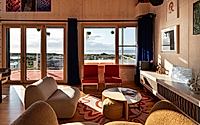
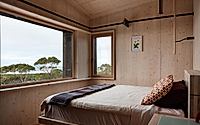
Positioned on a 1,434 square meter (15,435 square foot) plot, the building leaves generous ground around it for gardens, play, and quiet outdoor sitting areas. Interior zones look outward to these planted edges, giving each room a direct visual link to changing coastal light and weather. Everyday life stays close to nature while remaining under the steady umbrella of Passivhaus performance.
Comfort As Environmental ethic
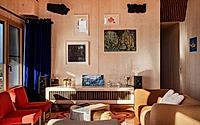
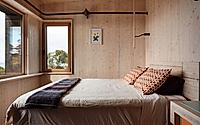
Scamander Passivhaus A is conceived as a calm, environmentally responsible dwelling rather than a technological showpiece. Low operational energy, reduced emissions, and high indoor air quality are not treated as separate goals; they form the basis of how the home works hour by hour. Thermal comfort, daylight, and acoustic softness are tuned so residents can read, cook, or rest without thinking about systems ticking away in the background.
In this setting, coastal life and sustainability align through measured architectural choices instead of grand gestures. A single-level plan, high-performance envelope, and Passivhaus standards collectively show how a modest house can set a new bar for regional coastal living.
By 2025 completion, the building stands as a clear statement about future-ready housing along Tasmania’s eastern shoreline. Light, wind, and sea air still define daily life, but they do so through a carefully moderated architectural filter. Scamander Passivhaus A turns a quiet coastal plot into a precise climate-responsive home that privileges comfort and environmental responsibility in equal measure.
Photography by Adamo Gibson
Visit Spectura Studio