Phum Sambo Café & Eatery: Concrete Frame Turned Green Dining Retreat
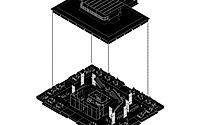
Phum Sambo Café & Eatery sits in Phnom Penh, Cambodia, as a restaurant renovation by Khoan + Partners that respects an existing concrete frame. The project turns an abandoned structural shell into a calm, climate-aware destination where wood, greenery, and open-air volumes reshape a once utilitarian grid. Guests read the building’s past while stepping into a gentler present, grounded in local light and tropical air.


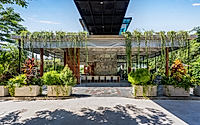
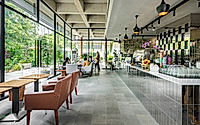
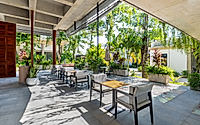
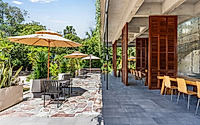
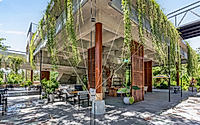
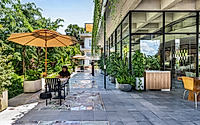
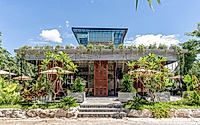
Soft tropical light slips through timber slats and hanging vines, laying patterned shadows across cool concrete. From the street, the once bare frame now reads as a porous pavilion, open to air, foliage, and the slow rhythm of daily meals.
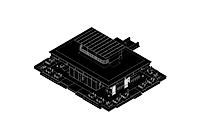
This renovation of a restaurant in Phnom Penh, Cambodia, by Khoan + Partners returns to an unfinished structural shell with restraint and precision. Rather than erase the rigid concrete skeleton, the team keeps its grid intact and works around it, using the existing frame as both armature and memory. The project turns an abandoned carcass into a place for gathering, grounding every move in adaptation instead of replacement.
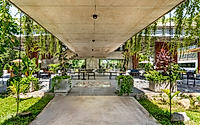
Originally built as a utilitarian structure, the building arrives as exposed slabs, columns, and beams, strong but inert. Khoan + Partners decide that the frame stays; the concrete remains visible, its weight and order forming a clear backdrop for new insertions. The core story revolves around adding warmth, climate performance, and human comfort while keeping the bones legible.
Reframing The Structure
On arrival, diners still read the concrete grid, but its impact softens through careful proportion and layered thresholds. The architects do not thicken the structure or cover it in cladding; they use it as a stable outline for new life. Openings stay generous, allowing air and sightlines to pass through the frame, so circulation feels easy and informal. A simple walk from edge to interior becomes a small sequence of shade, filtered light, and glimpses of vines.
Wood Softens Concrete
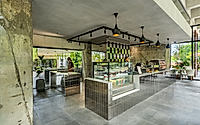
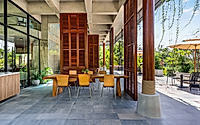
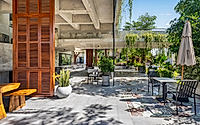
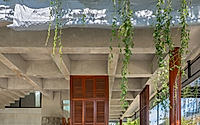
Timber arrives as the tactile counterpoint to bare concrete, warming handrails, soffits, and new edges. Operable wooden louvers sit between columns, regulating sunlight and privacy while inviting diners to adjust their surroundings. Railings and cladding in wood reintroduce human scale, so bodies relate to balusters, slats, and grain rather than just large spans and deep beams. One touch on a timber rail, cool in shade, quietly shifts the perception of the whole room.
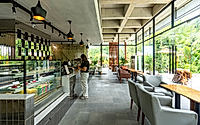
These wooden elements do more than decorate; they tilt the building toward the climate. Louvers temper hard tropical sun, creating a soft, mottled light that moves across tables throughout the day. Soffits and screens frame views without sealing the perimeter, helping breezes cross the plan and keeping interiors from overheating.
Greenery As Filter
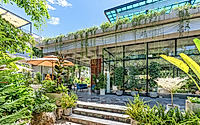
Planting threads directly into the frame, treated as a primary material. Vines descend from slab edges, while climbers wrap columns and beams, turning the grid into a loose trellis. These layers of foliage cool the air before it reaches diners and cast shifting shadows that change from morning to evening. Built mass becomes a support for growth rather than a barrier against it.
Vegetation also blurs the line between restaurant and landscape. Edges soften where leaves cross balustrades, and over time, the structure reads as a living frame, animated by branches and small movements. Greenery works with wood and concrete to mediate temperature, glare, and acoustics in a single, continuous system.
Climate-Ready Dining Levels
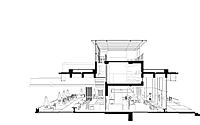
At ground level, the restaurant functions as a shaded open-air hall that spills toward the surrounding site. With perimeter walls pulled back, cross-ventilation becomes the main comfort strategy, reducing dependence on mechanical cooling. Diners sit within a thick band of shade, close to plants and filtered daylight. Air moves freely, and the volume feels generous but not overexposed.
The upper floor takes a different but related approach. Here, passive shading, vegetation, and green roof insulation work together to create tempered interiors even under tropical sun. Light enters in softened bands rather than harsh beams, so surfaces remain comfortable to touch. Guests sense the climate, but the building’s layered envelope keeps it gentle.
In the end, the former concrete shell reads as a tranquil pavilion rather than a relic of halted construction. Light, air, wood, and greenery do the quiet work of daily comfort. Phum Sambo Café & Eatery shows how working with an existing frame can yield a more grounded result, where structure, climate, and everyday use align without noise.
Photography courtesy of Khoan + Partners
Visit Khoan + Partners