Wagner in Milan Balances British Poise with a Secret Garden Retreat
Wagner unfolds as a four-storey terraced house in Milan, Italy, reimagined by Lupettatelier with a vivid red street presence and a secluded inner garden. Behind the compact façade, the home becomes a layered sequence of British-accented rooms, art-lined passages, and a central stair that anchors everyday life. Each level draws light, color, and collected objects into an interior narrative that feels both urbane and quietly personal.
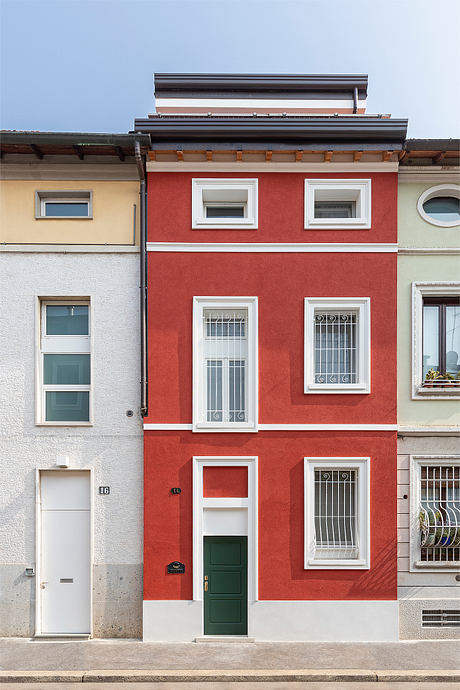
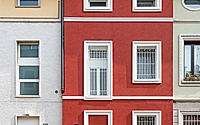
From the street, a bold red façade presses against its neighbors and marks the narrow front door. Inside, light slides through to a hidden garden that suddenly widens the view and shifts the mood.
This terraced house in central Milan is reworked by Lupettatelier as a four-storey home that orients daily life toward a secret green court and its changing light. The project is a compact urban house, and the interior composition focuses on color, furniture, and collected objects as tools to stitch together British references, Oriental textures, and twentieth-century memorabilia. Every floor revolves around the central staircase, which acts less as a passage and more as a quiet gallery.
Framing The Hidden Garden
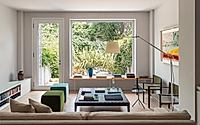
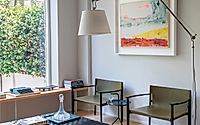
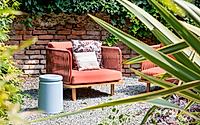
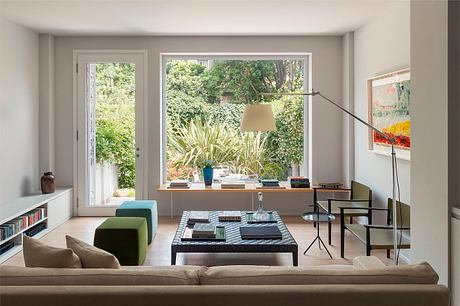
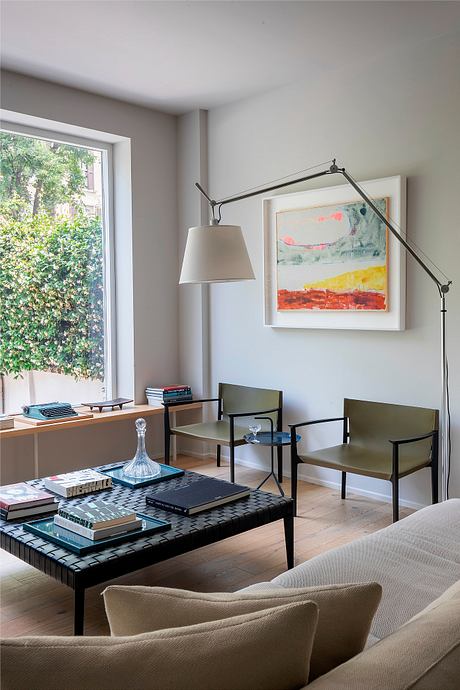
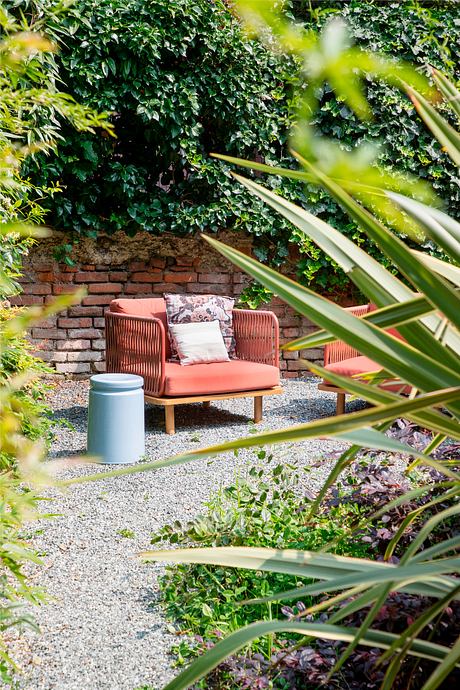
On the ground level, the living room stretches toward the inner garden, its pale walls and low shelving allowing foliage to dominate the view. A large panoramic window reads like a calm screen, filling the room with green tones, soft daylight, and reflections from the glass-lined objects scattered along the built-in bench. Seating stays low and spare, with a woven coffee table and compact armchairs that keep sightlines clear to the plants outside. The garden itself holds gravel paths, brick walls, and rust-colored lounge chairs, so the threshold between interior and exterior feels porous yet sheltered.
Rooms With British Ease
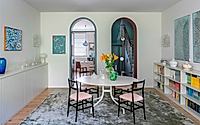
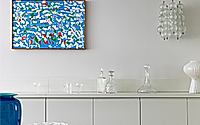
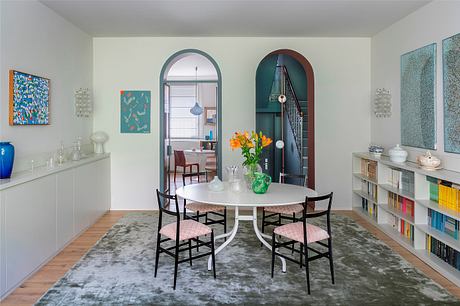
Moving upstairs, the dining level carries what the owners describe as British taste, expressed through dusty hues and composed arrangements. A soft green rug anchors a round white table and black chairs, while fitted sideboards and book-lined shelves maintain order around the perimeter. Artworks punctuate the walls, their small-scale patterns and colors echoing glass pieces and ceramics on display. Through two rounded openings, views extend to the kitchen and staircase, so conversation and movement pass easily between rooms without feeling exposed.
Stair As Quiet Spine
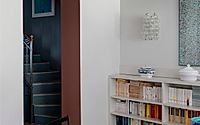
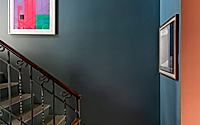
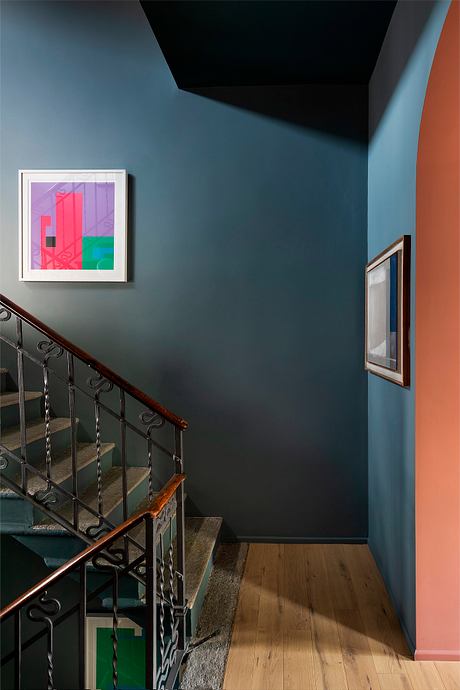
The stair rises as the house’s backbone, enclosed by deep teal walls and guarded by a slender metal balustrade with simple ornament. Landings double as small galleries, with framed geometric prints and artworks catching the eye at each turn and introducing new color notes. Light from high windows grazes the painted surfaces, sharpening shadows along the treads and emphasizing the vertical journey. Around this spine, rooms shift character yet stay visually related, so circulation feels both calm and episodic.
Color In Intimate Corners
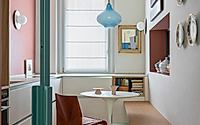
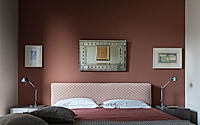
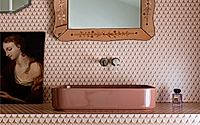
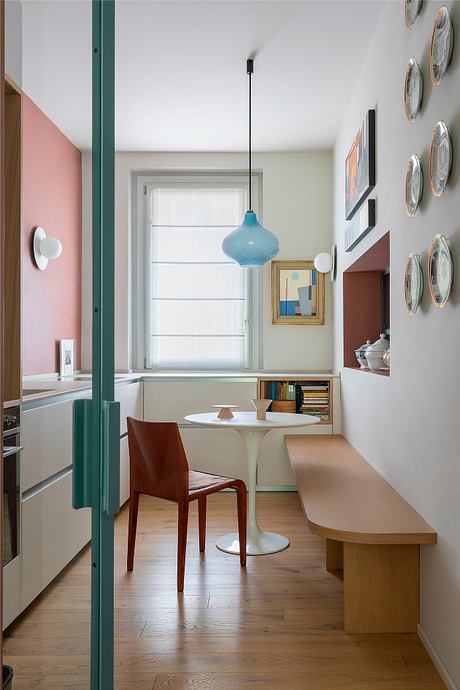
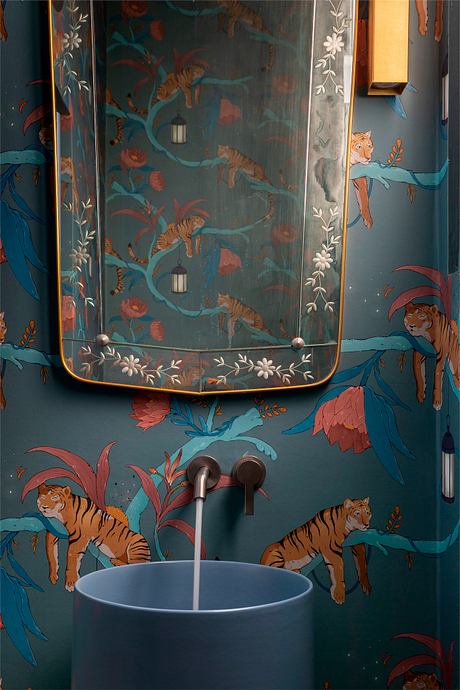
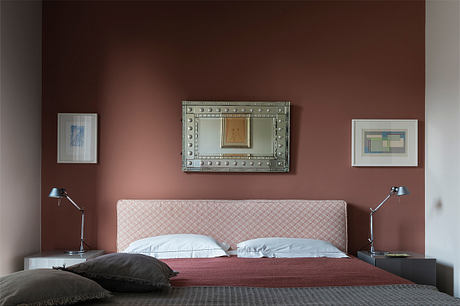
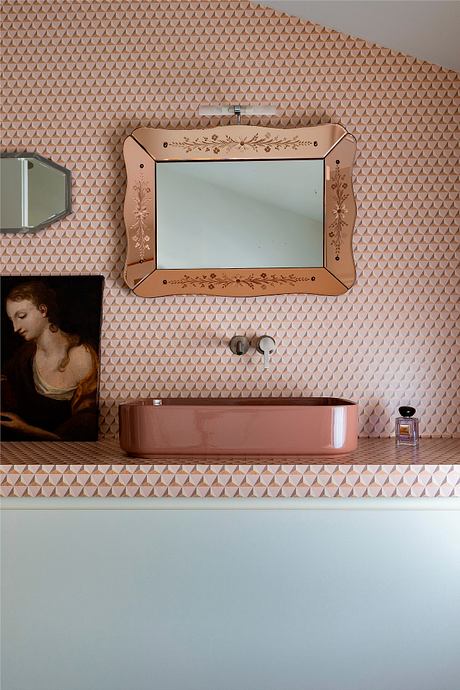
More private rooms lean into warmer tones and tactile finishes that favor intimacy over spectacle. In the bedroom, a terracotta wall sets a grounded backdrop for an upholstered headboard, flanked by slim metal lamps and flanked artwork that keeps the composition balanced. Bathrooms push color further: one powder room wraps every surface in blue wallpaper populated by tigers and foliage, with a slender basin and mirror trimmed in fine detailing; another bath uses patterned pink tiles and a coordinated basin beneath a decorated mirror, building a gentle rhythm of repeating shapes. Even the compact kitchen tucks a blue pendant, wall plates, and a built-in bench into its footprint, turning daily routines into small, characterful rituals.
As day fades, light withdraws from the garden while the interiors pick up its tones in fabrics, wall colors, and art. The red façade returns the house to the orderly street, but inside, each level keeps layering memories and textures around the central stair. The result is a home that treats color, furniture, and collected objects as structural elements, giving an urban terrace house a quietly personal depth.
Photography by Ph. Beppe Brancato – Styling Giulia Taglialatela
Visit Lupettatelier