Atrium Zürich by NOA
Atrium Zürich reworks an existing villa in Küsnacht, Switzerland, for a young couple and their daughter. Designed by NOA, the house keeps its original architecture in view while answering a new family routine with brighter rooms, added color, and a more open living atmosphere. The result is a careful interior refresh that stays close to the building’s simple lines and strong connection to the lake.


About Atrium Zürich
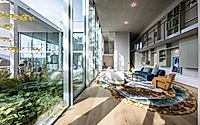
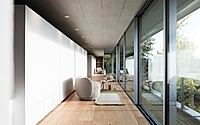
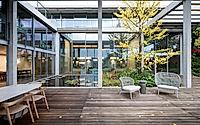
One arrives first at light. Behind the entrance, the villa opens to a central atrium, where concrete, glass, and long views toward the garden set the tone for the rooms beyond.
In Küsnacht, Switzerland, NOA adapts an existing house for a young couple and their daughter, keeping the building’s original character in place while tailoring the interior to family life. The project builds on a villa completed in 2019 by LOT-Z and Meyer Dudesek Architects, using the existing structure as a framework for a calmer, more adaptable home.
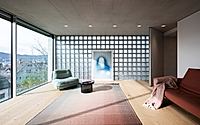
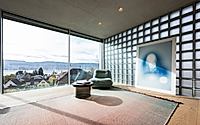
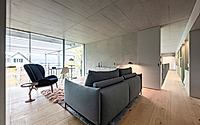
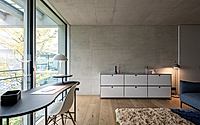
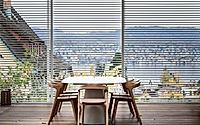
The house is defined by restraint. Exposed concrete walls, oak parquet flooring, slender aluminum frames, and only limited decorative elements shape a clear architectural order, while some west-facing walls in glass block preserve privacy without giving up daylight. Large glazing opens the rooms to the landscape and keeps the lake present throughout the interior.
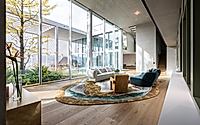
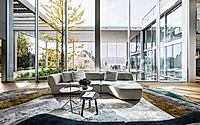
The atrium remains the home’s organizing center. It opens directly behind the entry and contains the living room, where a five-meter ceiling height reinforces the volume of the space. Before the intervention, a gallery level and a large library wall anchored this area; NOA replaces that arrangement with a new wall unit for art, travel objects, family photographs, and storage, finished in eucalyptus green to connect the interior to the surrounding greenery.
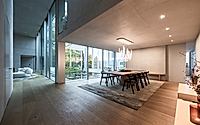
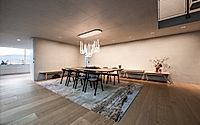
Color arrives with a light hand. Rugs from Loominology, Walter Knoll, and Nanimarquina, along with selected textiles, soften the concrete surfaces and make the large rooms feel more lived in without altering the villa’s essential character. The dining area on the ground floor extends this approach with a Van Rossum table, Ethnicraft chairs, and a Walter Knoll rug, all set within a neutral palette that keeps the interior linked to the exterior tones.
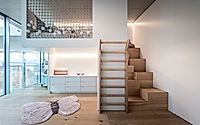
The plan also responds to changing needs. On the first floor, NOA creates a child’s bedroom with an adjoining bathroom despite the absence of existing plumbing in that part of the house; a kitchen cupboard on the ground floor now carries the installations upward with minimal disturbance. A raised sleeping area reached by a staggered stair gives the room a distinct profile, while the former studies are refitted with multifunctional furnishings so they can serve as guest rooms when needed.
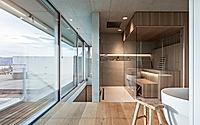
Upstairs, the parents’ level becomes a private retreat. A new wellness area gathers a sauna, bathtub, shower, and room for a fitness mat and chaise longue, with a boudoir-like corridor linking it to the master bedroom. Storage is built into a furniture element that separates the vanity and WC zone from the hallway, keeping the suite open while still practical. A private terrace completes the sequence.
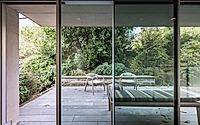
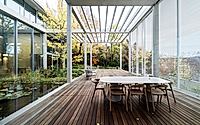
Outside, the same measured approach continues. A partially covered terrace frames the water basin and breaks the broad ground-floor setting into smaller seating zones, while the garden designed by Uniola extends the living areas into the landscape. On the first-floor terrace, a pizza oven, teak seating, and a Gommaire table create a more secluded perch, where the lake, trees, and changing light remain part of daily life.
Photography by Alex Filz
Visit NOA