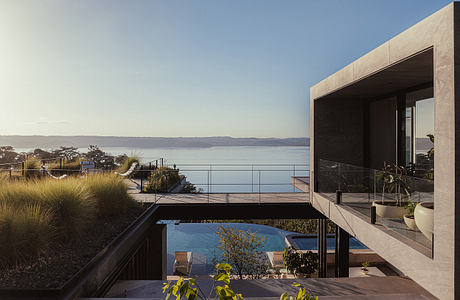
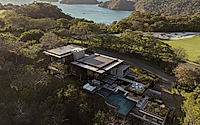
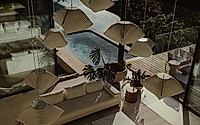
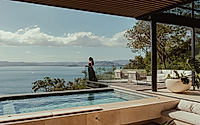
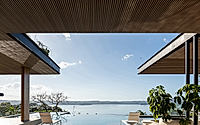
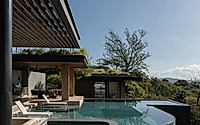
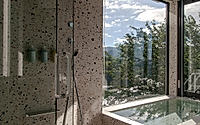
Casa Enoki sits on a steep hillside in Liberia, Guanacaste Province, Costa Rica, where dense dry-tropical vegetation drops toward the Pacific. Designed by QBO3 Arquitectos as a luxury house, the residence reads the terrain and turns it into a series of staggered platforms with ocean views. The result is an indoor-outdoor home that treats the surrounding landscape as both boundary and companion.
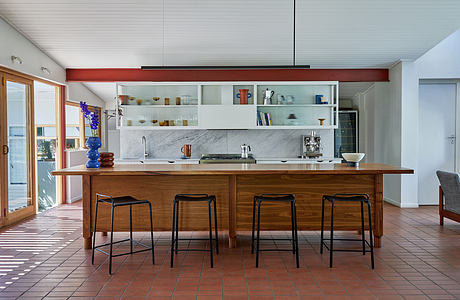
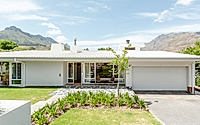
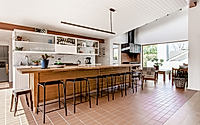
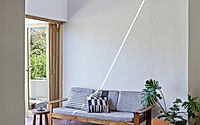
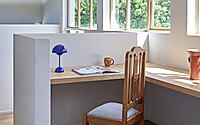
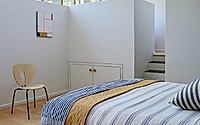
House Slabbert sits in Stellenbosch, South Africa, where SALT Architects reworks a modest 1973 modernist house into a more connected family home. The single storey house is re-planned for convivial cooking, outdoor gathering, and better light, yet the low-profile street façade stays recognizably of its time. New internal and external sequences now support an easy movement between public rooms, private quarters, and a series of terraces tuned to everyday life.
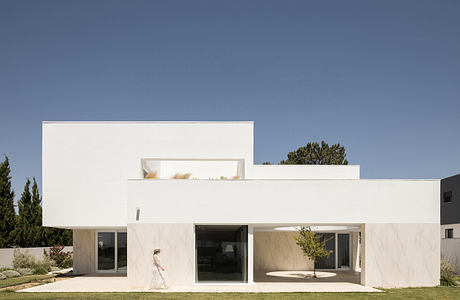
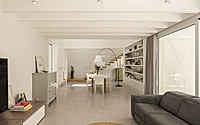
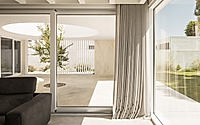
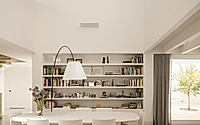
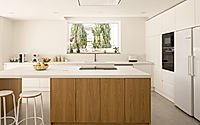
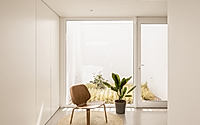
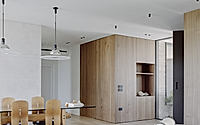
Verdizela House sits in Marisol, Corroios, Portugal, where the Atlantic breeze reaches a pine forest edge and filters into a quiet domestic world. Estúdio AMATAM arranges this house as a contemporary courtyard dwelling, drawing on Mediterranean and Islamic precedents to pursue calm, control light, and temper the coastal climate. Across its white walls and timber accents, the residence reads as a disciplined retreat for introspective living.
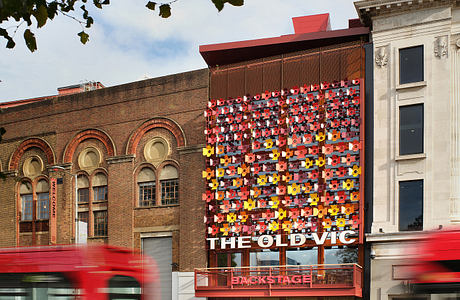
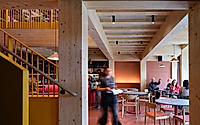
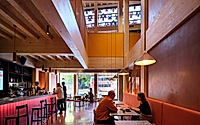
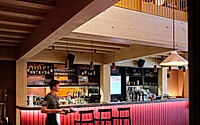
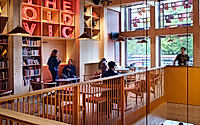
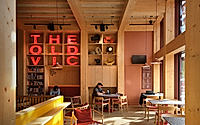
Backstage at The Old Vic expands the Grade II* listed theatre in London, United Kingdom, with a new charitable wing by Haworth Tompkins. The project folds a café, learning centre, rehearsal rooms and event venues into one extension, giving the institution a daily civic presence beyond performance nights. With community access, sustainability and accessibility embedded from the outset, the building reframes how a historic theatre can work for its neighbours as much as its artists.
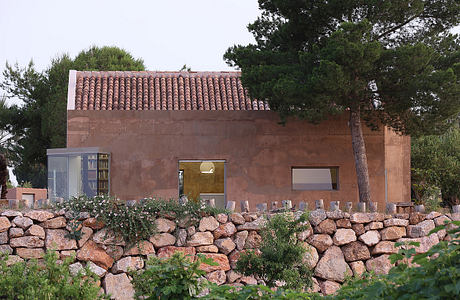
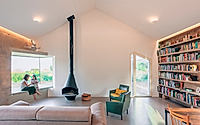
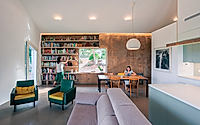
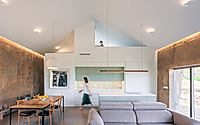
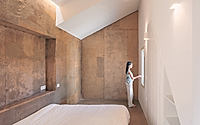
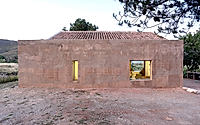
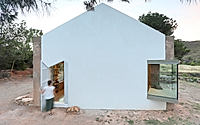
Los Llanos House stands on rural ground in Paraje los Llanos, TM Lorca, Murcia, Spain, where a near-ruin becomes a lived-in memory. Designed by Pepa Díaz Arquitecta as a house rooted in family history, the project turns a former childhood home into a contemporary dwelling. The restored structure balances emotional continuity with a new way of living that favors shared rooms over compartmentalized domesticity.
Today’s rental landscape places greater demands on landlords than ever before. Rising tenant expectations, evolving regulations and ongoing maintenance requirements can quickly make property ownership feel like a round-the-clock occupation. Learn how experienced property managers streamline day-to-day operations, minimize administrative burdens and address operational inefficiencies that often consume owners’ time. So, how can property management help save landlords time?
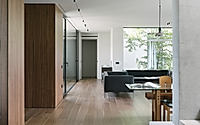
House GM stands on the edge of Rosà, Italy as a composed concrete house by Didonè Comacchio Architects. The project arranges living and sleeping rooms around green patios, using solid and permeable surfaces to manage views, light, and privacy. Concrete, brick, and walnut set a restrained palette that lets the quiet shifts of daylight and courtyard greenery define the mood through the day.
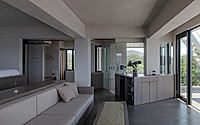
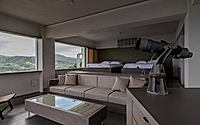
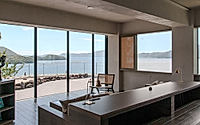
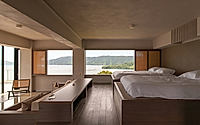
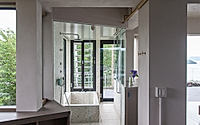
Jinakachi anchors a singular hotel room along the Kuniga Coast in Shimane, Japan, reworked by Amane Architects within the long-standing Kuga-so property. The project turns a south-east corner room into a deliberate viewpoint over the Shimamae Inland Sea, giving guests an immediate encounter with wind, water, and the grazing grasslands that define this island setting. Architecture here acts as a lens rather than a spectacle.