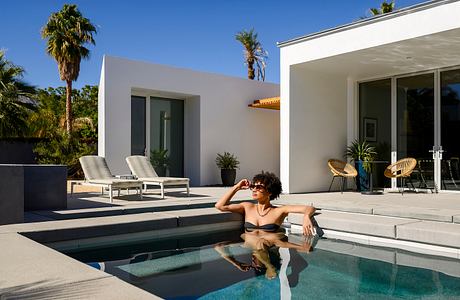
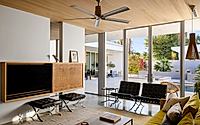
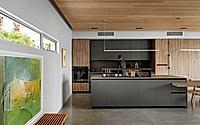
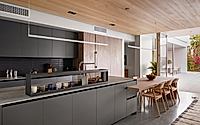
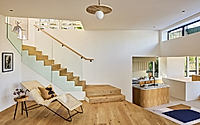
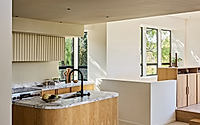
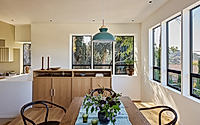
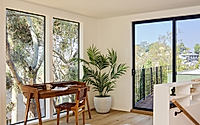
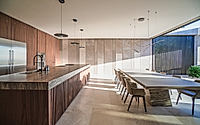
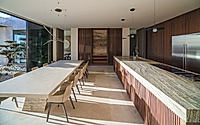
Palm Springs is a house in Palm Springs, CA, United States, designed by sticklab. The single-level home gathers daily life around a pool courtyard while long rooflines and slatted shade manage the desert light. Clear glazing opens the living areas to patios and gardens, setting up a measured back-and-forth between cooler interiors and sunlit outdoor rooms.
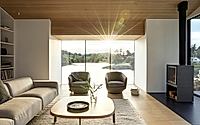
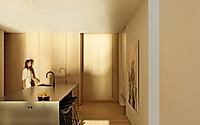
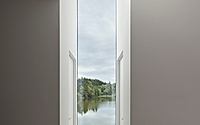
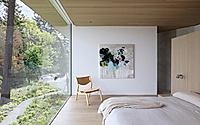
Shoreline House sits in Victoria, Canada, where suburban plots meet a rocky inlet and tall firs. Splyce Design renovates a 1960s house and threads in a compact, single-storey addition that respects sensitive shoreline habitat while sharpening the home’s relationship to light and view. The result is a coastal house with a new primary suite and a measured environmental stance.
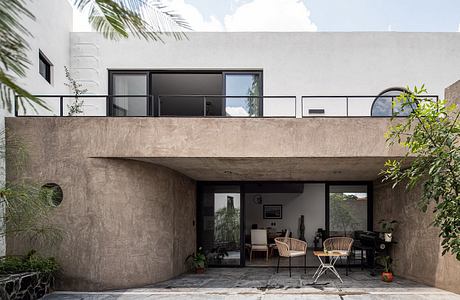
Casa Gálvez sits in León, Mexico, where residential blocks meet light industry and a surprising band of trees. Designed by Christian Mauricio Villanueva Gálvez, the house turns toward that green edge with measured restraint and a clear sequence. A compact tower for private rooms pairs with a generous social core, each reading the site’s breezes and sun to keep interiors calm without fuss.
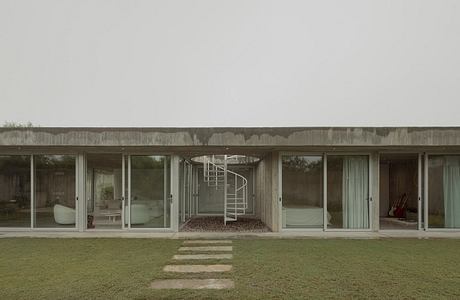
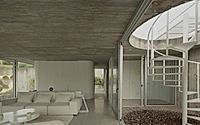
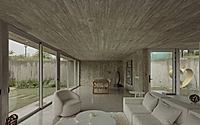
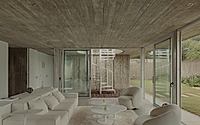
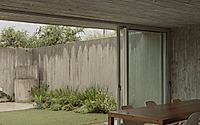
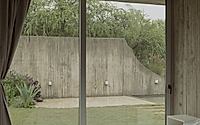
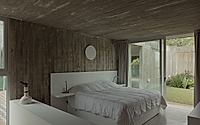
Casa Clausura sits in Mendiolaza, Argentina, as a single-family house by Agustín Lozada. The project resists suburban habits, settling low on the site and turning its back on the punishing western exposure. Instead of spectacle, the plan collects rooms around an inward courtyard with a pool, privileging light, shade, and privacy over frontage. It reads as a measured reply to its setting, quiet in posture yet exacting in intent.
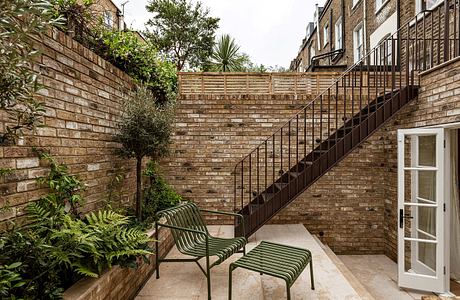
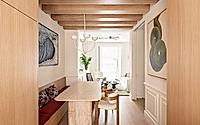
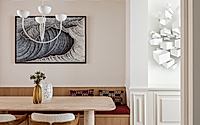
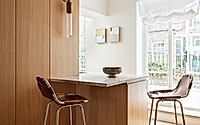
Notting Hill Flat places a Grade II listed townhouse in London, United Kingdom, back into daily circulation with a clear, contemporary hand by WER Studio. The house shifts to an open, light-forward upper level and a calmer bedroom level below, preserving the building’s character while updating its workings. Across the plan, crafted cabinetry, refined finishes, and measured interventions turn a historic shell into a family home.
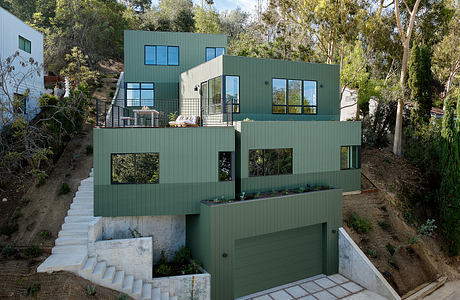
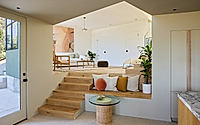
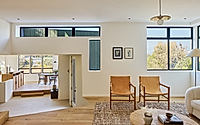
Unstack House is a new house by FreelandBuck in Los Angeles, California, United States, set on a steep hillside in the city’s northeast. The residence arranges a loose stack of rotated volumes to pull landscape between rooms and frame long views toward the mountains. Public rooms flow through overlaps, while private areas anchor the sequence at both ends.
Small homes can be cozy, efficient, and charming — but they can also feel cramped if they’re not designed thoughtfully. As we move into 2025, homeowners are looking for creative remodeling solutions that maximize square footage without sacrificing style or comfort.
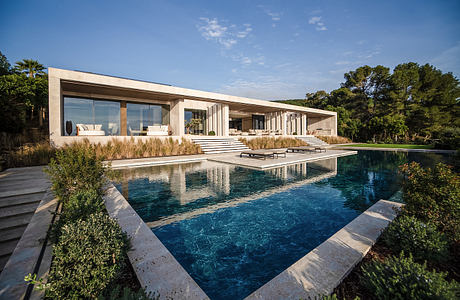
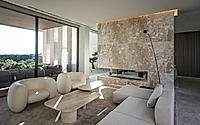
Villa Tai, designed by ARK Architects in 2024, rises from the hills of Sotogrande, Spain. This luxurious residence combines contemporary architecture with expansive use of stone and wood, maximizing Mediterranean views and the surrounding landscape. Floor-to-ceiling glass, open-plan living, and seamless indoor-outdoor connections define the home’s design ethos, bringing nature directly into each refined space. The result is a serene and stylish retreat tailored for modern living.