Aschmüllerhof by Stefan Gamper Architecture
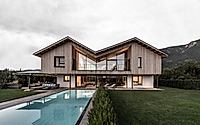
Aschmüllerhof sits in Laives, Italy, a house by Stefan Gamper Architecture that quietly threads contemporary life into the Bozen lowlands. The estate pairs a two-story residence with a working utility building, set within orchards and stitched by a pergola that frames a generous courtyard. Open rooms reach toward terraces and a private garden with a pool, while the build leans on masonry below and timber above to meet KlimaHaus A performance.


Soft morning light threads through the pergola and across the courtyard. From the orchards, the house reads as slender volumes whose gables cut a calm line against the sky.
This is a house in Laives by Stefan Gamper Architecture, paired with a working utility building and organized around outdoor rooms. The throughline sits in how it’s made: a grounded masonry base, a warm timber top, and sun control layered into terraces and louvers.
Masonry Base, Timber Top
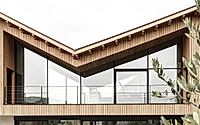
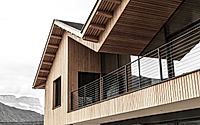
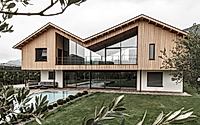
The ground floor is solid masonry with full thermal insulation and coarse plaster that takes light with a matte, tactile grain. Above it, a lighter timber structure with wooden cladding brings warmth and a direct material echo of the rural setting, giving the two levels a clear hierarchy in both weight and feel.
Roofs Set The Tone
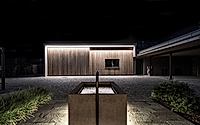
Intersecting gable roofs break down the residence’s mass and lend a nimble profile across two stories. Next to it, the utility building keeps a flat roof and low stance, a quiet neighbor for machinery and beekeeping that lets the house retain the composed silhouette that marks the courtyard edge.
Courtyard and Pergola
A pergola links living and working while framing the central court as a daily threshold. It organizes movement between rooms and out to terraces, turning the open ground plane into a sequence of shaded paths and outdoor rooms that fold the orchards into everyday routines.
Shade, Light, Control
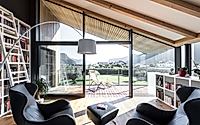
Cantilevered terraces cast dependable shade and set up deep edges for sitting, dining, and easy circulation. Matte-finished louvered blinds regulate glare and heat, so interiors hold steady light through long days, and the south side opens onto a private garden where a swimming pool stretches along greenery and distant views.
Rooms In Flow
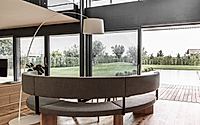
Kitchen, dining, and living connect without interruption, then step outside to broad terraces that extend use well beyond the envelope. A central stair marks the turn from day rooms to the upper level’s bedrooms and bathrooms, preserving privacy while keeping the house’s easy continuity intact.
Built to KlimaHaus A, the assembly brings energy efficiency and resource care into the fabric rather than as afterthoughts. Local trees and shrubs finish the ground, bridging thresholds so the orchard breeze and shade read as part of the architecture.
Late light grazes the plaster and timber, the courtyard cooling under the pergola’s grid. The house settles into its routine—rooms open, blinds tuned, and the orchard edge quietly close.
Photography courtesy of Stefan Gamper Architecture
Visit Stefan Gamper Architecture