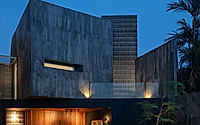
10º House by STUDIÉ
10º House stands in South Tangerang, Indonesia, with its street face tilted ten degrees to the east and its form cut from textured concrete. Designed by STUDIÉ, the house treats climate, shadow, and material as equal partners in daily life. Rooms gather around courtyards and tall openings that modulate light and privacy, while timber and stone temper the concrete’s weight with warmth.
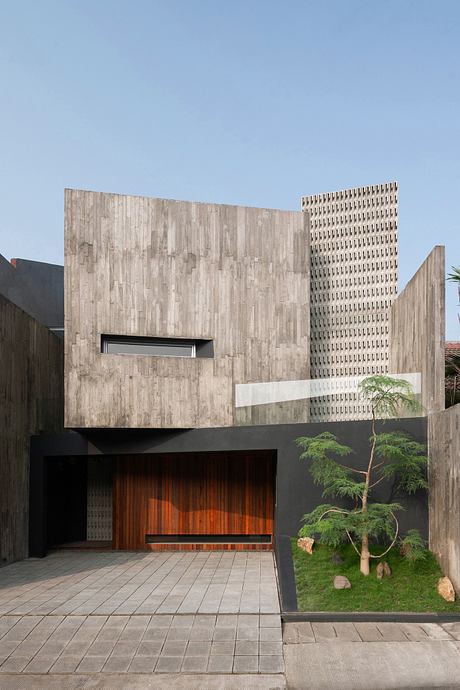
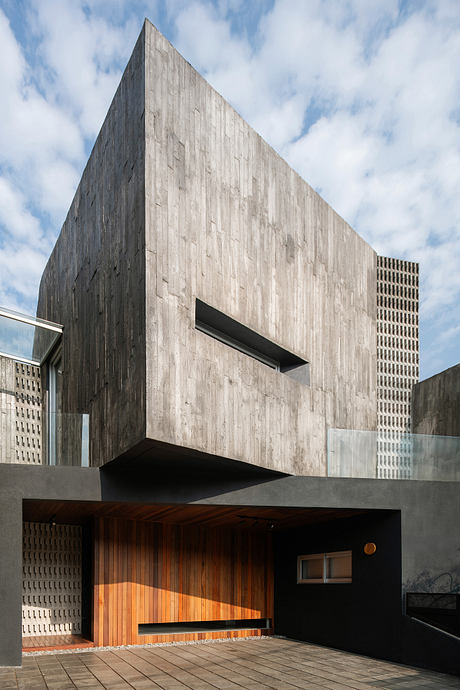
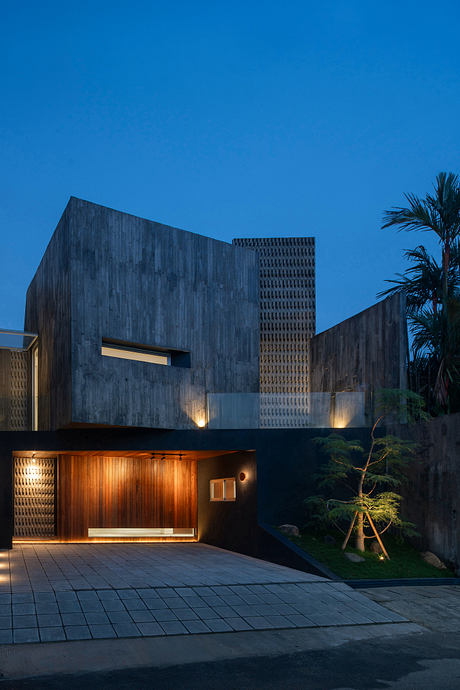
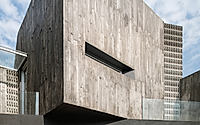
Morning light skims across the board-formed concrete, catching every grain left by the timber molds. A sharp 10-degree tilt in the street facade turns the house toward the eastern sun and away from direct glare.
This is a house in South Tangerang by STUDIÉ, composed as a robust tropical dwelling and built around a clear material thesis. Concrete, timber, and stone establish the architecture’s rhythm, while carefully cut openings and courtyards calibrate shade, airflow, and privacy for the humid climate.
Tilt the Facade
A 10-degree shift sets the project’s tone. By turning the facade, the elevation gathers softer morning light and sheds harsh exposure, which helps the interior stay cool through the day. Deep recesses and narrow apertures puncture the mass, their edges casting thick shadows that stretch and contract as the sun arcs overhead. Street views are edited, yet rooms still read the weather.
Cast, Grain, Shadow
Board-formed concrete drives the composition: each panel holds the imprint of its wooden formwork, a tactile record of making. The monolithic volumes stack, interlock, and occasionally cantilever, so the heavy envelope reads light at the edges where shade lifts it from the ground. Vertical timber cladding warms the entry sequence and softens the concrete’s austerity—material contrast becomes the house’s pulse. A pared garden with a single tree marks the threshold.
Courtyards Draw Air
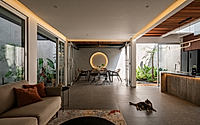
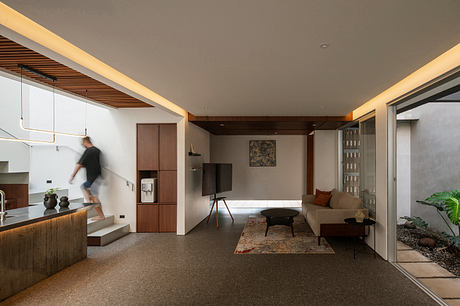
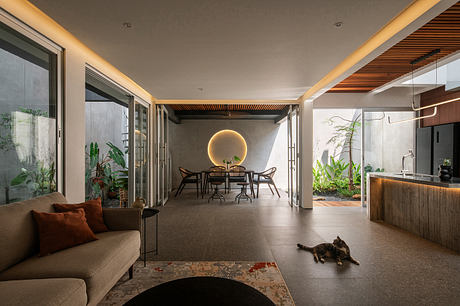
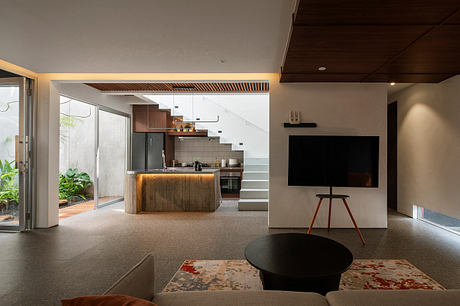
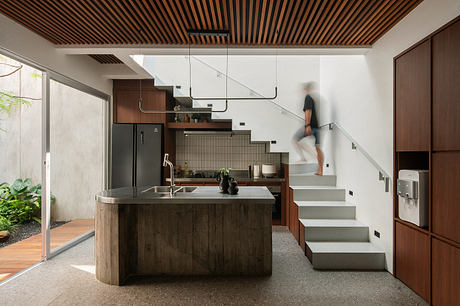
Inside, rooms ring planted courts that invite breeze and break heat. Sliding glass partitions keep sightlines long while letting the plan open or close as needed for daily life. Skylights and full-height cuts bring top light and side light together, so brightness shifts across polished concrete floors through the afternoon. Green pockets work as thermal buffers and small places to pause.
Timber Overhead, Stone Underfoot
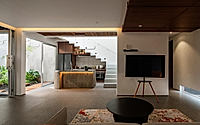
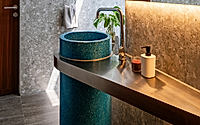
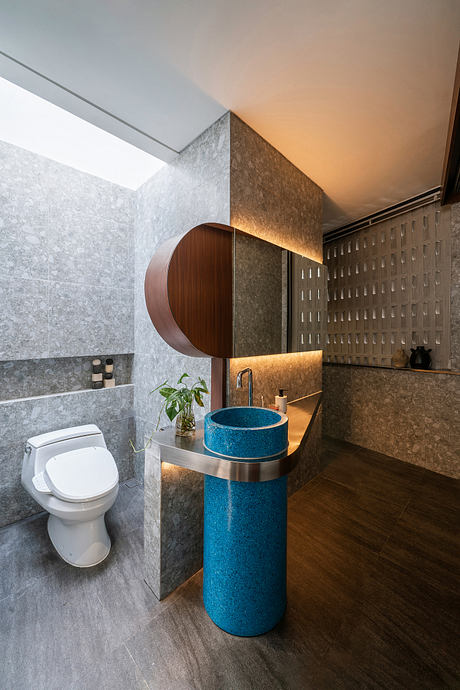
Material continuity steadies the interior. Polished concrete floors meet white walls and timber ceilings, their linear slats hiding lighting that washes surfaces rather than glaring down. The kitchen island, cast in exposed concrete with embedded illumination, acts as a quiet anchor for cooking and conversation. In the bathroom, cool gray stone plays against a turquoise cylinder basin, a single color note that sharpens the restrained palette.
Light, Privacy, Poise
Open living, dining, and kitchen areas read as one room, yet thresholds feel precise. Sliding planes, deep reveals, and high vents keep air moving and views modulated without fuss. Indirect lighting pulls depth from textures at night, so the concrete’s grain and timber’s warmth remain legible after sunset. Each element does its job, nothing more.
By dusk the facade holds shadow while the courtyards glow. The materials stay honest, the rooms stay cool, and the house finds an easy rhythm with the weather. Craft and climate meet in the grain of the concrete and the quiet of the garden.
Photography courtesy of STUDIÉ
Visit STUDIÉ