BAAN O+O by Junsekino Architecture & Design
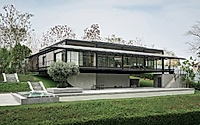
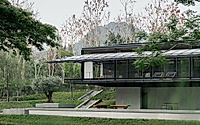
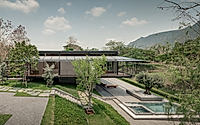
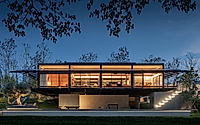
BAAN O+O is a small vacation house set in Nakhon Ratchasima’s Khao Yai, Thailand, by Junsekino Architecture & Design. The compact retreat lifts from the slope on a steel frame, using a courtyard plan and generous glazing to draw air and views through daily life. It holds to the hillside without heavy earthwork and turns the ground level into a breezy undercroft for gathering.


Wind threads the hillside and slides beneath the floor. Above, a slim steel frame casts a measured shadow while the rooms project toward the treeline.
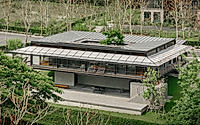
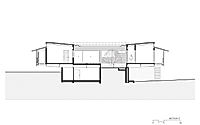
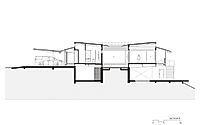
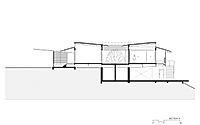
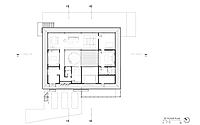
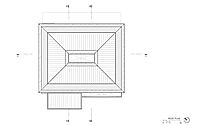
This vacation house in Khao Yai, Thailand, by Junsekino Architecture & Design uses a light structural strategy to touch the slope gently. The real work is structural clarity: a rectangular box lifted on steel, cantilevered rooms, and a courtyard that keeps the plan porous to air and view.
Lift the House
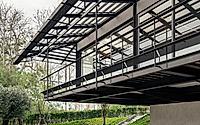
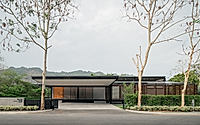
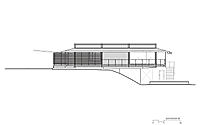
The building rises clear of the ground, avoiding landfilling and holding to the site’s natural grade. A compact foundation supports the frame, reducing disturbance while giving the composition its calm stance. From the approach, the volume reads as a measured line above vegetation, with a cool underside and crisp horizon.
Cantilever the Rooms
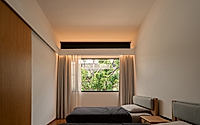
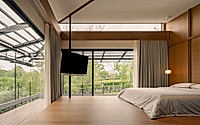
Primary rooms extend from a small footprint, set on steel that reads slender yet carries long reaches over the slope. The cantilevers drive the outlook, pushing living and sleeping areas toward open views and away from heavy ground work. Glass on two sides of each room keeps corners bright and pulls the eye outward.
Courtyard at Core
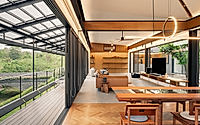
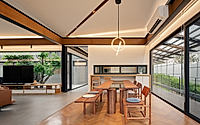
A void opens at the center of the rectangular plan: it draws light down, sets cross-breezes in motion, and anchors circulation as a continuous loop. Rooms address both the courtyard and the landscape, so air moves across short paths and heat slips away during the day. The result is direct and efficient, with walking lines that stay compact and legible.
Open Undercroft
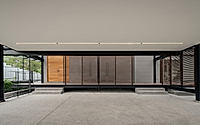
The ground level functions as a modern tai thun—an open underfloor zone that works as an outdoor living room and a thermal buffer. Shade, airflow, and a firm floor make it useful for gatherings, rest, and play (rain passes and the house keeps breathing). This airy band also reduces heat gain to the rooms above.
Glass and Frame
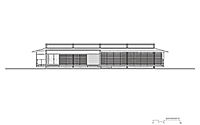
Large sliding panes face the hillside while the steel frame defines edges with lean lines. Transparency is employed for view and ventilation, not spectacle, and the structure keeps the load path legible—posts, beams, projection. Materials remain light in appearance, letting the geometry and the site carry the composition.
Late light skims the soffit and picks out the steel’s clean joints. Air moves freely under and through, tempering the rooms without heavy systems. The house meets the slope with care, and the frame carries it forward into the trees.
Photography courtesy of Junsekino Architecture & Design
Visit Junsekino Architecture & Design