Falcon Ledge Residence by Alterstudio Architecture
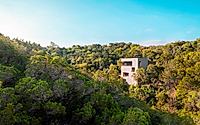
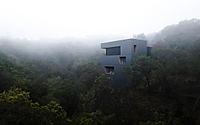
Falcon Ledge Residence sits at the edge of a neglected ravine in Austin, United States, by Alterstudio Architecture. The compact house rises above the tree canopy while staying closely tied to the ground, turning a steeply falling lot once dismissed as unbuildable into a quiet perch. In this vertical home, daily life unfolds against layered views of foliage, suburban roofs, and sky.


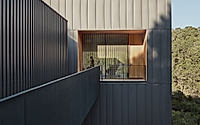
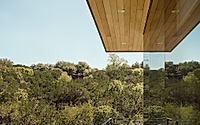
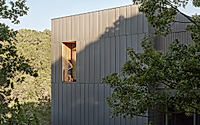
Light cuts across the upper level, catching on vertical steel panels before slipping through deep recesses into the rooms. Below, the ground drops away, trading front-yard lawn for layered ravine foliage and distant roofs.
This is a compact house on a precipitous suburban lot, devised by Alterstudio Architecture as a tall residence that reads almost like a tower. In Austin’s Falcon Ledge Residence, everyday life unfolds in an inverted arrangement, with living areas high in the canopy and private rooms stacked below, all organized around an efficient plan tuned to its difficult site. The project treats construction sequence and circulation as its main drivers, turning a once-dismissed ravine edge into a place for family routines.
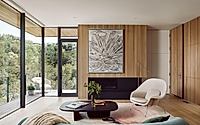
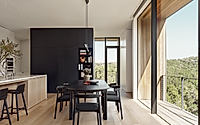
A young couple, planning for children, seeks daily contact with the outdoors without relying on curtains or high fences. The house answers with an upside-down organization that lifts living and dining toward the treetops, where privacy arrives from elevation rather than heavy screening. Below, bedrooms rest closer to the ravine floor, wrapped by vegetation and shaded by the structure above, keeping quieter rooms in closer conversation with the terrain.
Staging The Impossible Lot
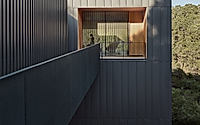
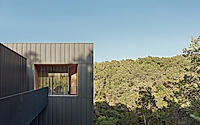
The project starts not with a room but with a platform. Because the land falls sharply from the curb, construction begins by casting a deck at street level, creating the only workable surface from which to build. That temporary work zone, aligned with the asphalt edge, later transforms into the garage and a bridge that leads directly into the tall house, turning an initial logistical fix into the permanent front-door experience.
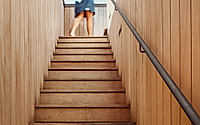
As the structure rises from this ledge, it reads as a slender volume rather than a sprawling footprint. The sequence from car to entry to stair emphasizes the dramatic drop beyond the street, guiding residents past the secure platform and into the vertical stack that hangs above the ravine. What began as a constraint becomes the narrative of arrival.
Living Upstairs, Sleeping Below
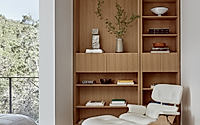
Inside, the plan reverses suburban convention. Main living areas occupy the top floor, where elevation secures privacy and extends views over the nearby rooftops into dense foliage. Deeply carved recesses puncture the otherwise taut exterior envelope, framing long vistas while keeping glazing set back from direct sun and prying eyes.
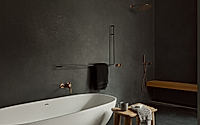
Bedrooms and more private rooms move to the lower levels, pressed closer to the ravine slope. Here, plant life and the overhanging structure temper daylight and sound, while the stacked arrangement shortens vertical runs of structure and services. The organization tightens circulation, concentrates shared life where light and air are richest, and quietly reserves the shaded levels for rest.
Envelope, Light, And Air
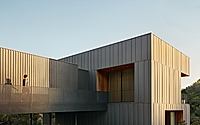
Around this vertical sequence, a controlled shell keeps the form disciplined. Vertical steel panels wrap the exterior, chosen to weather over time while resisting damage from sun and rain. Deep cuts in this skin create protected openings where windows sit in shadow, translating into cooler interiors and carefully composed views.
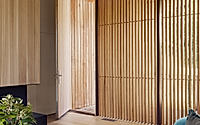
Daylight enters from multiple directions rather than a single façade, so rooms shift in character from morning to evening. Operable windows encourage cross-ventilation, letting breezes track through the compact volume and reducing reliance on mechanical cooling, while filtered indoor air systems backstop comfort when the climate turns harsh.
Standard Bones, Precise Moves
Beneath the distinctive profile, the construction remains straightforward. Traditional lumber framing and standard wood trusses form the structure, anchoring the project within conventional building trades and costs. That reliance on familiar methods keeps budgets in check, crucial for clients balancing ambition with financial reality and contractors unaccustomed to highly specialized assemblies.
Where the house departs from the ordinary is in selective adjustments: tighter envelope detailing, exacting recesses for light and sightlines, and a carefully sequenced build that respects the fragile ravine edge. Normative systems carry most of the work, but small, targeted deviations lend the house its confident character while holding construction near the area’s median cost.
From the street, the house reads as a disciplined vertical form, calmly addressing a row of conventional neighbors. Step inside, and the sequence shifts down and up, drawing the eye past tree trunks to branches and sky beyond. Daily routines play out amid those layered views, proof that an unpromising lot and standard construction can support an unexpectedly rich way of living.
Photography by Casey Dunn
Visit Alterstudio Architecture