Casa do Engenho by Jorge Prata
Casa do Engenho sits within an agricultural estate in Vila Nova de Gaia, Portugal, where architect Jorge Prata reworks an ancillary building into the family’s primary house. Once a rigid, compartmentalized volume used mainly for gatherings, the former pool house is now recast as a fluid, light-steered home with contemporary character. Across two levels, everyday life unfolds between preserved stone, new wood, and a renewed connection to the surrounding landscape.
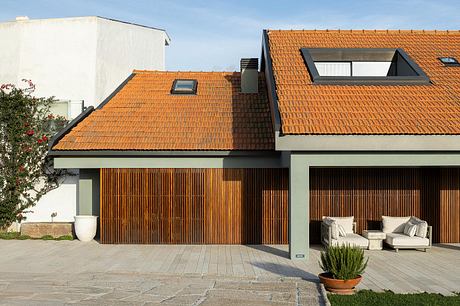
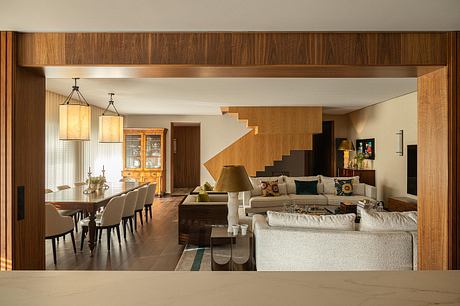
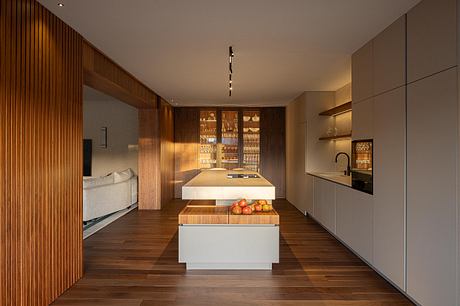
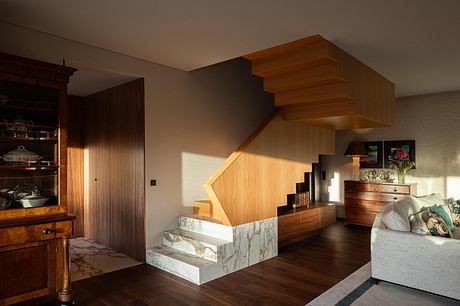
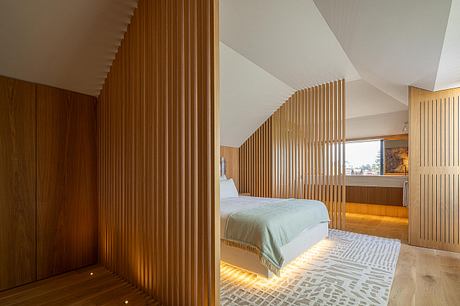
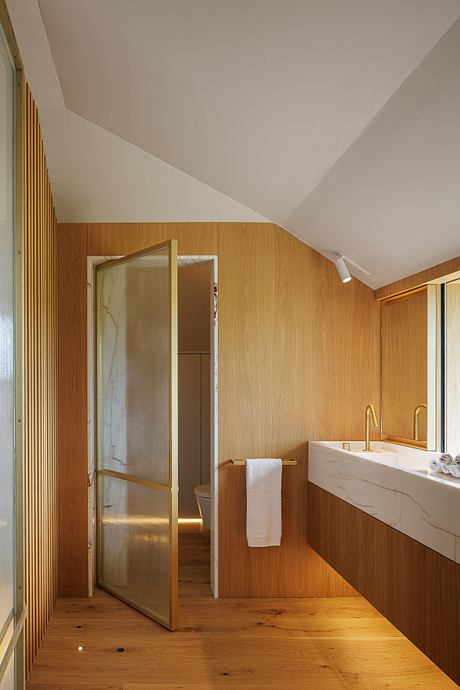
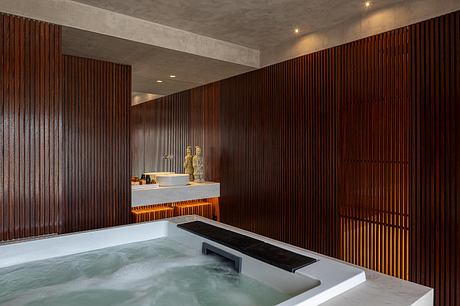
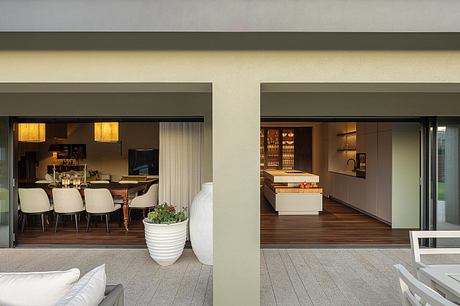
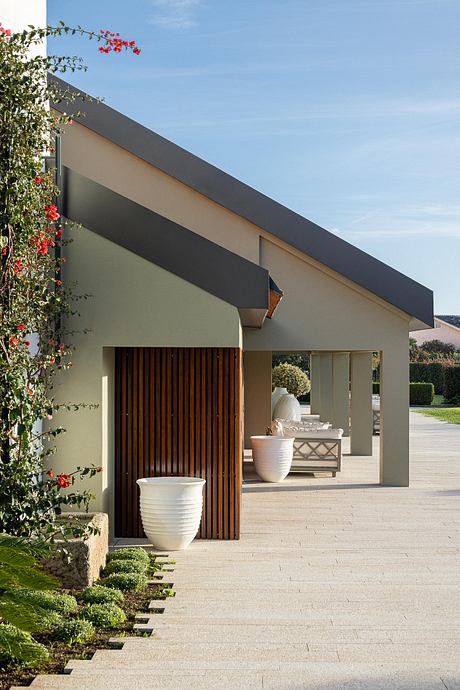
Soft evening light grazes the old estate walls as Casa do Engenho steps forward from the larger ensemble. Inside, the former pool house reads as one continuous, warm volume stitched by wood and filtered daylight.
Once a secondary structure on an 18th-century agricultural property, the house now serves as the main residence for the family, reshaped by architect Jorge Prata. The project keeps the historic shell and structural integrity while reconfiguring the interior for contemporary living, concentrating on how rooms connect, how light moves, and how daily use can expand beyond occasional celebrations.
Clarifying The Shell
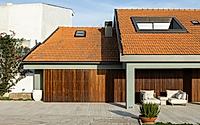
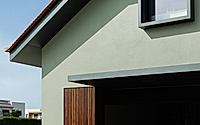
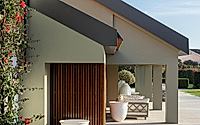
Outside, the intervention reads as a careful edit rather than a new object. The façade’s rhythm is regularized, its metric clarified so openings align with a more legible order and reinforce the original structure. New shutters, tuned to the westward sun, let the family modulate glare, privacy, and airflow with simple adjustments, turning the envelope into an everyday tool. The building remains formally tied to the main residence yet asserts its own identity through a more contemporary, contrasting architectural language.
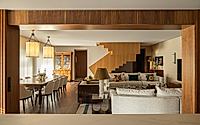
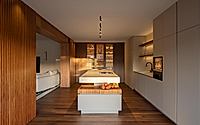
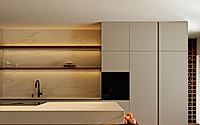
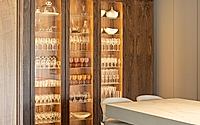
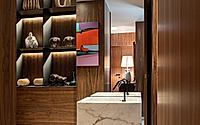
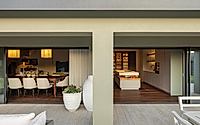
Inside, the transformation is complete. Formerly rigid rooms give way to a continuous ground-floor volume where living room, dining area, and kitchen share one extended floor. Wood brings warmth and visual continuity, carrying the eye along the length of the plan while keeping the scale domestic. Sliding panels between kitchen and living areas can be drawn to create privacy or stacked away to restore full openness, so the house can swing between quiet daily rhythms and large family gatherings.
Reworking Daily Life
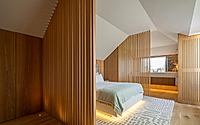
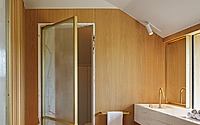
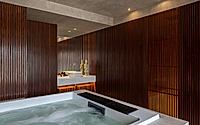
The plan is reoriented around everyday use rather than occasional events. On the ground level, the social rooms align with practical support areas: laundry, pantry, guest bathroom, and garage sit close at hand yet outside of sightlines. The main suite completes this floor, functioning almost as a private retreat with walk-in closet, bathroom, and spa area that opens directly to the exterior. This direct connection extends the routines of bathing and resting into the open air, stitching interior comfort to the agricultural landscape.
Above, the upper floor hosts two additional suites and a generous lounge. Each room opens to balconies, extending views outward and drawing in light across the day. Skylights set into the pitched roof punctuate the ceiling, pulling daylight deep into the volume without compromising wall surface for storage or art. The roof itself reaches beyond the building’s perimeter to create a covered outdoor zone, expanding use in shoulder seasons while providing welcome solar protection during hotter months.
Stair As Memory
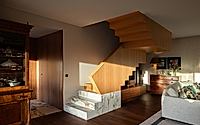
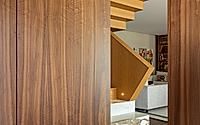
At the heart of the house, the original staircase becomes a precise record of the building’s evolution. Stone steps at the base extend the entrance hall flooring, underlining the structure’s agricultural past with a tangible, durable surface underfoot. Above, new wooden treads take over, lighter in appearance and set against the stone to mark the shift toward contemporary living. Together, they draw a clear line between social and private realms while tracing the family’s route through the day.
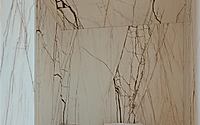
Throughout, the material palette leans on natural elements that speak to what stood here before, anchoring new rooms within the long history of the estate. Interior volumes stay open and fluid, granting visual permeability from one function to the next and encouraging movement toward balconies, terraces, and the covered exterior extension. After the intervention, the former ancillary building no longer plays a supporting role; it becomes the primary setting for family life, carrying existing memories while making deliberate room for those still to come.
Photography courtesy of Jorge Prata
Visit Jorge Prata