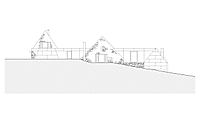
Mansion Lom: Karst Farm Becomes a Quiet Retreat for Eight Children
Mansion Lom gathers a far-flung family in a renewed house on the Banj plateau above Ljubljana, Slovenia, where OFIS architects work with rugged karst tradition. The studio keeps two existing stone buildings at the core of the project, binding them with a restrained new wing and a warm, wood-lined interior. Eight children and parents find a shared base here, in a landscape once almost forgotten yet rich in durable forms.
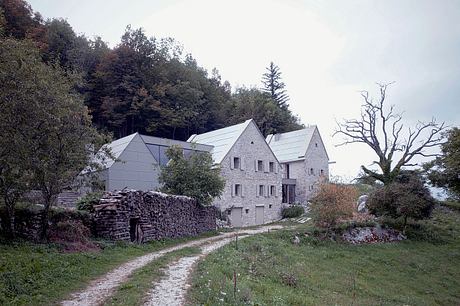
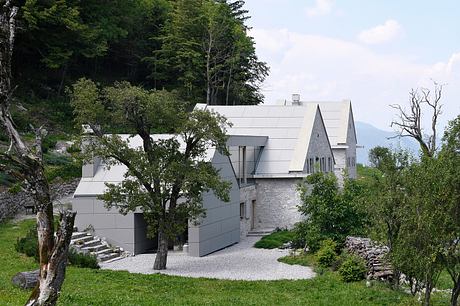
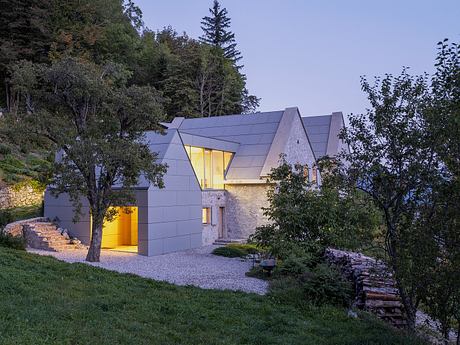
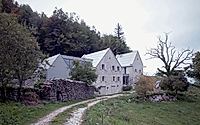
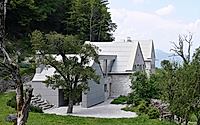
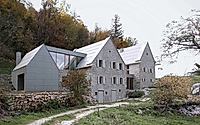
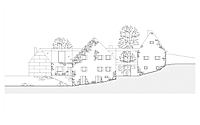
Wind cuts across the dry karst pastures and presses against the slate roofs as the clustered stone volumes come into view. From the narrow road above the valleys, Mansion Lom reads as a compact farmstead, its new surfaces tuned to the tone of the old walls.
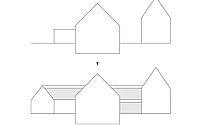
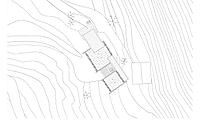
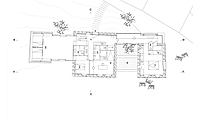
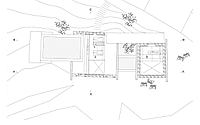
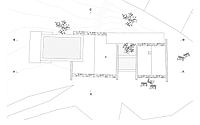
This is a house on the Banj plateau for a Russian–American couple and their eight children, positioned between the Soča, Idrijca and Čepovan valleys in western Slovenia. OFIS architects treat the existing homestead as both constraint and resource, using the stone structures and rural layout as the starting point for an enlarged family home. Adaptive reuse drives the project, from the reinforced skeleton within the masonry to the careful insertion of a new entrance wing that respects but doesn’t mimic the vernacular.
Reworking The Stone Homestead
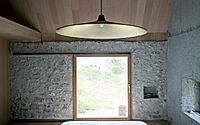
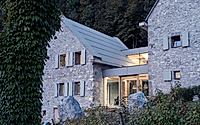
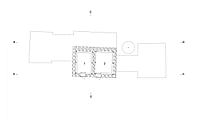
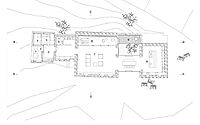
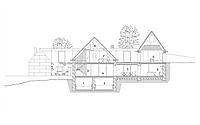
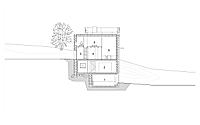
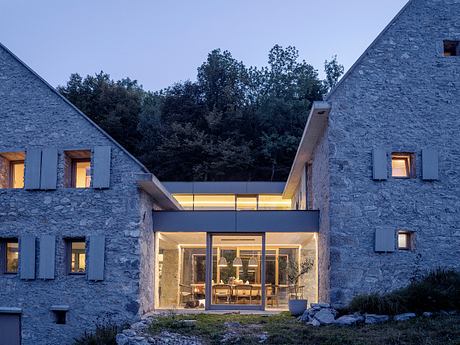
Two original stone houses form the backbone of the composition, their refined masonry walls carrying memories of local building culture. Rather than demolish and rebuild, the architects strengthen the existing envelope with wall injections and reinforced concrete connections, turning the ensemble into a kind of skeletal construction that can withstand new loads. Horizontal concrete slabs span within this frame, tying the old shells together and giving the enlarged house a clear structural rhythm. The intervention keeps the essential massing of the farmstead while equipping it for contemporary family life.
Linking Volumes With A New Wing
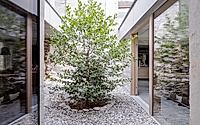
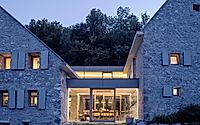
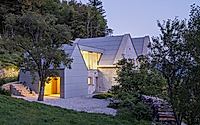
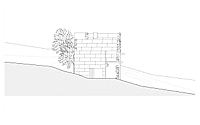
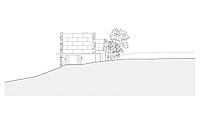
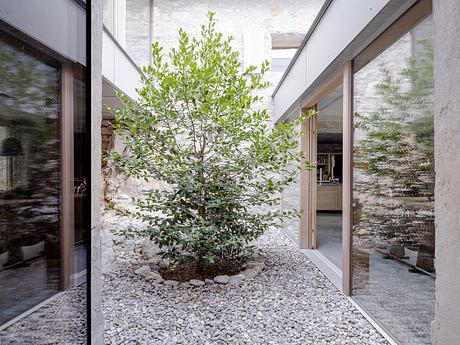
A new entrance wing stitches the two stone houses into a single whole, reading as another rural building on the plateau. Its form and proportions draw on vernacular tradition, yet contemporary materials and a restrained gray facade panel system distinguish it from the older masonry. The muted cladding tone defers visually to the stone, allowing the historic walls to remain dominant from a distance. From the approach, the ensemble feels coherent, with the addition acting as mediator rather than object.
Structure Behind Quiet Surfaces
Behind the calm exterior, the technical upgrade is rigorous. Concrete slabs, new ties and strengthened walls together create a robust skeleton that underpins everyday use for a large household. Static reinforcement may be largely hidden, yet it shapes room proportions and openings, giving the interior a sense of order. The project acknowledges that rural masonry, however enduring, needs contemporary support when asked to hold expanded programs and new spans.
Interior Warmth Against Old Walls
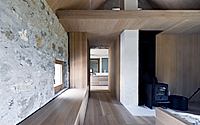
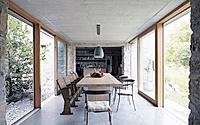
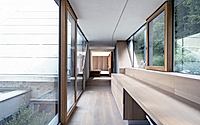
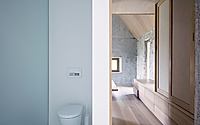
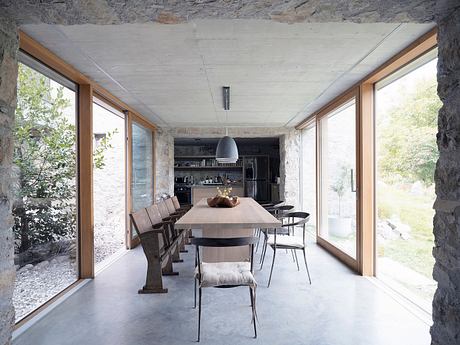
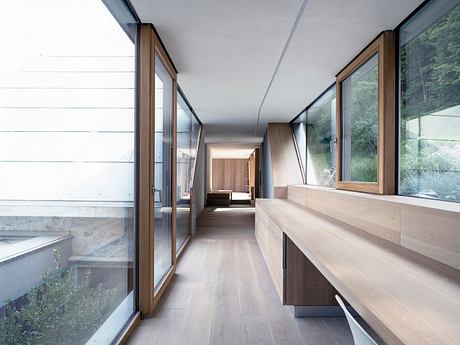
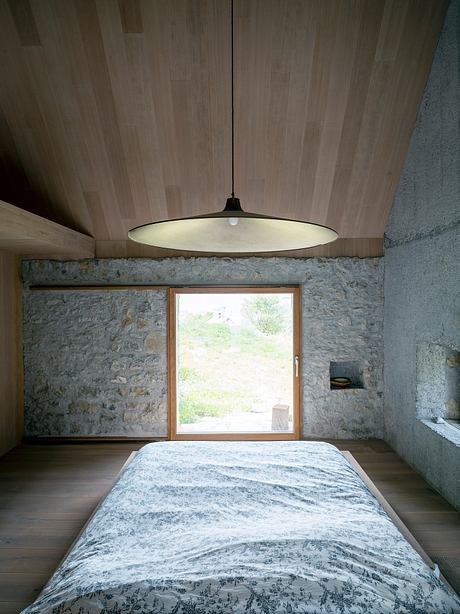
Inside, wood dominates, running across floors, ceilings and built-in elements to set a warmer register against the cool stone. Massive interior elements follow the sturdy character of the original houses, favoring solidity over thin partitions. In some rooms, masonry walls stay exposed; in others, a visible concrete wall steps forward, reminding occupants of the reinforced structure carrying them. The palette remains simple, letting material contrast and daylight do most of the work.
Living On The Remote Plateau
Getting such a project built in this remote location proves as demanding as the technical work. Contractors reluctant to tackle the narrow access road and isolated plateau had to be convinced, and the process unfolded as much as a social negotiation as an architectural task. For the globally dispersed family, that negotiation results in a grounded home, one that reconciles old stone and new concrete without turning the question into a battle. In this karst setting, continuity feels less like an aesthetic choice and more like the only sensible path forward.
Photography by Matevž Granda
Visit OFIS architects