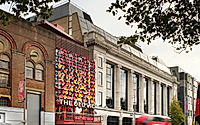
Backstage at The Old Vic by Haworth Tompkins
Backstage at The Old Vic expands the Grade II* listed theatre in London, United Kingdom, with a new charitable wing by Haworth Tompkins. The project folds a café, learning centre, rehearsal rooms and event venues into one extension, giving the institution a daily civic presence beyond performance nights. With community access, sustainability and accessibility embedded from the outset, the building reframes how a historic theatre can work for its neighbours as much as its artists.
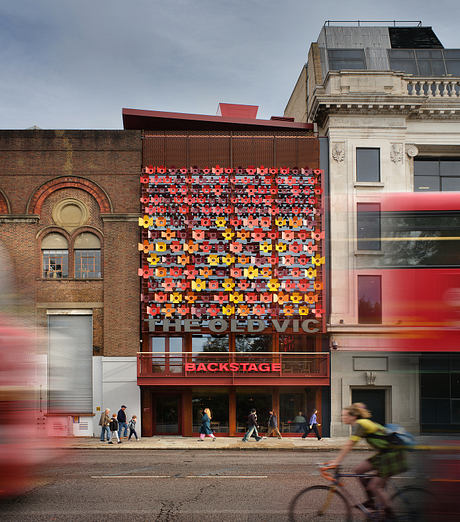
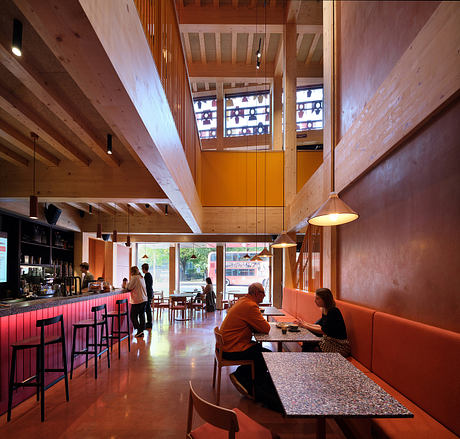
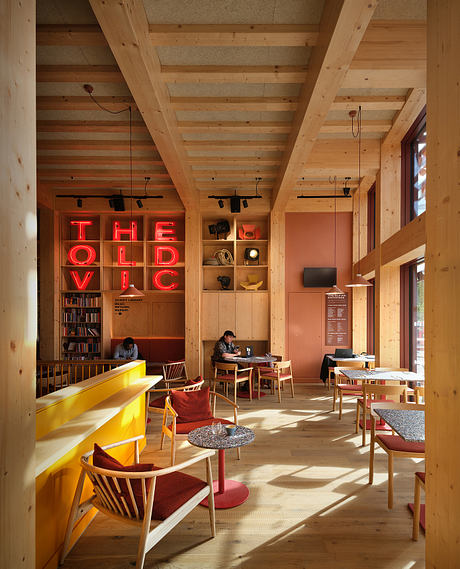
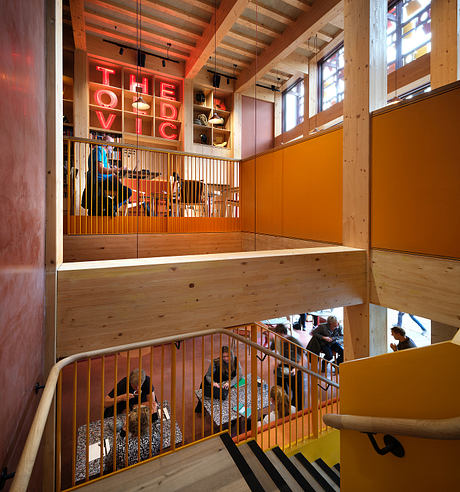
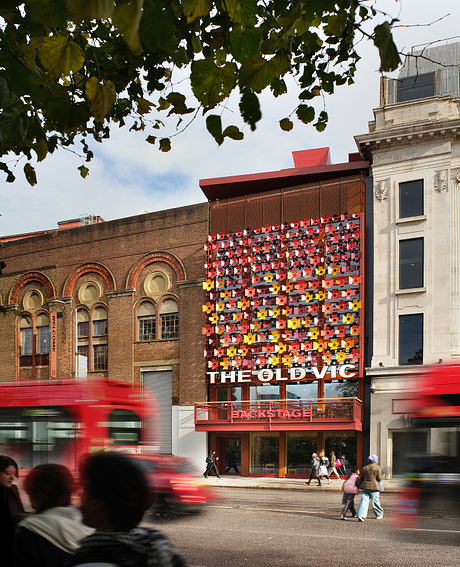
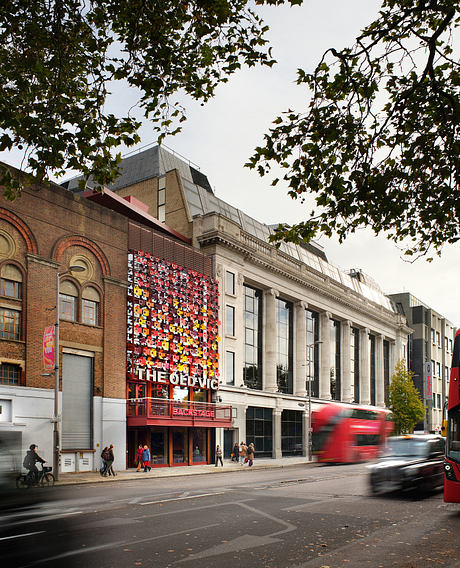
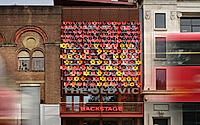
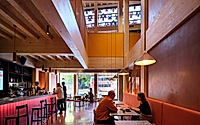
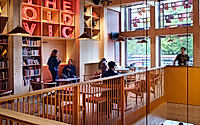
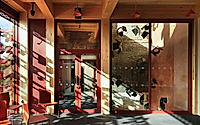
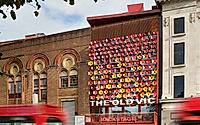
From Waterloo Road, the new corner of the Old Vic now reads as an active front, with a triple-height café and balcony pressing close to the street. Light moves through the tall glazing into the interior bar and script library, carrying a sense of the theatre’s daily life out toward the pavement.
Backstage at The Old Vic is a major extension to one of London’s most storied charity theatres, designed by Haworth Tompkins for a Grade II* listed context. The project concentrates on how rooms work for people: performers, staff, students, local residents and visiting audiences who use the building from morning until late at night. Program, circulation and accessibility drive every move, turning a previously underused edge of the site into a porous, civic-facing wing.
The new building gathers many of the Old Vic’s dispersed functions under one roof, tying together education, outreach, rehearsal and hospitality. It sits on the Waterloo Road side of the theatre, reshaping a neglected corner into a visible address for the organisation’s charitable mission and daily work.
Opening The Theatre Daylight
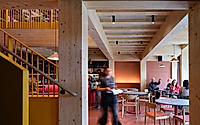
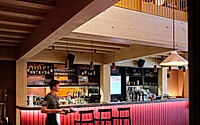
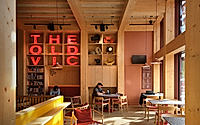
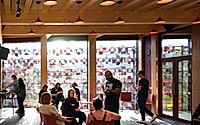
The lower levels act as a public living room, with a triple-height café and bar that stretch across ground and first floors to project activity toward the street. A balcony frames the new entrance, giving passersby a clear view into the bar and script library where residents and creatives read, meet and work between shows. This civic room carries the weight of hospitality for pre- and post-performance gatherings, yet it also runs quietly through the day as a neighborhood meeting point. People can arrive without a ticket, use the play script library and occupy the generous volume as part of their daily routine.
Stacking Learning And Rehearsal
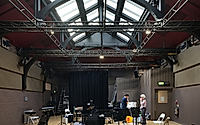
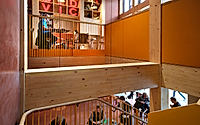
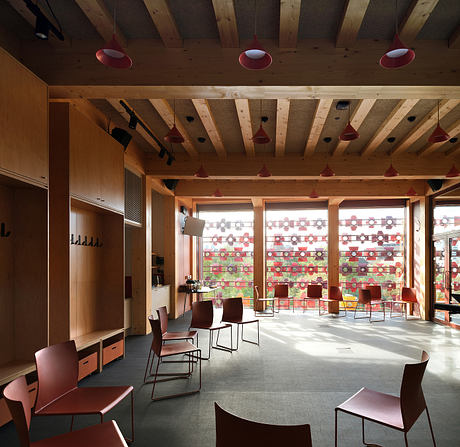
Above the café, Haworth Tompkins organise the programme vertically, stacking teaching, rehearsal and flexible studio rooms to intensify the theatre’s educational work. A new Clore Learning Centre gives the outreach team dedicated rooms for workshops, classes and community projects that previously had to spill into off-site venues. Nearby, the existing rehearsal room converts into a studio that can switch between making work, hosting events or supporting outreach, depending on the day. This compact stack of rooms supports a more diverse artistic output, allowing the Old Vic to expand programming without enlarging its footprint on the city.
Working Rooms Behind The Curtain
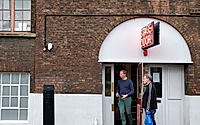
Back-of-house areas gain as much attention as public zones, reflecting the theatre’s commitment to working conditions for performers and staff. A new green room triples the previous provision, giving cast and crew a generous place to rest, eat and prepare between rehearsals and shows. Offices, a private meeting room and an additional writer’s room cluster alongside, so administrative work, creative development and production planning can happen close to the stage. The existing back of house is also remodelled, with a fully accessible stage door, upgraded dressing rooms, staff offices, toilets, showers and cycle provision that support contemporary working patterns.
Rooftop Rooms And Urban Garden
At the top, a flexible event room and dedicated roof terrace open up long views across London, turning the building into a place for community gatherings. Meetings, workshops and social events can spill onto the planted terrace, where greenery contributes to urban biodiversity above the busy road. This upper level completes the vertical sequence from café to classroom to rehearsal and, finally, to outward-looking civic room. In daily use, it gives the charity another way to bring people together around the theatre’s work.
Reusing Fabric, Lowering Carbon
Program and environmental performance are tied closely, with a fabric-first approach that reuses structure wherever possible and reduces operational demand. Existing walls stay in place where they can, and the retained Grade II* brick wall threads visibly between historic theatre and new extension. A European spruce glulam frame with solid timber floors forms the primary structure, engineered for disassembly and future reuse. Natural ventilation uses stack effect through solar chimneys to manage heat and airflow, reducing dependence on mechanical systems and cutting energy loads for everyday operation.
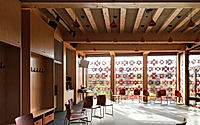
Across the façade, reclaimed materials add environmental value and cultural memory in equal parts. Locally sourced theatre barn door lights, salvaged from redundant London theatre stock, hang as a colourful brise soleil in front of fixed curtain wall glazing. Inside, recycled theatre programmes are pressed into table tops and used again in cladding, turning archival material into working surfaces used daily by visitors. Efficient lighting, an air source heat pump and careful control of water use round out the approach, aligning environmental responsibility with heavy, year-round occupation.
Accessibility is treated as fundamental infrastructure rather than an add-on, reshaping how people move through the building each day. Step-free routes run throughout, with accessible dressing rooms, showers and wide circulation making backstage areas usable for wheelchair users and those with limited mobility. A dedicated Space for Change facility sets a new standard for dignity and independence in theatre environments, supporting visitors whose needs were not previously met. For the first time in the Old Vic’s two-hundred-year history, performers, staff and visitors with different mobility needs can move freely and equally across the complex.
As a whole, Backstage at The Old Vic reads as the working face of a historic institution, where public life, learning, rehearsal and support rooms interlock across the day. The extension strengthens ties between theatre and neighbourhood, giving the charity new tools to serve its community without distancing itself from its historic shell. From the street café to the roof terrace, daily routines anchor the architecture in lived use, carrying the Old Vic’s founding principle into its next century.
Photography by Philip Vile
Visit Haworth Tompkins