Villa Kronbuhl by Oppenheim Architecture
Villa Kronbuhl stands on the shore of Lake Constance in Germany, where Oppenheim Architecture shapes a house around far-reaching views and daily rituals. The 3,700-square-foot home pivots level by level to catch mountains, forest, and water, giving an international family a flexible retreat that shifts between quiet living and generous gathering. Inside and out, each turn of the plan pulls life back toward the landscape.
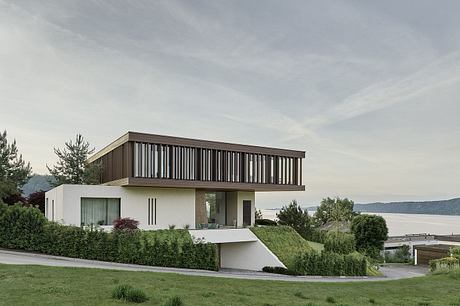

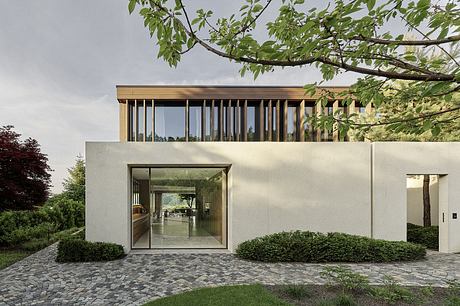
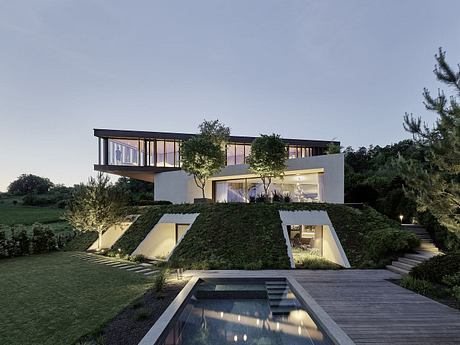
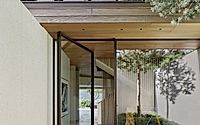
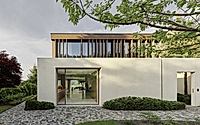
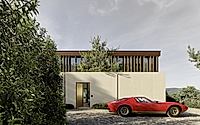
Approach from the road and the house steps forward in angled layers, concrete anchoring the slope while timber seems to float above. Light glances off broad panes of glass, carrying reflections of lake, mountains, and moving clouds deep into the interior.
This is a house built around sequence. Villa Kronbuhl in Germany is a 3,700-square-foot family home by Oppenheim Architecture that turns on its axis at every level to catch a different slice of Lake Constance and the alpine horizon. Each turn in the plan aligns daily life with a distinct outlook, tying circulation, gathering rooms, and quiet corners to the surrounding water, fields, and forest.
Pivoting Volumes Organize Life
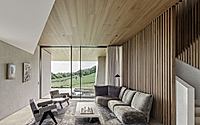
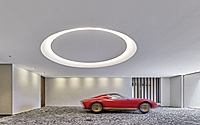
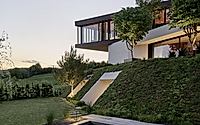
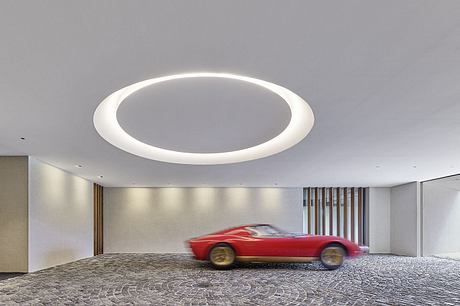
The house reads as a stack of rotated forms, each one adjusted to a particular orientation and use. A hammered concrete base hunkers into the terrain, housing the four-car garage and service rooms while stabilizing the composition above. On this solid plinth, the main living level rotates to open wide toward the lake, aligning the primary gathering rooms with the broadest panorama. Above, a lighter timber-clad volume turns again, sharpening the angle of view and establishing a more intimate perch for private routines.
Circulation traces the edges of these volumes, so movement through the house tracks changing perspectives rather than simply connecting rooms. Short runs of stair land at small landings where a window cuts to a specific vista, making each transition feel like a pause on a lookout point. Daily routes between kitchen, living room, work zones, and bedrooms become a gentle zigzag through framed fragments of landscape.
Rooms Oriented To Views
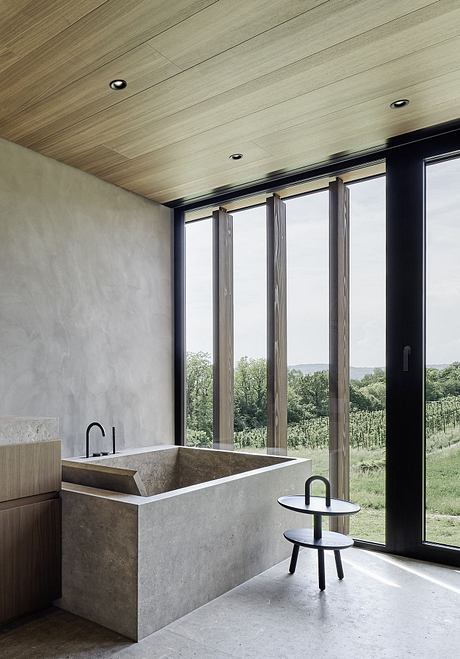
Every important room is paired with its own outlook. The main living area stretches toward Lake Constance and the distant Swiss–Austrian mountains, with expansive window walls holding the horizon at eye level. A yoga room faces the forest and morning light, trading the broad sweep of water for the close rhythm of trunks and branches. Even smaller niches, from workstations to reading corners, lean into a particular view so that time spent indoors still tracks the conditions outside.
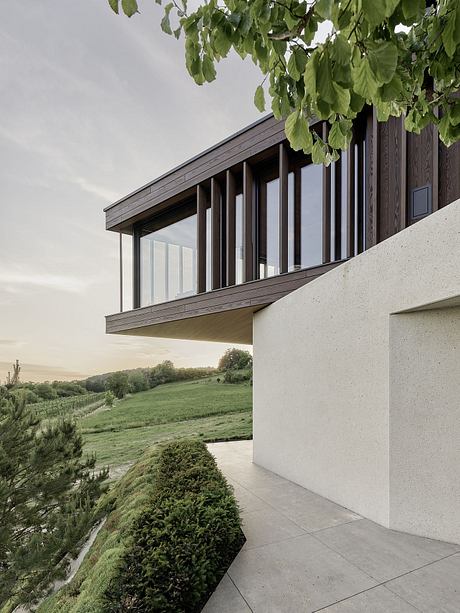
The master bedroom cantilevers toward the lake, pushed out from the timber-clad top level to command a long, cinematic perspective. That projection does double duty, shading an outdoor terrace below and tightening the relationship between interior ceiling, exterior soffit, and the surface of the water. Orientation is never incidental; it is the primary tool that organizes how the family wakes, works, relaxes, and gathers.
Indoor Rooms And Terraces
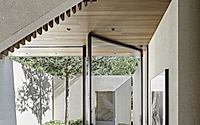
Where the rotated volumes slide past one another, residual pockets emerge and become terraces, gardens, and outdoor rooms. Directly below the cantilevered bedroom, the shaded terrace extends the main living level, creating a place to eat, talk, or work while still under the protective reach of the upper form. To the east, the kitchen opens into a dedicated garden conceived with Swiss landscape architects Enea, tying meal preparation to herbs, produce, and changing seasons.
These outdoor moments mirror the interior in scale and orientation, so that life moves easily between the two realms. A resident can step from the yoga room to the adjacent exterior edge, from the kitchen to the garden, or from the living room to the terrace in just a few strides. The result is a sequence of thresholds tuned to sun, wind, and view rather than a hard divide between house and surroundings.
Geometry As Daily Framework
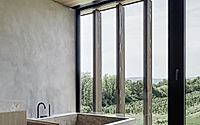
Strong geometries shape the character of each room while leaving them calm enough for everyday use. The contrast between the weight of the hammered concrete and the lightness of the timber-clad upper level sets up a clear visual hierarchy, with the grounded base giving way to more delicate forms above. Large panes of glass keep edges thin, so the structural drama stays in the silhouette while interiors remain quiet and measured.
Those sculpted moves generate a series of incidental corners, overhangs, and cuts that residents gradually claim for their own routines. An angled wall becomes a place to lean a bicycle after a ride, a stepped soffit marks where children gather with friends, and a slice of glazing between volumes frames the evening sky. Geometry, in this house, is less about display than about how mornings, workdays, and gatherings line up with the world outside.
By evening, the rotated forms catch the last light as it slides across the lake and fields. From inside, each room holds its chosen view while the rest of the landscape recedes to shadow. The house stays quiet, and its careful turns keep the family in steady contact with water, mountains, and forest just beyond the glass.
Photography by Zooey Braun
Visit Oppenheim Architecture