Casa Mirantre by Gilda Meirelles
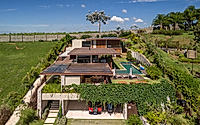
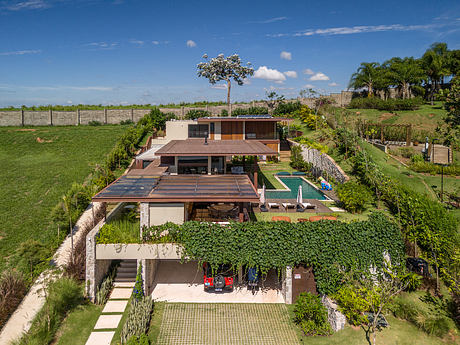
Casa Mirantre rises within a gated community in São Paulo, Brazil, where a 12-meter drop shapes every move. Designed by Gilda Meirelles for a couple and their children, the house climbs and descends with the terrain, threading social rooms, terraces, and gardens into a calm sequence that edges toward the nearby lookout and surrounding greenery.
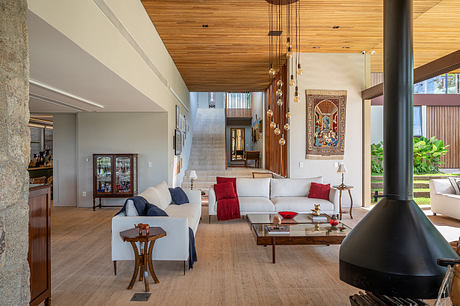
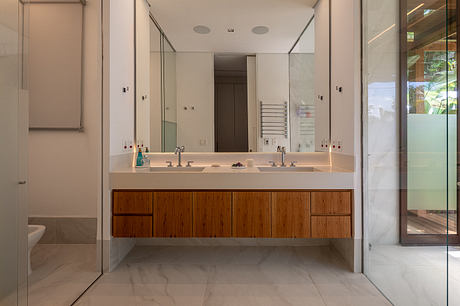
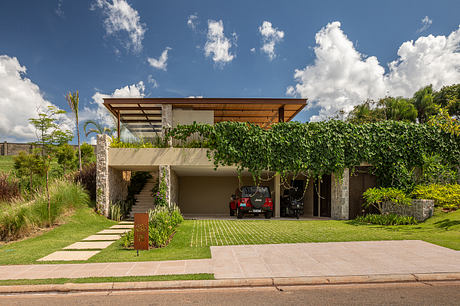
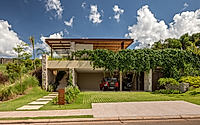
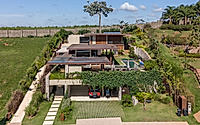
From the street, Casa Mirantre sits above. A garage, entry hall, and dense planting set the scene for a descent into a double-height heart where light pours down over connected living, dining, and garden rooms.
This house in São Paulo, Brazil, by Gilda Meirelles uses a 12-meter level difference as its main organizing tool. Instead of fighting the slope, the plan rides it, distributing volumes across several levels that distinguish social, leisure, and private realms while keeping the family in visual contact. Circulation becomes a clear narrative in section, tying everyday routines to views, ventilation, and greenery.
Following The Slope
Access begins at street level, where the garage and entrance sit at the top of the site. From here, residents move toward a stair framed by vegetation that immediately turns movement into an encounter with planted slopes and filtered daylight. This first transition sets the tone: each change in level corresponds to a shift in use, so circulation never feels residual or leftover.
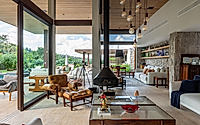
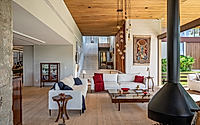
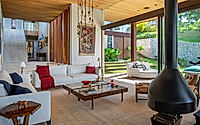
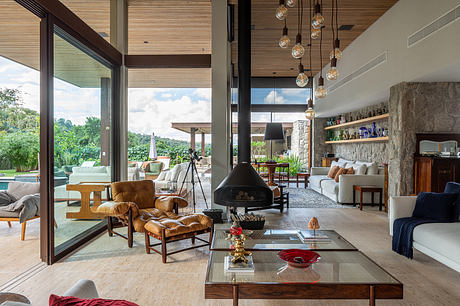
Stepping down from the entrance, the double-height volume marks the social core, with generous glazing pulling in views toward the shared lookout beyond the property. Vertical dimension adds drama while also orienting people, since from this central room one can read the split-level bedrooms above and the garden terrace stretching outward.
Social Core On Grade
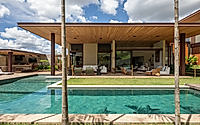
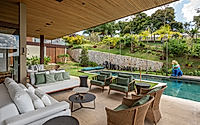
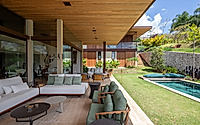
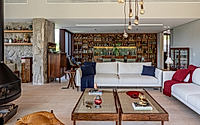
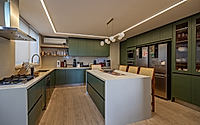
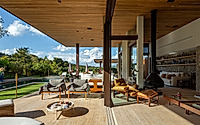
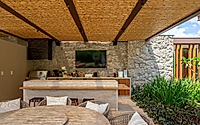
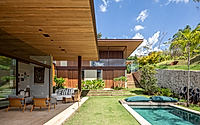
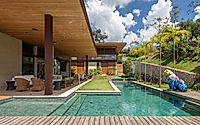
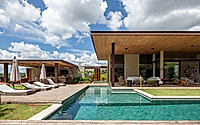
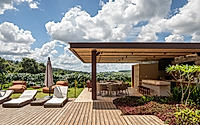
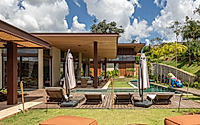
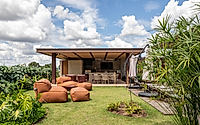
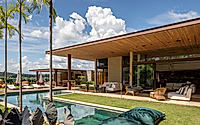
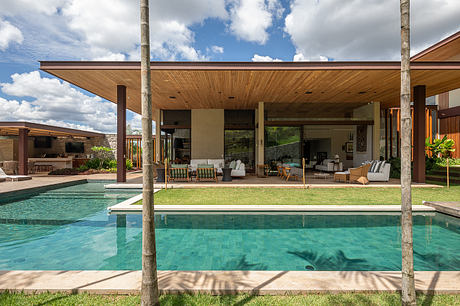
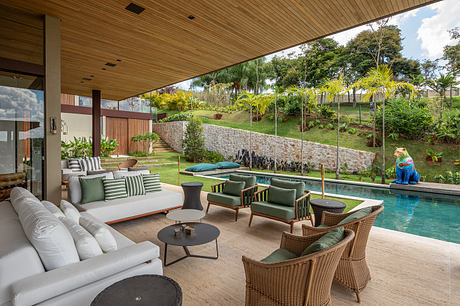
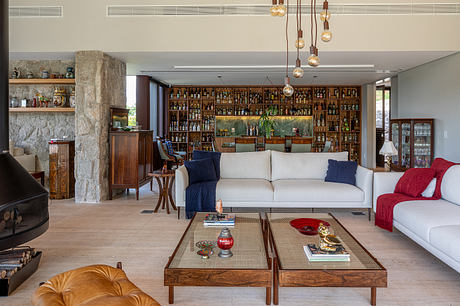
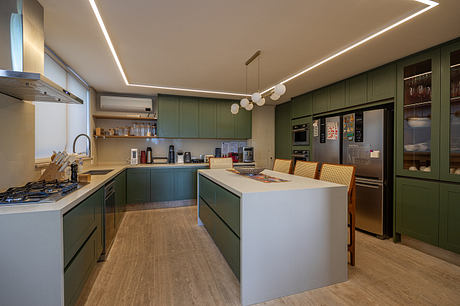
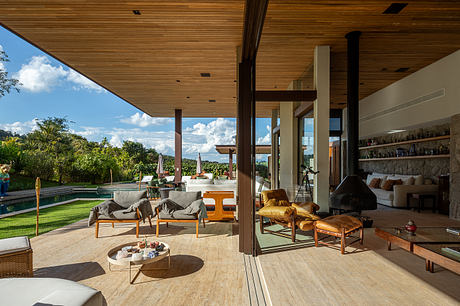
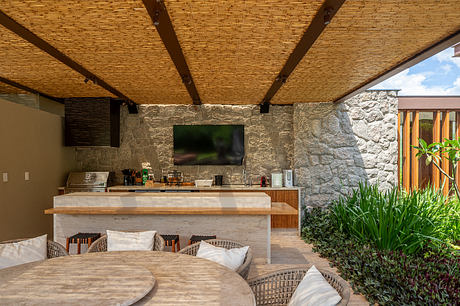
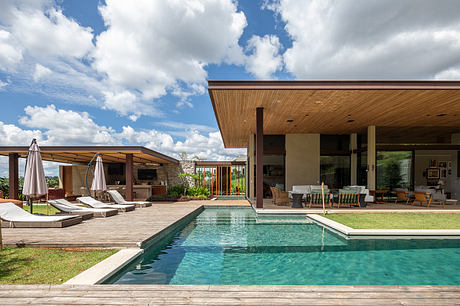
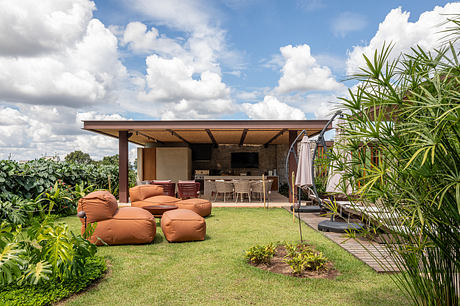
The main living and dining rooms sit at a level that negotiates between street and garden. Here, daily life unfolds between a covered terrace, pool, kitchen, and a gourmet area that all relate directly to one another, so movement from cooking to swimming to lounging stays short and legible. Openings on opposite sides support cross-ventilation, making the central rooms work with natural air rather than mechanical reliance.
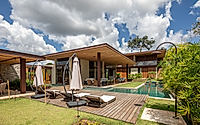
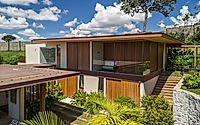
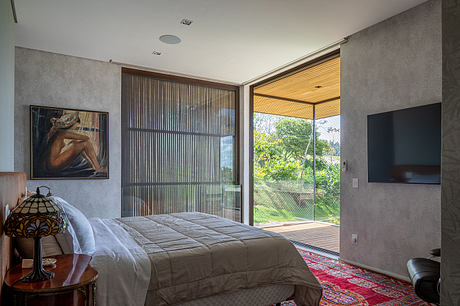
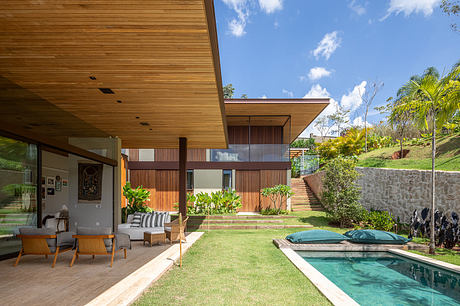
Terraces and balconies extend from this social core over the landscaped ground, drawing people outward without a hard break between interior and exterior. Glazed surfaces run long across these faces, giving each primary room an immediate relationship to greenery, while overhangs and changes in roof height help temper sunlight and give comfortable shaded edges.
Layered Private Realms
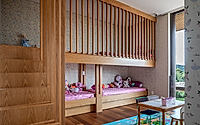
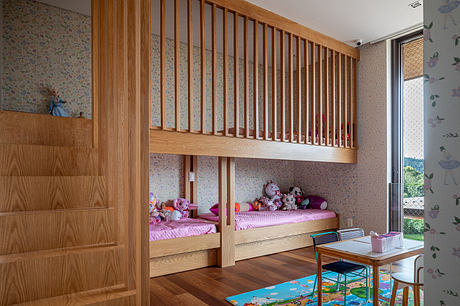
Bedrooms branch away from the social hub on a split level, slightly raised for privacy yet still close enough for easy supervision of children. Two of the five bedrooms are conceived as flexible rooms, able to shift from guest suites to home offices as needs evolve, so the plan anticipates different family stages rather than a single moment.
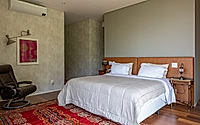
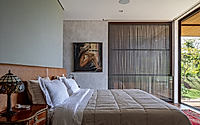
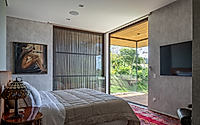
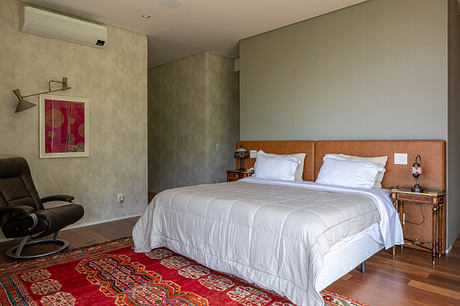
Higher still, toward the back where the natural ground rises, sit the main bedrooms and a playroom aligned with the upper part of the terrain. This upper band reads as a quieter enclave, buffered from street activity above and social life below. Windows here frame long views toward the lookout and treetops, so even the most private rooms hold a direct tie to the wider landscape.
Leisure Terraces And Water
The leisure area is treated as its own chapter in the plan sequence. A jacuzzi shaped as a reflecting pool forms a hinge between the terrace and the barbecue zone, connecting two outdoor rooms that can work together or independently, just as the owners requested. Visual continuity is maintained across water and paving, yet slight shifts in level and orientation give each area a distinct role.
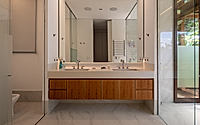
Around these exterior rooms, wood, stone, and metal structure register the house’s contemporary language without erasing the sense of countryside living. Interiors share the same logic of clear circulation, with service and support rooms tucked along secondary paths on two levels, ensuring daily operations stay discreet while the main routes remain generous and uncluttered.
As days move from morning light at the lookout to evening gatherings by the terrace, the stepped plan keeps every activity grounded in the site’s original slope. Casa Mirantre turns topography from constraint into organizer, giving the family a house that reads in section as clearly as in plan, and that keeps landscape, air, and movement in constant conversation.
Photography courtesy of Gilda Meirelles
Visit Gilda Meirelles