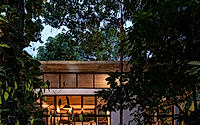
Casa Cajuí: Equatorial House Embracing Forest, Breeze, And Light
Casa Cajuí sits on a lush slope in Manaus, Brazil, where TROOST + PESSOA Architects read the forest and climate before drawing a single line. The house stretches out above the ground, using terraces, elevated volumes, and porous envelopes to keep air and light in constant motion. What results is a home that stays close to the Amazonian landscape while holding onto a clear architectural order.
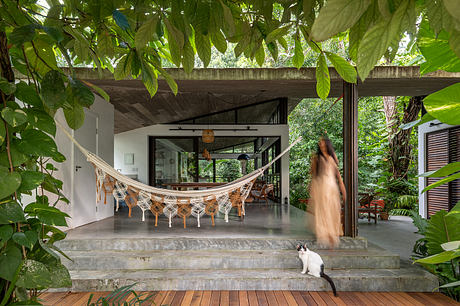
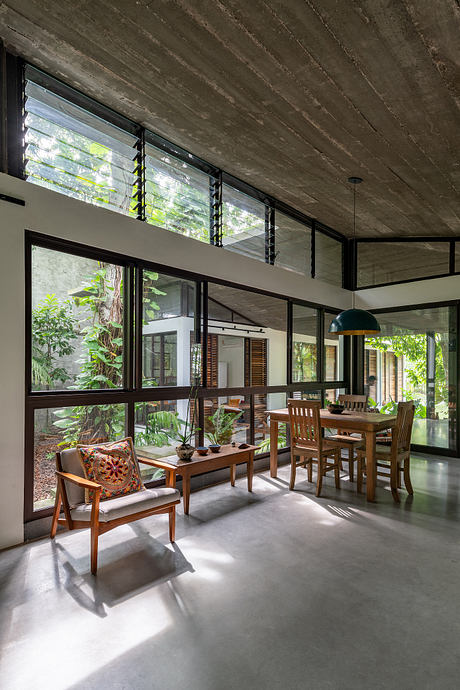
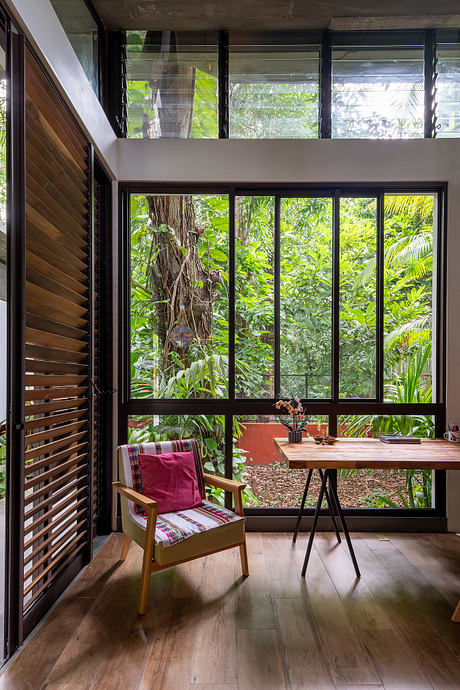
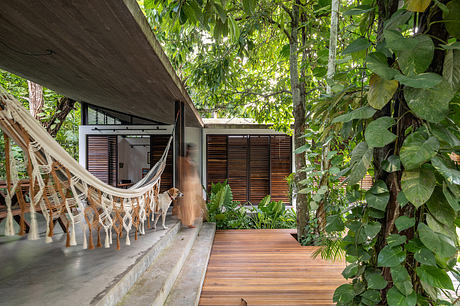
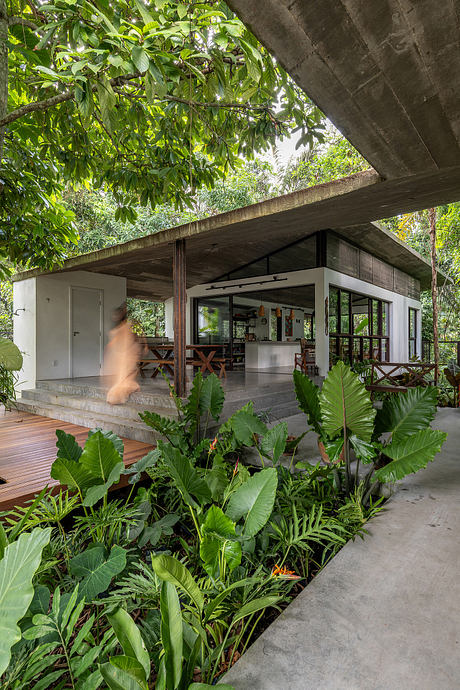
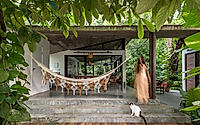
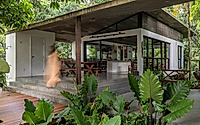
A concrete plane slopes toward the breeze while the forest rises around it. Under this single roof, light slips through cutouts and wooden panels, tracing the rhythm of trunks and branches.
Casa Cajuí is a house in Manaus, Brazil, by TROOST + PESSOA Architects, set on a steep plot wrapped in dense Amazonian vegetation. The project grows from equatorial climate, existing topography, and an uncompromising decision to preserve every tree. Architecture, ventilation, and landscape work together as one system, turning terrace, balcony, and roof into instruments for air, shade, and long views toward a lake.
Reading Slope And Forest
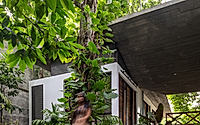
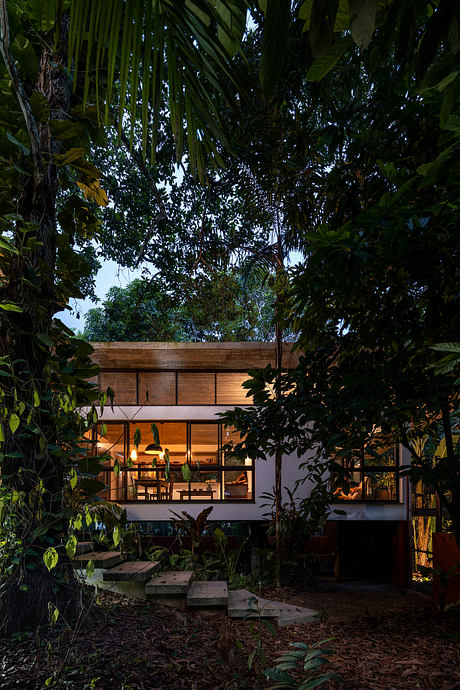
The house rests on the natural incline, projecting outward rather than cutting into the terrain. Ground remains open and loose, with the elevated structure freeing soil and understory vegetation below. Existing trees, from cupuaçu to avocado, dictate the zigzag plan, bending volumes and circulation around their trunks and root zones. Foundations and roof cutouts respond with precision, so crowns and roots continue to grow without interruption.
Balconies As Climate Mediators
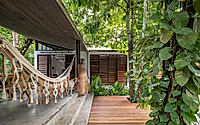
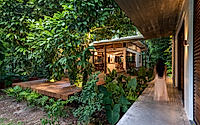
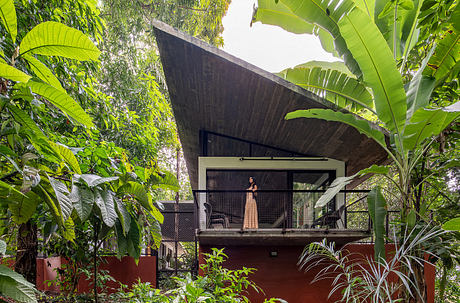
A continuous balcony lines the projected volume, acting as a social threshold between interior rooms and forest edge. This long platform becomes a place for contemplation, conversation, and quiet observation of the lake at the bottom of the lot. From the entrance, a clear visual axis cuts through the house to that water, aligning daily routines with the slope and distant reflection. The elevated corridor also improves air circulation, as breezes slide along the façade before diffusing into living areas.
Concrete Roofs And Crosswinds
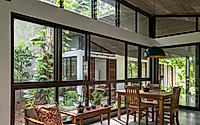
Over the social block, a single-slope concrete roof cast in situ holds substantial thickness for thermal inertia. Its plane follows prevailing winds, setting up a calibrated pattern of openings that draws air through the rooms and out again. Elevated floor levels and upper fins at the roof edge accelerate this cross ventilation, making mechanical cooling unnecessary in daily use. The roof becomes both shelter and climate tool, tuned to midday heat and evening breezes.
Porous Intimate Wing
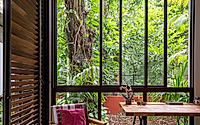
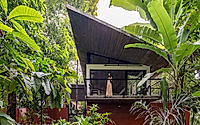
In the intimate block, the roof folds into two planes, continuing the dialogue with terrain and slope. Below, long linear openings and glass-free wooden brise panels let air flow freely while filtering light and maintaining privacy. Constructive simplicity governs this wing, where permeable envelopes temper humidity and heat with few materials and clear details. Rooms stay connected to the forest through filtered views and constant air movement rather than sealed glazing.
Layers Of Ground And Sky
Relationships to the ground unfold in measured tiers: two terraces step with the natural gradient, and internal level changes create a kind of artificial topography indoors. Above, the accessible roof reads as another path, a quiet route for watching the Amazonian sky and canopy from within the treeline. Rainwater harvesting systems support this layered section, tying daily life to seasonal cycles and future phases such as a pool and water reuse infrastructure. Matter, light, and air stay in continuous dialogue, keeping the house attuned to its equatorial setting.
As day cools, air still moves under the concrete roof and through the wooden panels. The forest remains close and intact, with the house slipping between trunks rather than claiming their ground. Casa Cajuí holds its position lightly, elevated yet rooted in the specific climate and living landscape around it.
Photography courtesy of TROOST + PESSOA Architects
Visit TROOST + PESSOA Architects