The Landscape Within by Peny Hsieh
The Landscape Within anchors an apartment in Taiwan by designer Peny Hsieh, where the daily view of trees and sky sets the tone indoors. Raw stone, wood, brick, and iron replace overt luxury so the interior reads as a calm extension of the surrounding landscape, threading natural textures through the owner’s long-term home. Every surface leans toward clarity and restraint while holding quiet, durable character.


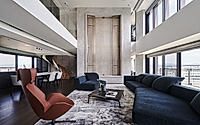
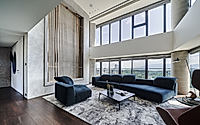
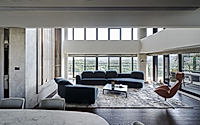
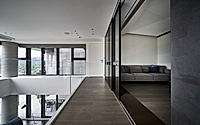
Light spills across stone and wood as the apartment opens toward the green view beyond the windows. A quiet hush sits over the room. The material palette catches that stillness and bends it toward something gently animated by grain, texture, and the subtle seams between surfaces.
This apartment in Taiwan is the owner’s primary residence and a long-term investment in daily calm, shaped by designer Peny Hsieh around a single idea: the landscape should live inside. Nature stays present through raw materials rather than decorative motifs. Stones, woods, bricks, and iron define the rooms and form a steady backdrop for changing light.
Materials Shape Atmosphere
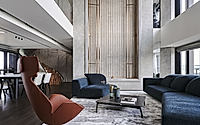
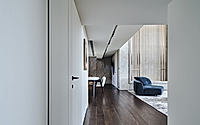
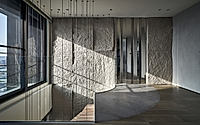
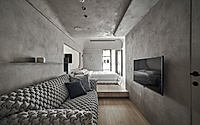
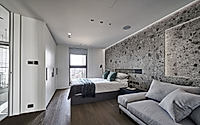
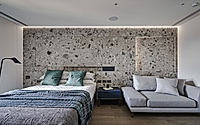
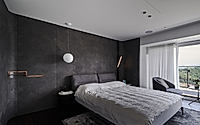
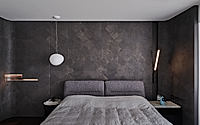
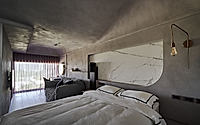
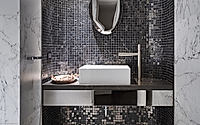
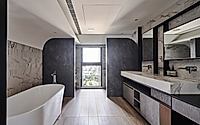
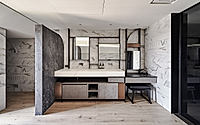
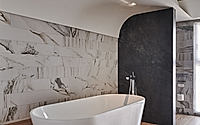
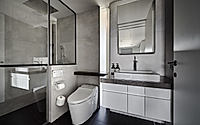
The project strips away strong, luxurious ornaments and relies on elemental surfaces to carry mood. Stone floors and walls bring a cool, grounded base that anchors movement through each room. Warm wood introduces rhythm and tactility, cutting across the heavier masonry and softening the transition between living zones. Brick and iron arrive in measured touches, adding weight where needed and reinforcing a sense of structure without crowding the eye.
Each material earns its place through contrast and quiet detail. Rougher textures sit against smoother planes, so a hand moving along a wall meets subtle shifts instead of uniform polish. Corners read as deliberate joints rather than hidden seams, which keeps the construction legible and honest. Together, these choices build a landscape of surfaces that favors durability, calm, and a direct connection to the elements outside.
Waterfall Stair As Spine
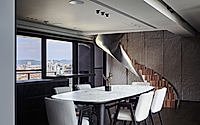
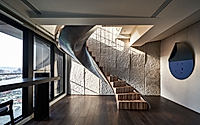
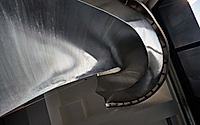
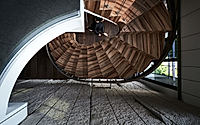
At the heart of the apartment, the stair carries the project’s strongest image. Its form draws on waterfalls, turning vertical movement into a choreographed descent of lines and planes. Curving treads rise against stone walls, so each step reads like a ledge worn into a cliff. Slim wires run alongside, extending linear traces that echo streams of water in the forest.
This composition sets a visual rhythm that cuts through the home. The stone wall acts as a stable backdrop, while the stair’s curve brings motion to the interior landscape. Light brushes along the edges and wires, tracing a vertical path that changes over the day. That interplay of solid mass and delicate lines becomes an internal horizon, a built reminder of distant mountains and moving water.
Light, Shadow, Landscape
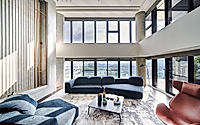
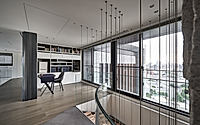
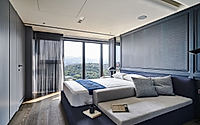
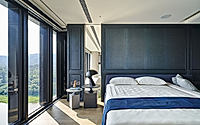
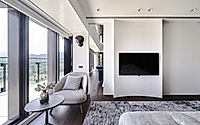
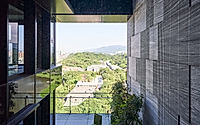
Glazing pulls the green view into the apartment so the outside landscape feels stitched to the material field indoors. Natural light arrives without heavy obstruction, sliding across stone, wood, and brick and tying their tones together. Instead of rigid partitions, the project uses shifts in depth and width as gentle borders between rooms. This approach keeps sightlines long and preserves the flow of light and shadow.
The idea of “the landscape within” plays out through linear elements that suggest terrain: edges of platforms, runs of brick, and the fine lines of metal work. These traces form a hidden border system that guides movement while still leaving the plan open. As the day changes, light draws new contours on these surfaces, so the apartment behaves like a quiet interior valley that registers weather and time.
Furniture With Thrift
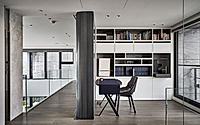
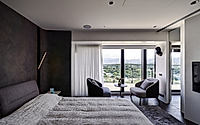
Loose pieces follow the same disciplined approach as the shell. Unique and often customized furniture reflects a sense of thrift, keeping shapes clear and materials direct. Each table, chair, and cabinet leans on simple construction and practical proportions rather than elaborate detailing. This restraint lets the raw surfaces behind them stay legible.
Romantic practical aesthetics guide these choices, favoring objects that support daily life while holding quiet presence. Textiles soften contact points but do not crowd the rooms, so the material bones stay visible. With strong decoration stripped away, daily routines align with a setting that values economy, clarity, and long-term comfort.
From morning light on the stair to evening shadows along the stone walls, the apartment keeps returning to its core image of an interior landscape. Materials age in place, recording use without demanding attention. In that steady environment, the resident lives with nature held close, not through overt views alone but through every grain, joint, and edge underfoot.
Photography courtesy of Peny Hsieh
Visit Peny Hsieh