Villa Colucci Revives A Historic Italian Villa With Artful Charm
Villa Colucci stands in Fasano, Italy, where Francesco Mastrororsa guides the careful revival of a historic villa turned hotel rich with art and memory. High ceilings, patterned cement tiles, and the red facade frame interiors layered with Danish and international artworks, antiques, and contemporary pieces that bring the restored rooms to life. Guests step into a place where craftsmanship, history, and daily hospitality quietly intertwine.
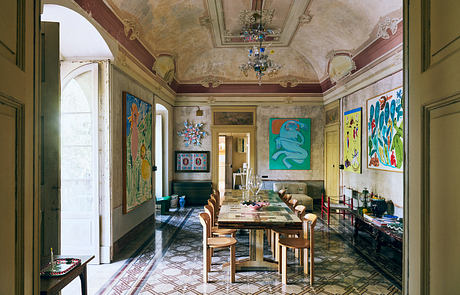
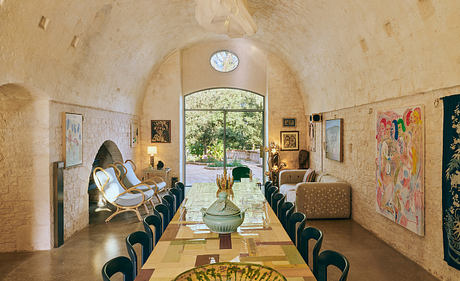
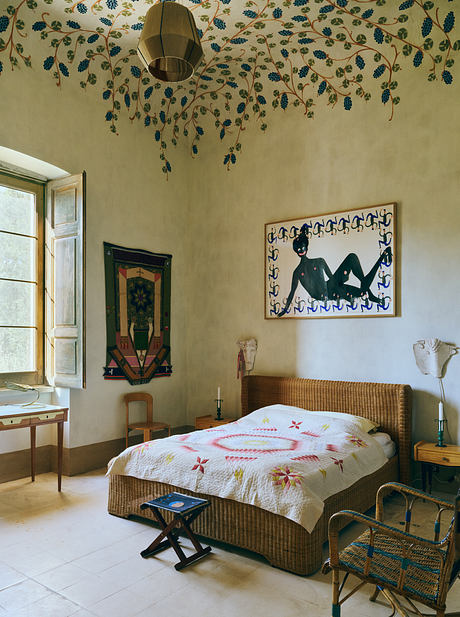
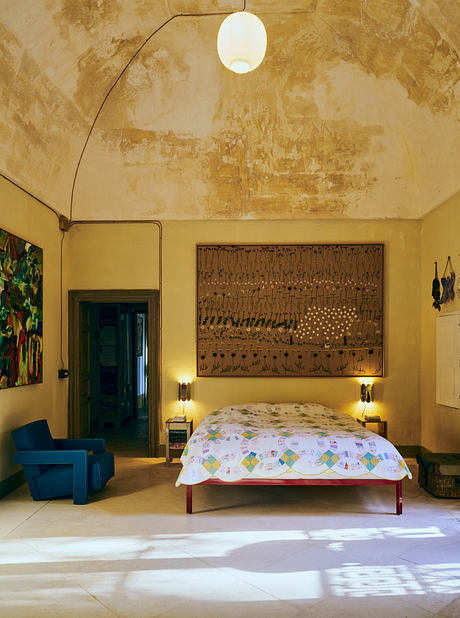
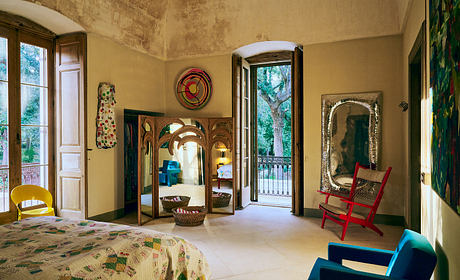
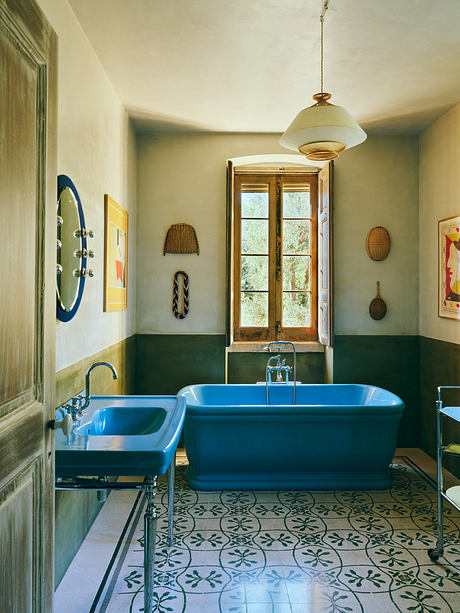
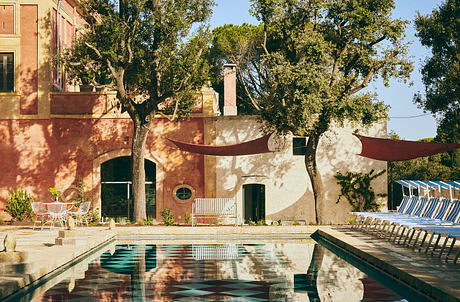
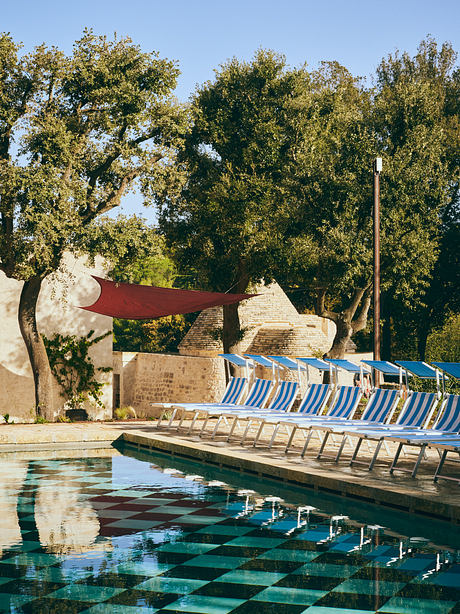
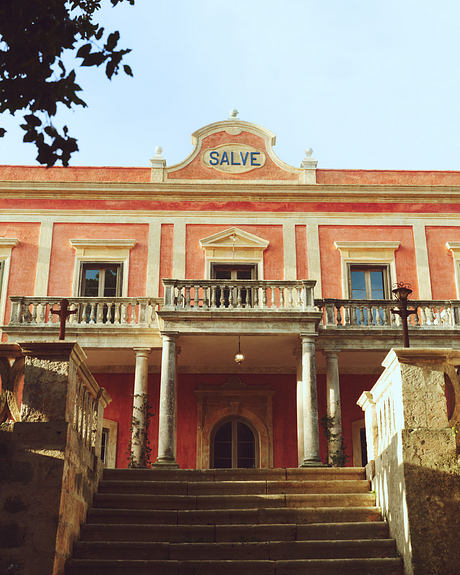
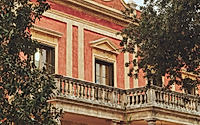
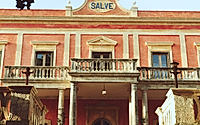
Sunlight catches the red facade, pulling its color forward against the sky. Through tall doors, cool patterned cement tiles draw guests into generous rooms edged by thick walls.
Inside, restored volumes hold the rhythm of an old villa, yet the atmosphere feels distinctly current and curious. Villa Colucci operates as a hotel in Fasano, Italy, reimagined under the direction of Francesco Mastrororsa and two Danish families who commit to restoration rather than reinvention. Their work keeps the building’s structure intact while rethinking how people move, gather, and rest within it.
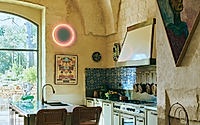
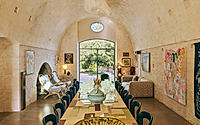
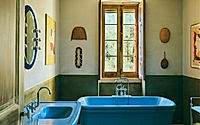
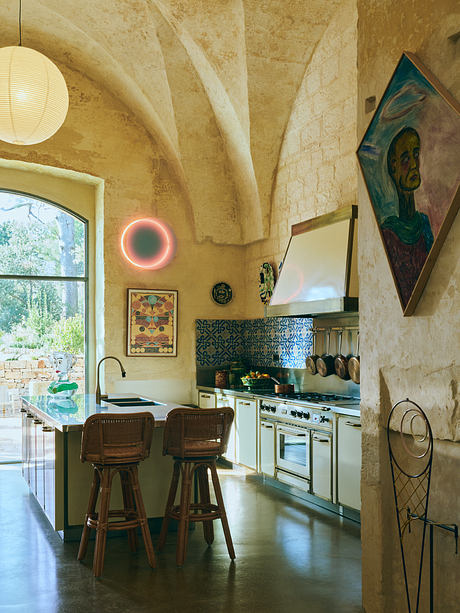
This adaptive restoration leans on existing proportions, original finishes, and local craftsmanship, then layers art and design objects to support contemporary hospitality. High ceilings, traditional tiles, and hand-restored shutters anchor the rooms, while new furnishings and lighting organize fresh ways of using them. The project treats history as an active framework for daily routines: sleeping, reading, meeting at the bar, and slowly discovering art at every turn.
Restoring The Villa
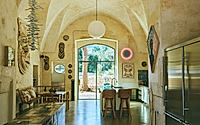
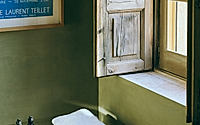
Work on Villa Colucci begins with conservation, not demolition. Existing doors and shutters are carefully repaired, keeping the grain, patina, and small irregularities that record the villa’s past. High ceilings remain open and generous, allowing air and light to move freely through bedrooms, corridors, and gathering rooms. The red exterior is preserved as a defining surface, giving the restored hotel a clear identity from the street and courtyard.
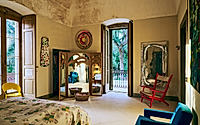
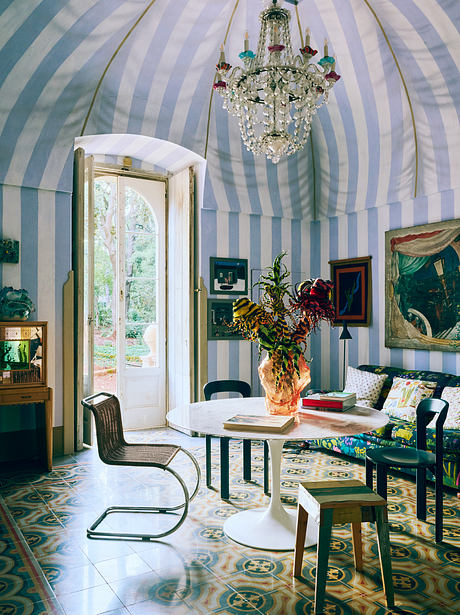
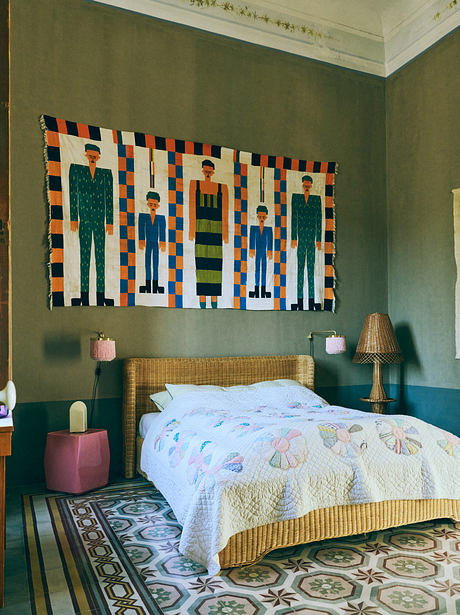
Inside, patterned cement tiles provide a continuous, tactile field underfoot that connects old rooms adapted to new uses. Art, furniture, and lighting sit on this inherited base rather than competing with it. The result respects the original envelope while giving visitors updated comfort and clear circulation. Guests move through a building that holds its age with confidence.
Art In Every Room
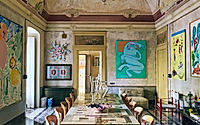
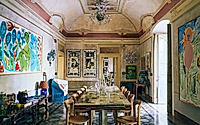
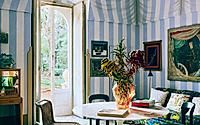
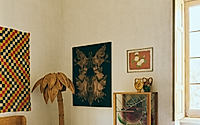
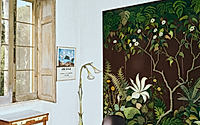
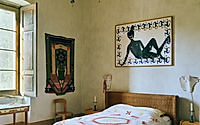
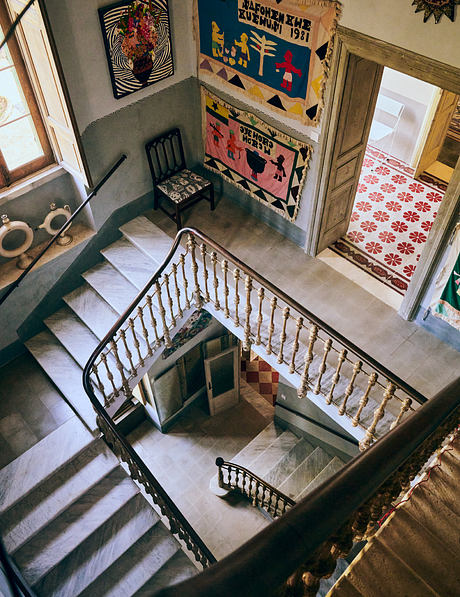
Art is treated as structure for experience rather than afterthought decor. Walls carry pieces from a wide range of contemporary artists, from paintings and drawings to embroidered works and textile compositions. Corridors and landings gain character from embroidered tarot cards and traditional flags, turning what might be simple passageways into small galleries. Bedrooms gain depth through handwoven wall hangings, embroidered canvases, and textile works that soften the tall volumes.
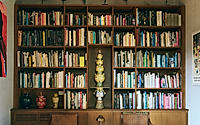
Sculptures and ceramics settle onto furniture, mantels, and consoles, creating different focal points in each room. Every level of the hotel holds something to pause over: a textile, a carved detail, a ceramic group. Guests live with art at close range rather than encountering it in a distant, museum-like way. Daily movements through the villa naturally trace a path between distinct artistic voices.
Furniture As Narrative
Furniture and design objects deepen the building’s restored shell with pieces gathered over years. Contemporary chairs and tables from well-known collaborators sit beside flea-market finds, mid-century cabinets, and religious artifacts. This mix keeps the historic villa from drifting into nostalgia; instead, rooms read as lived-in and layered. Each item carries its own origin story, from auction discoveries to long-term collaborations.
Chairs by Italian masters, sofas by noted designers, and anonymous wooden pieces all share the same rooms. Together they anchor places to sit, talk, or read beneath high ceilings. Antique treasures pair with modern lighting and art, so every corner speaks to different decades of making. Guests read these juxtapositions as they move from bedroom to corridor to landing.
Gathering At The Bar
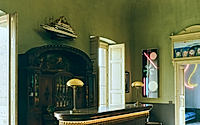
On the first floor, the bar becomes a central point of orientation for the hotel. Here, artworks and light installations surround the counter, folding social life into the broader narrative of craft. People arrive for a drink and end up scanning walls and ceilings, taking in pieces by several contemporary artists in a single glance. The room turns everyday hospitality into part of the artistic experience.
From the red facade to the quiet bedrooms, Villa Colucci maintains its original bones while hosting an unusually dense world of art and objects. Daylight, tile, and plaster hold together old and new layers without erasing either. Guests leave with memories not only of a restored villa, but of how history, craft, and contemporary culture can share one address with ease.
Photography by Villa Colucci
Visit Francesco Mastrororsa