Pracownia by ACOS
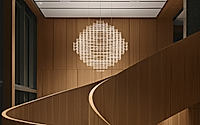
Pracownia brings a new office world to Poland for OMNI KAISER Patisserie, with ACOS orchestrating a careful balance between production and workplace life. The project turns a once straightforward facility into an environment where administrative, marketing, and creative teams share a close relationship with the patisserie’s making rooms and the surrounding garden. Volumes, materials, and daylight set the tone for a measured, contemporary workplace narrative.
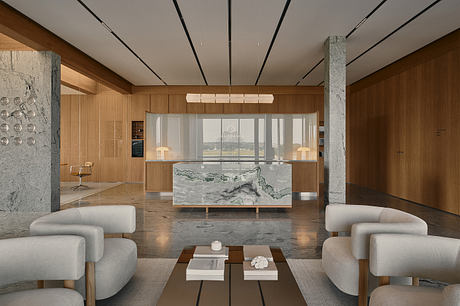
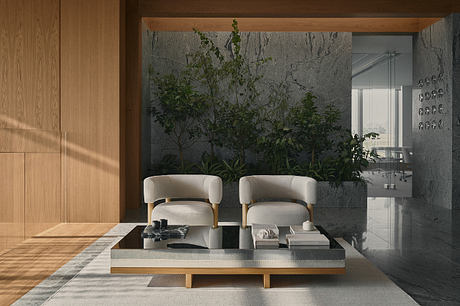
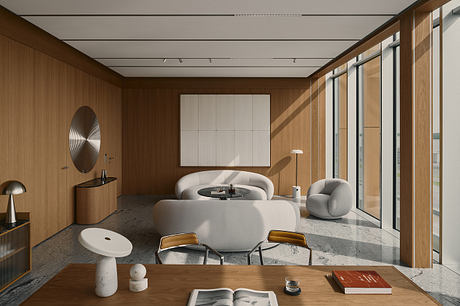
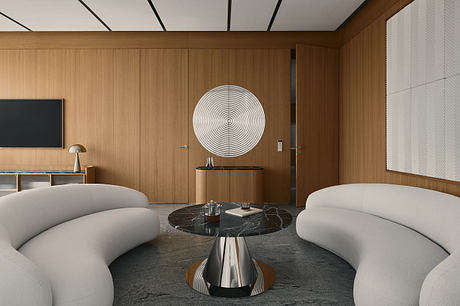
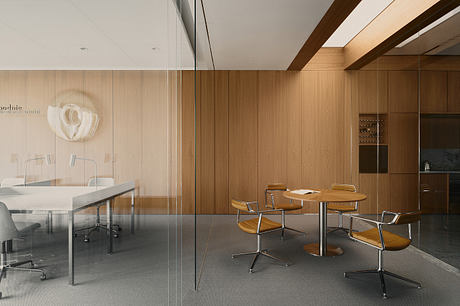
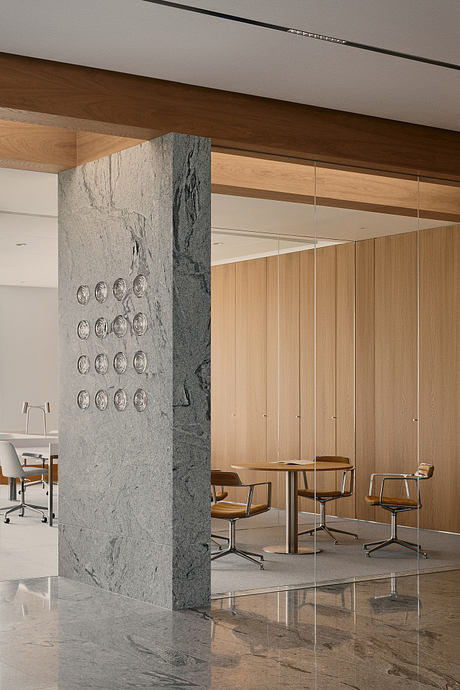
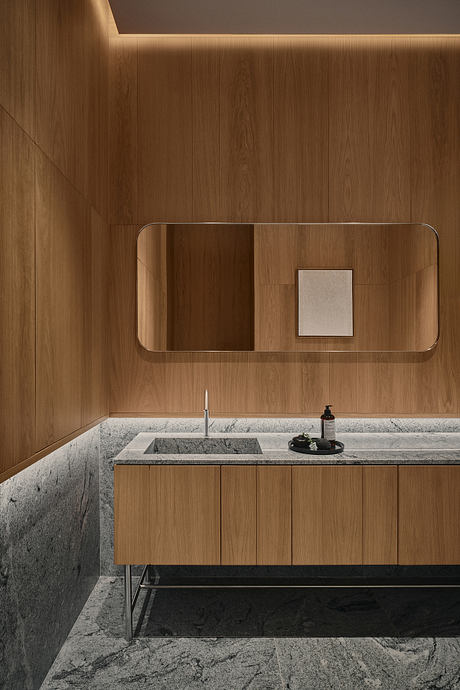
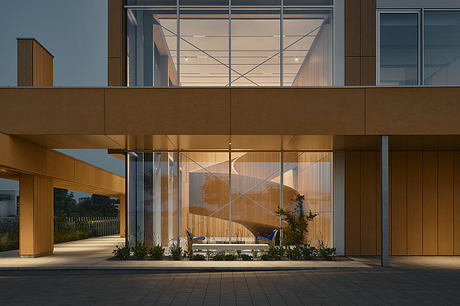
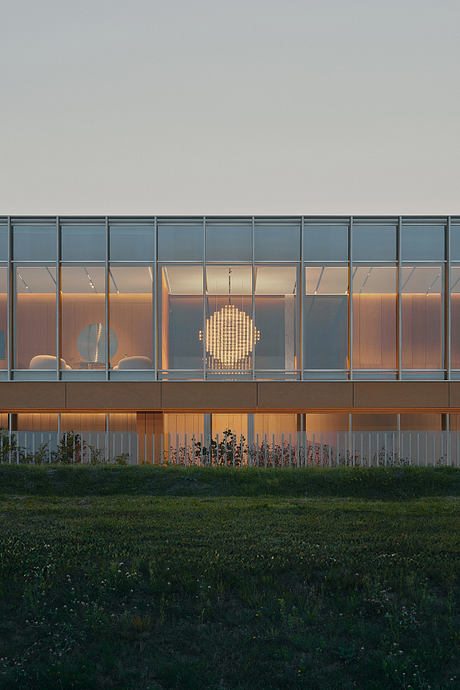
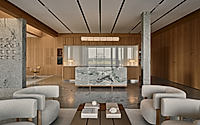
Stone slabs step outward toward the garden, carrying the eye from interior floor to planted edge in one continuous gesture. Morning light cuts across wood, glass, and woven textures, tying the new office rooms back to the patisserie production below.
This office for OMNI KAISER Patisserie in Poland is conceived by ACOS as a holistic workplace, connecting administration, marketing, and management to an active manufacturing context. The project reworks an existing facility, inserting a new programme of offices, meeting rooms, and conference areas while holding close to the industrial core. Context governs each move, from the glass pavilion that projects toward the street to the garden-oriented slabs that carry the building outward.
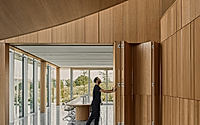
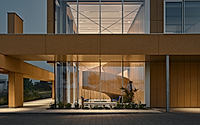
Key functions occupy the first floor of the original structure, while a new glazed volume stretches beyond the old envelope to mark the vertical circulation, director’s office, and conference room. Pracownia emerges as an office that treats context and climate as primary material: sunlight, views of vegetation, and flows of energy stand beside stone, wood, and fabric.
Reworking An Existing Shell
The project starts from an industrial building with fixed limits, then reorganises circulation and programme to shorten the distance between production and the administrative world. Offices, reception, and social amenities concentrate on the first floor, using the available volume efficiently while carving out a calm interior for daily work. Vertical circulation shifts into the new glass pavilion, drawing visitors forward and signalling entry without breaking apart the existing mass. This move gives the director’s office and conference room a direct visual link to the exterior, tightening the dialogue between management, city, and factory.
Composing Volumes And Matter
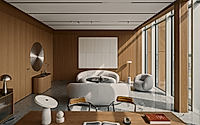
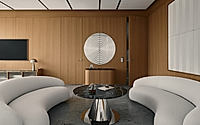
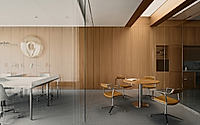
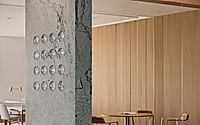
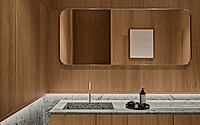
Inside, solid forms and surfaces define circulation and work areas, reading as composed volumes rather than loose furniture scattered across a floorplate. Natural materials such as wood and stone anchor these forms, their textures picked up by woven carpets, glass details, and soft textiles underfoot and at hand. Interwoven volumes set up framed views between rooms, encouraging brief encounters and shared sightlines among staff. Each junction between materials stays quiet, so the experience rests on depth, grain, and proportion rather than visual noise.
Blurring Interior And Garden
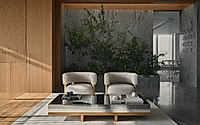
Nature enters through both structure and planting. Large windows open long views, while stone slabs extend from interior floor to exterior terrace, turning the garden into a continuation of the workplace. On the upper level, a substantial planter introduces vegetation into the daily route, its lush greenery set directly beneath a skylight that pulls in overhead light. Staff move past leaves and shifting shadows on their way to meetings, keeping the workday visually tied to weather and season.
Aligning Ecology And Work
Energy strategy sits alongside spatial planning. Photovoltaic systems and wind turbines contribute renewable power, while heat repurposed from patisserie production turns a byproduct into an asset for the office. Local sourcing of materials reduces transport impact and grounds the project in regional craft and manufacturing capabilities. Adaptable layouts anticipate change in the company’s organisation, allowing rooms to shift over time without discarding the core material framework.
Crafting A Shared Workplace
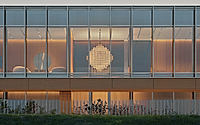
The office reads as a quiet counterpart to the patisserie’s more intense production floors below, yet the two remain closely linked in plan and daily routine. Overlapping volumes foster interaction between users, encouraging informal exchanges between departments that once sat further apart. Materials, light, and planted elements echo the brand’s emphasis on craft and care, translating those values into rooms for planning, marketing, and management. As day fades, the glass pavilion glows above the existing shell, marking a workplace grounded in its garden, its energy flows, and its continuous making.
Photography by Tomo Yamakawa Design
Visit ACOS