Portal 62 Reframes a Hidden Cavern House in Merida
Portal 62 begins as a compact house in Merida, Mexico, yet unfolds into something deeper under the direction of Veinte Diezz Arquitectos. What starts as a conventional courtyard dwelling soon pivots around the discovery of a hidden cavern, turning the project into a carefully staged journey from street to subterranean. Each move through the house clarifies that this is less a showpiece than a measured sequence meant to be uncovered slowly.


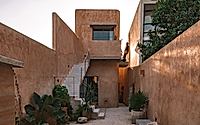
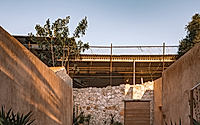
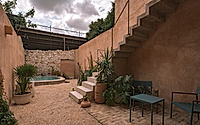
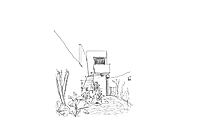
Light skims across warm terracotta walls as the day stretches, catching the grain of compacted earth and the pale edge of the pool. A slim stair traces the courtyard wall, pulling the eye upward before the view slides toward the rear, where the ground drops away to the hidden tub below.
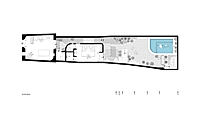
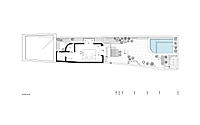
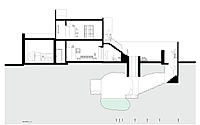
Portal 62 is a small house in Merida, Mexico, by Veinte Diezz Arquitectos, organized as a sequence rather than a static object. The project responds to an unexpected cavern beneath the plot, compressing the built footprint into 70 m² (753.5 ft²) and letting circulation choreograph the encounter with the underground volume. This is a domestic route built from pauses and thresholds, guided by the shifting relationship between earth, water, and light.
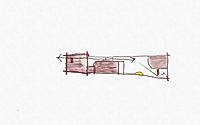
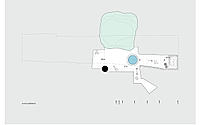
The house follows a clear order: an original bay at the front gathers kitchenette, living, and dining; a new volume adds two stacked bedrooms; the plot’s rear gives way to patio, pool, and cave. Every turn tightens or loosens that progression, so that moving through the home doubles as reading the ground beneath it.
Entering From The Street
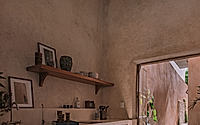
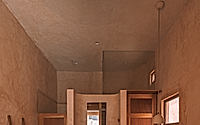
From the street, Portal 62 keeps a compact frontage, a quiet entry that understates what waits inside. Crossing the threshold, visitors meet the original bay, where high plastered walls and a simple concrete floor frame the kitchenette and an adjacent dining nook. Light filters in from the courtyard side, catching cedar cabinetry, open shelving, and a deep sink, so basic daily tasks align with the movement toward the rear.
Sightlines always point further in, past the timber table and low bench, toward the narrow opening that hints at the courtyard beyond. The first rooms feel close and almost introverted, a deliberate prelude to the unfolding route.
Moving Through The House
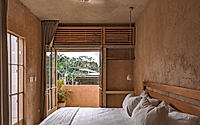
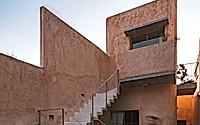
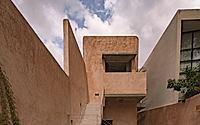
At the junction with the new bedroom volume, the circulation path contracts into a slim corridor. Underfoot, gravel and pale paving sharpen the sense of transition, while tall earthen walls pull the body inward. One bedroom sits above, opening to a modest balcony screened by slatted wood that tempers daylight and frames a slice of sky.
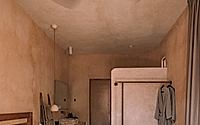
The second bedroom drops below street level, aligning more closely with the cavern’s depth. Inside both rooms, built-in elements in solid cedar—beds, headboards, wardrobes—keep the plan disciplined and clear, so attention stays on proportion, shadow, and the next threshold.
Courtyard, Pool, Descent
Stepping out of the living area, the corridor finally releases into the rear patio. Under open sky, rough gravel, drought-tolerant planting, and blocky concrete plinths create a measured ground plane that directs the gaze to the pool. This compact basin sits against a second rammed-earth wall, which works as a visual screen before the descent to the subterranean level.
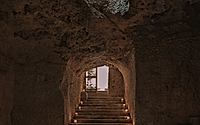
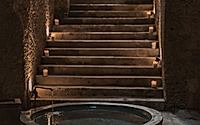
Next to the water, a stair slips down alongside the wall to the artificial tub placed under the original well. Here the plan turns almost cinematic: descent, pause, then revelation as daylight drops through the vertical shaft onto the surface of the water. Humidity, stone, and muffled sound slow the rhythm of movement to a near standstill.
Interior Calm And Rhythm
Throughout the house, a restrained material palette keeps the sequence legible. Earthen walls, pale floors, and cedar carpentry repeat from room to room, tying kitchen, dining area, and bedrooms into one continuous experience. Furnishings stay minimal—simple chairs, compact tables, a ladder for towels—so circulation paths remain clear and the volumes read as quiet, almost monolithic rooms.
Soft textiles on the beds, a single pendant over the dining table, and small objects clustered on shelves bring human scale to the long walls. Each window, door, and cutout is positioned to mark a moment along the route, from the first glimpse of the courtyard to the final descent toward the cavern.
By the time visitors return to the patio, the project’s logic is embedded in memory as a chain of rooms and levels rather than a single image. Portal 62 closes as it began, with warm earth, cool water, and a calm procession that favors discovery over spectacle. The house stays modest in size, yet its sequence stretches well below the surface.
Photography by Eyes of Memo
Visit Veinte Diezz Arquitectos