Casa Errante Reveals a Warm Palette for Contemporary Roman Living
Casa Errante anchors a 120-square-meter apartment in Rome, Italy, reworked by designer Raffaella Falbo into a home of light, storage, and quiet rhythm. The renovation refines a once-dated layout with a new master suite, generous kitchen, and layered color story that threads from entry hall to living room. Soft terracotta, sage, and celadon land against oak and metal, giving everyday rooms a composed and distinctly Roman intimacy.


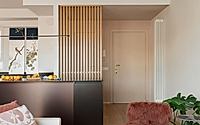
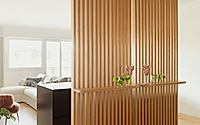
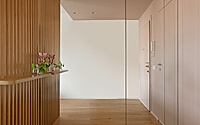
Light pools against the oak slats at the entry, catching on the tall mirror and the soft grain underfoot. From this first pause, Casa Errante sets out its rhythm with warm wood, reflective surfaces, and a gentle sequence of rooms that trade heaviness for ease.
The apartment is a 120-square-meter home reshaped in Rome by Raffaella Falbo, who uses interior architecture to redraw both circulation and mood. A reconfigured layout now holds a master bedroom with walk-in closet and en suite bath, a second bedroom, a second bathroom with integrated laundry, and new storage threaded through entry and corridor. At the core sits an enlarged living and kitchen area, where carefully tuned finishes and custom carpentry carry a quiet but assertive interior palette.
Framing The Threshold
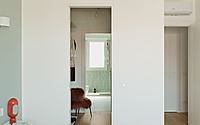
The entrance becomes a first room rather than a passage. A full-height oak slatted wall draws the eye along its vertical rhythm, while the floor-to-ceiling mirror doubles light and depth in one clean move. Behind this reflective plane, an integrated wardrobe absorbs coats and daily clutter, turning practical storage into part of the composition. The material and color story begins here, introducing the warm timber and muted tones that return in the corridor and living areas.
Kitchen As Living Core
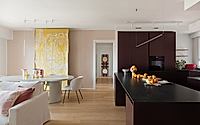
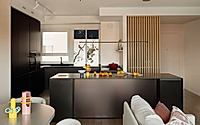
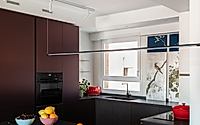
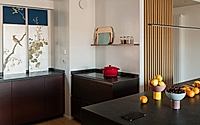
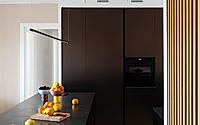
The day zone orbits around a large Stosa kitchen, treated as the active heart of the home. Three complementary systems divide the work, storage, and social roles so each reads clearly yet works together. The operative run is kept free of wall cabinets and tile, a deliberate move that leaves a calm horizontal line and an essential, unfussy backdrop. Tall storage columns rise to full height, visually stretching the room while absorbing appliances and pantry volume, so the surrounding living area can stay open and relaxed.
At the center, an island stretching more than three meters acts as both table and container. This long volume holds drawers and cabinets while setting a generous surface for cooking and gathering. Its scale allows kitchen and living to read as one fluid room, where conversation, movement, and work share a single continuous floor. The island’s material treatment, in dialogue with the metal laminate and oak, ties cooking, dining, and lounging into one clear composition.
Color As Quiet Structure
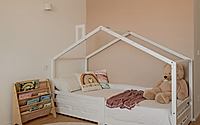
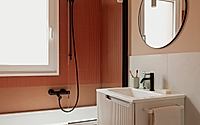
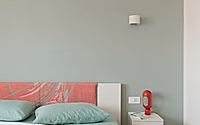
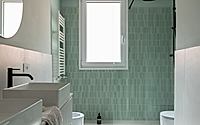
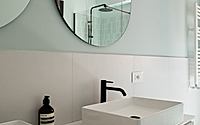
An edited palette of soft tones brings order to the varied rooms. Terracotta, antique pink, sage green, and celadon move from surface to surface, trading intensity but keeping a consistent, low-saturation quality. These hues sit against the textured metal laminate in a coffee shade on the kitchen fronts and the natural oak of both parquet and the slatted wall. Light glances off the metallic planes, catching on handles and edges, while the timber absorbs it with a steady, matte warmth.
This restrained chromatic script supports daily use rather than competing with it. Rooms feel calm but not neutral, with each corridor turn and doorway revealing a slightly different balance of warm and cool color. The palette links bedroom, baths, and living areas, so the apartment reads as one continuous interior rather than a collection of isolated zones. In that continuity, finishes do the quiet work of soft zoning and orientation.
Objects, Textiles, And Light
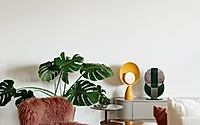
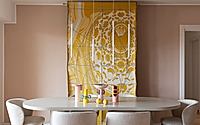
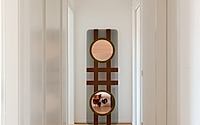
Furniture and art deepen the material story with deliberate contrast. Oriental references and a touch of American maximalism sit beside pieces by contemporary Roman designers, giving the rooms a layered but coherent sensibility. Painted chinoiserie panels, a bold woven tapestry, colorful ceramics, mirrored elements, vitrines, and poetic lighting each add a distinct texture or glint. These objects keep the refined shell from feeling static, allowing pattern, reflection, and color to gather in focused moments.
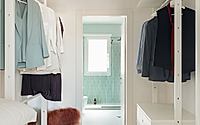
Throughout, custom elements of carpentry and built-in joinery keep daily life organized in the background. Storage along the corridor, the cabin-like dressing area, and the combined bathroom-laundry zone all hide their complexity behind simple doors and clean planes. The result is a home where the eye rests on material and art rather than on infrastructure, giving domestic routines a light, almost unhurried cadence.
In the end, Casa Errante feels anchored by its palette and carefully drawn furnishings. Morning light moves from entry mirror to kitchen metal and across the oak floor, tracing the interior’s quiet geometry. Color, wood, and crafted objects hold the rooms together, turning an updated plan into a calm setting for everyday Roman life.
Photography by Edi Solari
Visit Raffaella Falbo