French Creek Workshops House by Wittman Estes
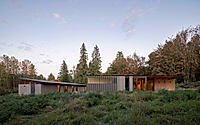
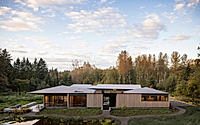
French Creek Workshops House sits beside a wetland in Snohomish, WA, United States, where Wittman Estes shapes a low, calm house for a newly retired couple. The single-level residence folds studios, gardens, and water into a daily routine that supports aging-in-place and welcomes multigenerational visits without drama. Every room orients toward making, resting, or watching the seasons change across the layered landscape.


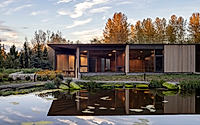
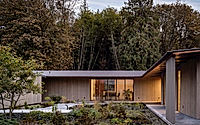
Visitors arrive along the edge of the wetland, where low roofs slip in under the tree line and concrete walks carry the sound of footfalls. Light moves across metal, water, and wood as the compound opens toward a central courtyard that gathers weather, craft, and daily routines into one shared ground.
French Creek Workshops House is a single-level house in Snohomish, WA, United States, planned for aging-in-place and multigenerational living. Wittman Estes organizes the 2,471-square-foot home and its studios around making, gardening, and quiet observation rather than formality. The architecture becomes a working compound where life, craft, and the changing Pacific Northwest climate intertwine in everyday use.
Living On One Level
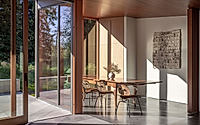
Inside the main house, circulation stays level from end to end, so movement feels calm and unhurried. Wide doorways, flush thresholds, and sandblasted concrete floors create clear, nonslip routes that support the couple now and anticipate future needs. Gentle terracing outside lets the building meet the sloped terrain without sudden drops, so step-free paths reach patios, gardens, and workshops. Aging-in-place here means the daily walk from bedroom to kitchen to studio stays simple, generous, and predictable.
Studios Around The Courtyard
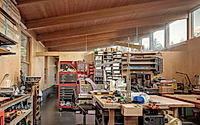
Studios for woodworking, metalworking, glass art, and other craft sit just beyond the domestic core, tied back by sheltered walkways and planted passages. The 1,471-square-foot studio volume turns its shed roof toward north-facing clerestory windows, drawing in even, cool light that stays steady through long work sessions. Noise and dust remain at the edges, yet doors and paths keep the makers close to home, so a project can pause for lunch and resume within minutes. Together, the buildings outline a courtyard that acts as outdoor workshop, living room, and seasonal observatory.
Water At The Center
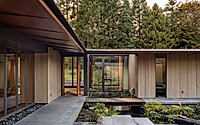
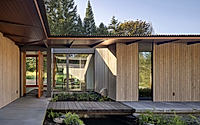
At the heart of the courtyard, a series of reflecting pools collects rainwater routed from surrounding roofs, echoing the ancient Roman impluvium. During storms, water sheets from the roof edges and lands quietly in the basins, turning bad-weather days into a slow performance of ripples, reflections, and soft sound. The couple moves between house and studio with this changing surface always in view, so daily tasks fold into an ongoing awareness of climate. Wetland, courtyard, and pools align to make water part of routine, not background scenery.
Materials For Work And Rest
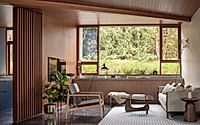
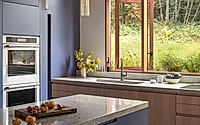
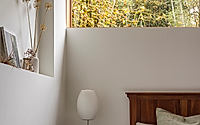
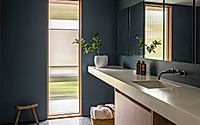
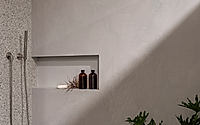
Interior finishes lean toward durability and tactile warmth, tuned to a life spent making things by hand. Locally sourced fir and cedar wrap rooms in grain and color, set against terrazzo and concrete that can handle heavy use and easy cleaning. Cast-in-place concrete floors with hydronic radiant heating extend outward onto patios and walks, so bare feet meet the same surface indoors and out. Overhead, a corrugated metal roof with a soft metallic sheen quietly records the movement of daylight and rain.
Gardens As Daily Rhythm
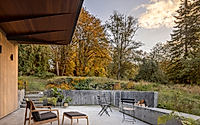
Gardens and patios knit house and workshops into a lived-in compound, giving each day a set of outdoor tasks and pleasures. Planting radiates from cultivated beds near the entries to wilder areas at the wetland edge, all maintained by the owners themselves. The entry walk rises through a welcoming garden, guiding visitors toward the courtyard where making, eating, and resting overlap in easy sequence. Between the deep eaves, layered planting, and water, outdoor rooms stay in steady use across wet winters and warm, dry summers.
From the drive to the inner court, movement follows a clear, human-scaled route that repeats with each visit. As seasons turn and work shifts from one studio to another, the compound remains legible, generous, and ready for the next day’s routines.
Photography courtesy of Wittman Estes
Visit Wittman Estes