House_JA by éOp-arquitectura e design
House_JA sets a concrete profile on the slopes of Vila Nova de Gaia, Portugal, by éOp-arquitectura e design. The three level house tracks the natural topography, stepping from a discreet street front to wide openings that catch the sea, the Douro estuary, the river, and Porto beyond. Inside, social rooms, bedrooms, and leisure areas align around those shifting views with a clear, landscape-led logic.


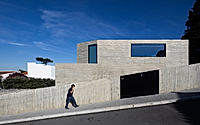
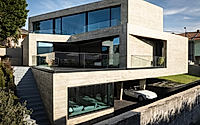
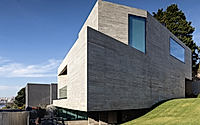
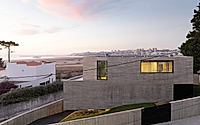
Light falls across exposed concrete as the house meets the hillside, then runs toward the distant line of sea and estuary. From the first approach, the building reads as a set of carefully stacked volumes that register each change in level and draw the eye outward to the Douro and the city of Porto beyond.
This single family house in Vila Nova de Gaia takes the steep terrain as its starting point, using three floors to follow the existing topography and structure daily life around layered outlooks. Designed by éOp-arquitectura e design, the project privileges the relationship with the landscape, from the sheltered street elevation to the terraces and rooms that face the water and city. Every level is planned so that the main rooms catch those views while still preserving privacy and a measured, introspective character at the edge of the neighborhood.
Grounded In Topography
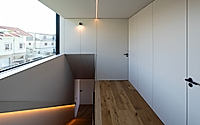
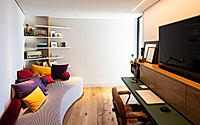
The building sits into the slope, with the ground floor following the natural terrain rather than cutting back the hill. This move sets up a clear vertical sequence, where exterior covered parking for two vehicles and technical areas form a robust base while the living rooms and bedrooms step upward. A cinema and leisure room sit on this lower level as well, turning what could be leftover volume into a shaded retreat that stays directly connected to the rest of the house. From here, circulation rises through the core, tightening the relationship between the stacked floors and the land that supports them.
Street Front To Horizon
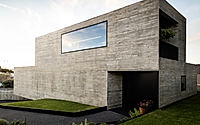
Toward the street, the house presents a quieter elevation with fewer openings and a more sheltered stance for the entrance. This controlled facade builds an introspective mood at arrival, giving residents a sense of privacy before the plan turns outward. Past the threshold, the architecture opens toward the rear, where larger glazed areas and terraces address the sea, the Douro estuary, and the long sweep of the river. The shift from discreet front to open back makes the walk through the house read like a pivot from city fabric to broad Atlantic horizon.
Living Level On The Edge
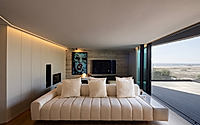
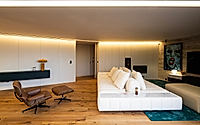
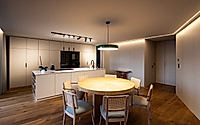
The entrance floor gathers the social rooms, placing daily life at the edge of the terrace and the long views. Large sliding windows span this level and can be opened fully so the living and dining areas merge with the outdoor terrace and its outlook over the water. This broad aperture does more than connect inside and outside, it lets daylight enter gradually and softly, creating an even glow across concrete and interior surfaces throughout the day. With this arrangement, gatherings, meals, and quiet evenings all unfold in direct visual contact with sea, estuary, and river.
Quiet Rooms Above
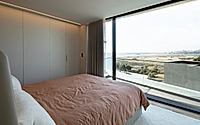
Three bedrooms occupy the upper floor, each oriented to capture panoramic views to the sea and the Douro estuary, as well as the river and city. These rooms lean toward calm, with the landscape treated almost as a framed surface for contemplation. Long sightlines replace decoration, and the consistent outlook gives the private level a unified, serene character. Waking, resting, and nightly routines all happen against that steady visual band of water and urban profile.
Concrete And Geometry
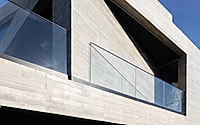
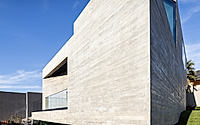
Materiality reinforces this clear relationship to context, with exposed concrete giving the house a strong presence and distinctly contemporary expression. Pronounced geometry lets the volume read in the landscape as an independent object, rather than just a platform for viewing the surroundings. Angles, planes, and cuts in the concrete mass define terraces, overhangs, and sheltered entries that modulate light and shade across the day. The result is a house that holds its own against the broad coastal setting, yet constantly directs attention back to the sea, the Douro, and the layered city beyond.
Concrete, topography, and horizon come together in a concise architectural figure that feels anchored yet open. From street to terrace edge, movement through the house always registers a change in level and a shift in outlook. By the time one reaches the upper bedrooms, the sequence of views has turned the landscape into part of daily routine, tying family life closely to sea air, river light, and the measured weight of concrete on the hill.
Photography by Nelson Garrido
Visit éOp-arquitectura e design