A Resolutely Maximalist Mini Loft — Color-Soaked Parisian Retreat
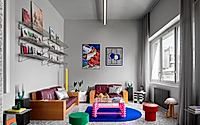
A Resolutely Maximalist Mini Loft condenses an entire visual universe into a compact apartment in Bagnolet, France, reimagined by ZYVA Studio’s founder Anthony Authié. Inside an industrial shell near Paris, the architect layers youth culture references, bold color fields, and cartoon-like furniture into an unapologetically graphic interior. What starts as a simple volume becomes a dense narrative of textures, objects, and memories that turns everyday domestic life into an ongoing visual story.
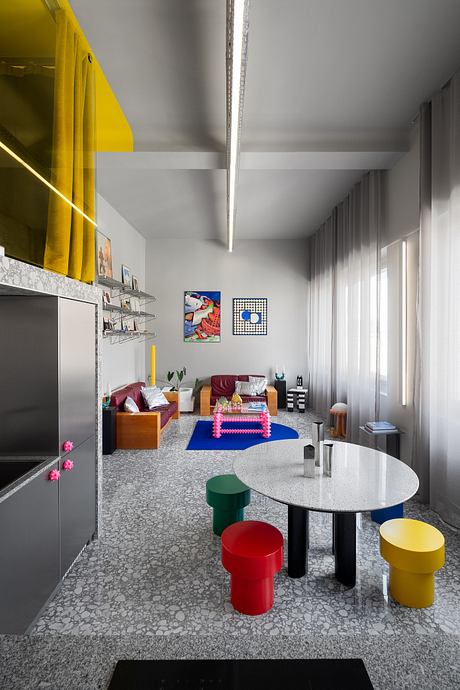
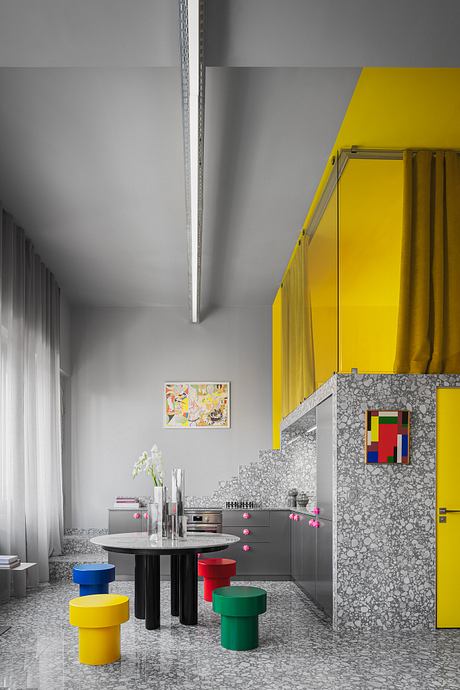
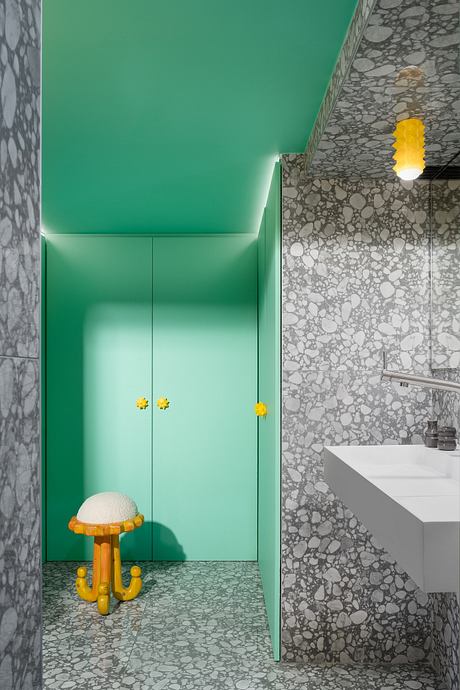
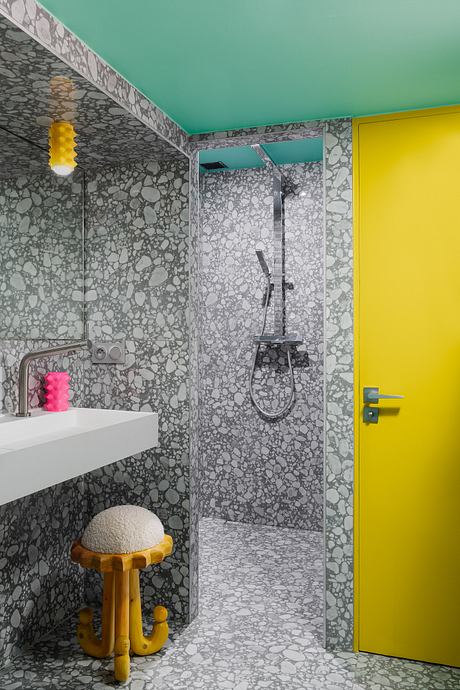
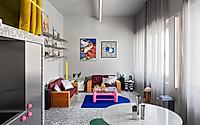
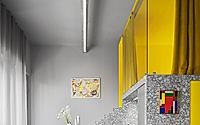
Light slides across polished gray terrazzo, catching flecks of aggregate as it moves from floor to wall. In the middle of this compact volume, sharp bursts of yellow and green pulse against the neutral shell, setting a vivid rhythm from the first step inside.
This apartment in an old industrial building in Bagnolet, just outside Paris, gives architect Anthony Authié of ZYVA Studio a canvas for what he calls trans-design. The 55m² loft becomes an experiment in mixing shapes, colors, motifs, and materials into an unapologetically graphic interior. Every surface, object, and reference leans into one idea: everyday life can unfold inside a collage of memory and subculture.
A Resolutely Maximalist Mini Loft is an apartment that treats interior palette and furniture as the primary structure. Instead of hiding influences, Authié assembles them in full view, from reality TV villa gloss to techno club lighting and cartoon furniture. The result is not a quiet retreat but a dense, readable world where domestic routines share the stage with a vivid personal narrative.
Casting Terrazzo As Ground
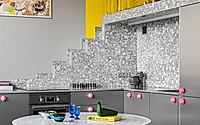
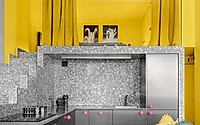
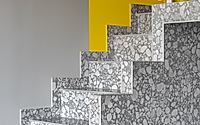
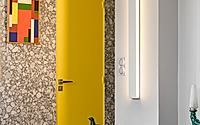
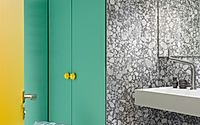
Gray terrazzo runs continuously underfoot and up the walls, giving the former industrial shell a sleek, almost set-like base layer. Its polished surface recalls the showy finishes of early-2000s reality TV villas, turning circulation paths into something closer to a camera sweep than a simple route from room to room. Against this cool, speckled field, every object and color block reads with extra clarity. The neutrality is deliberate: it frames the louder moves rather than competing with them, and lets saturated hues snap into focus.
Terrazzo’s hard texture picks up light differently throughout the day, sometimes flattening into matte gray, sometimes throwing back tiny sparks. That subtle shift keeps the graphic interior from feeling static, even when the palette stays aggressively artificial. It is the quietest element in the project, yet it holds the whole visual experiment together.
Flooding Rooms With Color
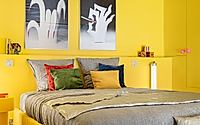
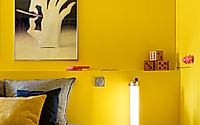
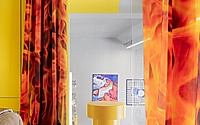
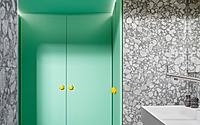
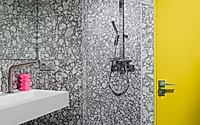
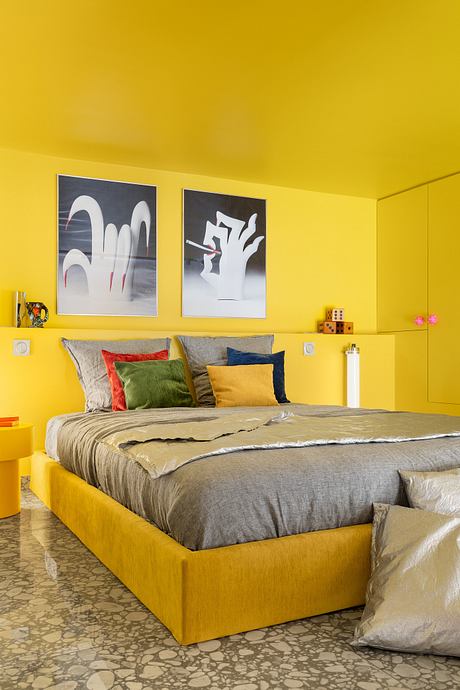
If the terrazzo is the stage, the color-blocked rooms are the plot twists. The bedroom and bathroom are rendered in monochromatic yellow and green, saturated like lines from a neon highlighter dragged across a white page. These rooms reject gradients and nuance, favoring total immersion instead. Crossing the threshold becomes a sharp cut, as if each door leads into a different scene within the same graphic novel.
Authié talks about an “aesthetic narrative,” and that intent runs clearly through these chromatic chambers. Growing up in the 2000s, he pulls from memories of reality TV sets, video game menus, and tuning culture, then freezes those impressions into solid color fields. Rather than sprinkling accents, he commits: walls, fixtures, and surfaces align to a single hue, turning routine tasks like showering or dressing into episodes inside a color story.
Building An Archive Of Motifs
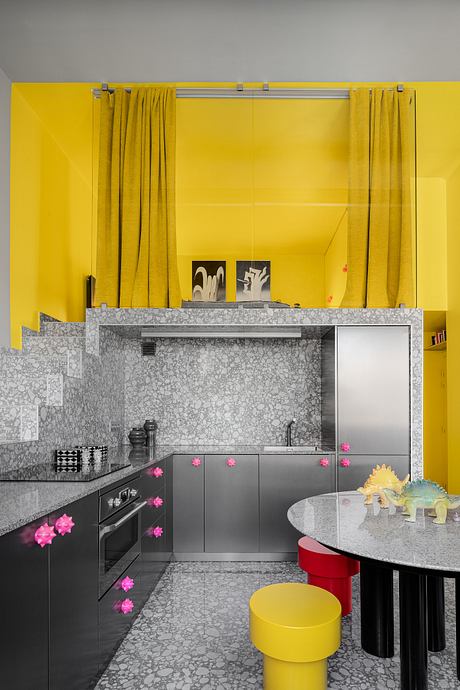
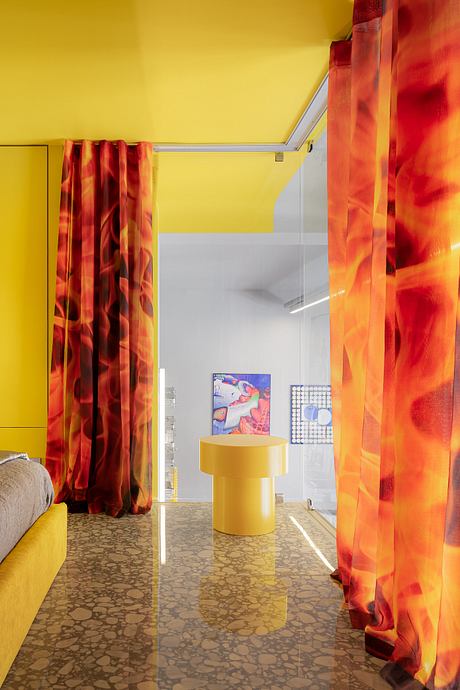
Across the apartment, motifs stack up into what the architect calls an “architecture of memorial collage.” Kitchen handles, all 3D-printed, take the shape of spiky turtle shells from the Mario Bros universe, adding a tactile jolt each time a cabinet is opened. LED strips run like club strobes, casting linear light that hints at techno dance floors rather than domestic ceilings. A flame motif nods to car tuning culture, where airbrushed hoods and customized bodies carry personal codes.
Metal cladding on kitchen cabinets and cupboards pays tribute to Mr. Freeze’s costume from Joel Schumacher’s Batman & Robin, pulling cinematic villainy into everyday storage. None of these references hide; they operate as intentional citations, grafted onto the rhythms of cooking, washing, and moving around. Together they form an archive of Authié’s and his partner’s shared memories, translated into surfaces people touch and light they stand under.
Staging Cartoon-Like Furniture
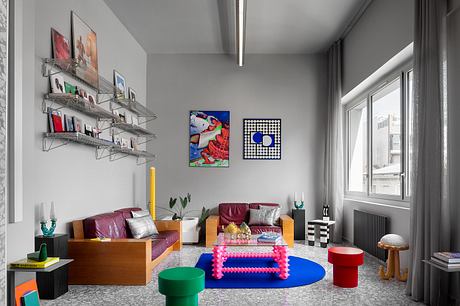
Furniture plays the role of cast rather than background. Authié speaks of chairs and stools as fictional characters, closer to Toy Story toys waiting offstage than to anonymous household objects. His own “Bandit” chair, created with carpenter Maxime Cornet and named after the Dalton brothers from Belgian comics, anchors this ensemble with a clear narrative thread. Around it, pieces by designers he admires add more voices and moods.
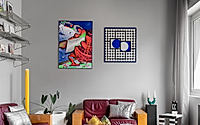
OHM’s Pion stools dot the interior with playful, childlike palettes, while JOJO’s stools and Alix COCO’s Dinodishes push the cartoon charge even further. Illustrations by Sucukundbratwurst, Robuche, Recsoverto, and Vasarely lean against or hang above Art Deco sofas by Hugue Chevalier, a table by Costance Gennari, a chair by Victoria Magnant, and an armchair linked to the TOTEM movement. Each piece contributes a distinct silhouette and color note, turning the apartment into a live-in gallery where sitting down or setting a cup on a table becomes part of an ongoing performance.
In this environment, the palette is never neutral, and the furnishings are never anonymous. Everyday routines unfold among characters, motifs, and references that speak directly to the architect’s past. Memory is given form.
By night, LED lines skim along terrazzo and metal, catching on flame graphics and 3D-printed spikes before fading into the high industrial ceiling. The apartment’s layered palette and cartoonish ensemble keep telling the same story from new angles as the light shifts. What began as a simple volume in a former factory now reads as a dense interior novel, written in color, objects, and the shared memories that bind them together.
Photography by Yohann Fontaine
Visit ZYVA Studio