House of the Lions by Catoni Associati
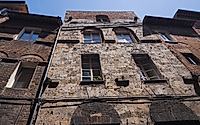
House of the Lions transforms a medieval tower apartment in Siena, Italy, into a contemporary B&B with a richly tactile interior. Catoni Associati works inside the historic shell with light steel and glass structures, colored cement tiles, and a mix of vintage, classic, and contemporary furnishings. Guests move through rooms where original ceilings, brickwork, and layered surfaces stay present yet comfortably reinhabited.


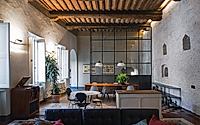
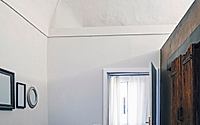
Morning light filters through tall, deep-set windows and lands on patterned cement tiles. Overhead, old timber ceilings run the length of the room in warm, uneven bands.
This medieval tower apartment in Siena, converted into a contemporary B&B, is handled by Catoni Associati as a careful interior palimpsest. The project uses iron and glass, vivid flooring, and a precise furniture selection to define new rooms while preserving the grain of the old house. Every decision rests on the way materials meet and the way color rides across brick, plaster, and wood.
Layering Old And New
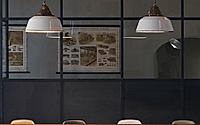
In the main living and dining area, a tall black steel and glass partition slices the volume, framing views between lounge, table, and the rooms beyond. Transparent panes catch reflections from pendant lights, while the dark lower panels steady the composition against pale walls and rough masonry. Long timber beams on the ceiling run above contemporary sofas and chairs, creating a measured tension between structural heft and light furnishings. Nothing feels erased; instead, new elements sit legibly against the preserved envelope.
Color On The Floor
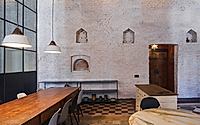
Across the apartment, cement tiles in varied patterns and tones draw subtle lines of movement. Geometric borders mark thresholds between rooms and loosely indicate where medieval walls once stood. In the dining zone, checkerboard flooring sets a casual rhythm beneath a long wooden table and an assortment of molded chairs, their neutral shells allowing the floor to carry most of the visual weight. Guests notice the ground first, then read the furnishings as lighter strokes on top.
Rooms With Memory
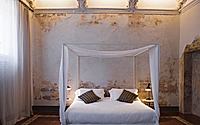
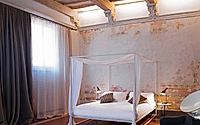
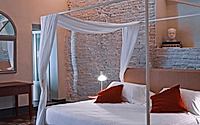
Guest rooms retain textured plaster, traces of fresco, and exposed brick, while lean canopy beds in pale metal stand almost like drawings in front of them. Sheer curtains soften daylight, letting the roughness of the walls stay visible without feeling severe. Simple bedside lamps and modest desks sit beside historic cornices, creating a calm dialogue between ornamented ceilings and contemporary essentials. Color enters through cushions and textiles rather than heavy new finishes, so the existing surfaces keep their quiet dominance.
Objects As Accents
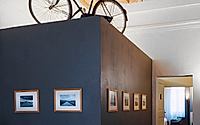
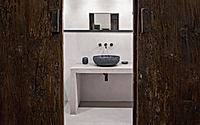
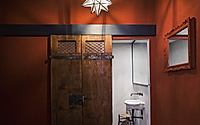
Smaller rooms and corridors show a playful yet restrained approach to objects: a dark, boxy volume carries framed photographs at eye level, while a vintage bicycle rests on its top edge. Deep red walls near one bathroom sharpen the rough grain of heavy wooden doors, with a star-shaped pendant lamp casting patterned light above. Bathrooms themselves pull back to nearly monochrome palettes of pale plaster and concrete, punctuated by stone basins and exposed brass taps. Each object earns its place by contrast with the surrounding shell.
Soft wall lighting and concealed uplights graze brickwork, arches, and ceiling beams, extending the reading of materials into the evening. Historic textures remain front and center, but they share the stage with slender structures, patterned floors, and a considered mix of vintage and contemporary pieces. House of the Lions stays rooted in its medieval fabric while giving every guest a direct, tactile encounter with the layers of its interior life.
Photography courtesy of Catoni Associati
Visit Catoni Associati