Hideaway House by Ming Architects
Hideaway House stands on an elevated plot in eastern Singapore, shaped by Ming Architects as both climate response and urban refuge. The house rises three metres above the street to meet flood regulations and push daily life away from the traffic, turning the main rooms inward toward filtered light, private gardens, and quiet views. An intricate skin of metal screens and natural finishes deepens the sense of withdrawal from the suburban row outside.
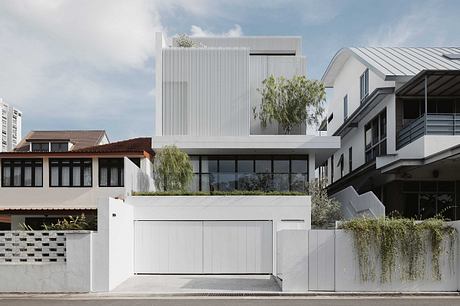
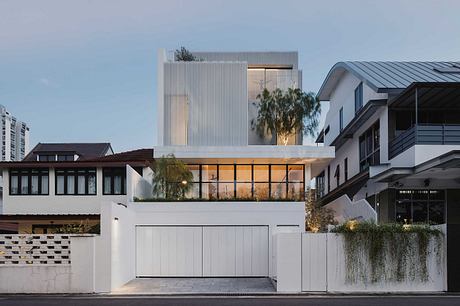
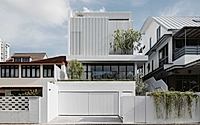
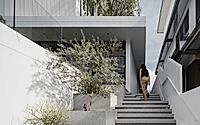
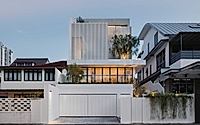
A quiet volume lifts above the busy street, its main floor hovering three metres above passing cars and pavement. Metal screens throw patterned shade across the façade as daylight slips through, tracing the difference between the city’s hard edge and the house’s hushed interior.
This elevated house in eastern Singapore is a careful response to both flood regulations and urban exposure by Ming Architects. Raised ground level keeps water at bay while pushing daily life away from the thoroughfare, so the family relaxes above street noise and views. The project concentrates on how light, material and layered screening shape a calm interior world behind a guarded outer shell.
Lifting Daily Life
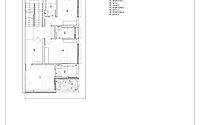
The ground storey sits three metres above the street, turning a technical requirement into a clear architectural move. Cars and passersby stay low while living areas perch above, gaining privacy without heavy walls. From this height, views tilt away from traffic toward sky and gardens, so the main rooms read as a retreat rather than an exposed frontage. Flood protection and everyday comfort converge in this simple vertical shift.
Layered Metal Skins
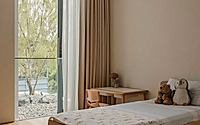
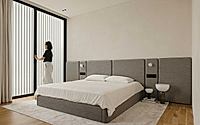
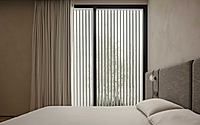
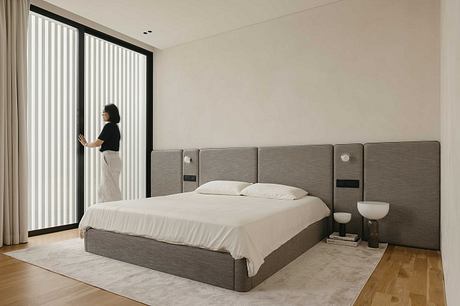
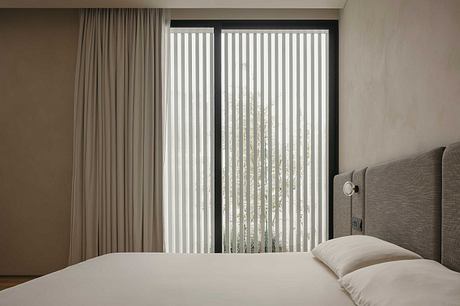
Along the façade, sleek metal screens are arranged as a series of skins that sit in front of the house rather than as a single flat veil. These layers deepen the elevation, collect shadow, and filter sunlight into the bedrooms, softening glare while keeping interior life out of direct view. By day they register as delicate filters against the suburban row; by night, lighted rooms glow behind them like a lantern, giving the street a quiet, rhythmic presence. Privacy, depth, and light control come from the same repeating element.
Echoes Inside The Stair
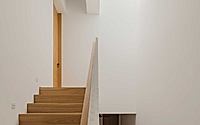
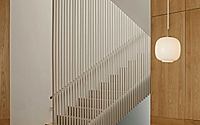
Inside, a run of metal fins lines the stair, echoing the language of the exterior screens in a more intimate register. Sunlight from a glass skylight overhead catches these fins through the day, shifting slender shadows across treads and walls like a moving pattern. The stair becomes a vertical gallery for light rather than just a circulation link, connecting floors through both movement and atmosphere. Exterior and interior are tied together by repetition rather than ornament.
Gardens At Every Level
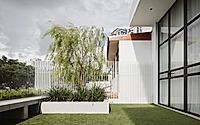
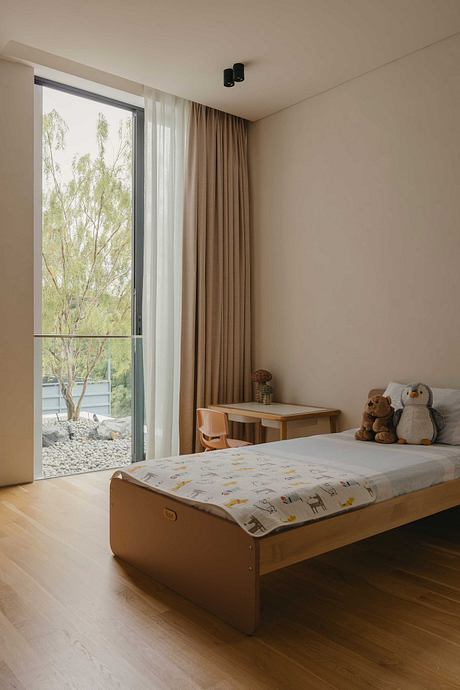
Private roof gardens are planted on various floors, threading nature into the building section instead of confining greenery to the ground. Each bedroom frames its own garden outlook, so waking up means opening onto foliage rather than the busy street below. These planted terraces reinforce the sense of withdrawal, turning upper levels into a sequence of quiet outdoor rooms attached to private quarters. The house stays compact, yet every level carries a direct link to weather and planting.
Warm Materials Within
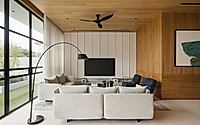
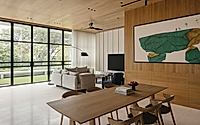
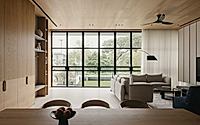
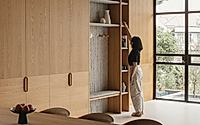
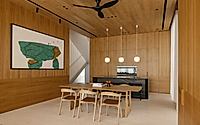
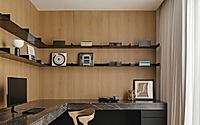
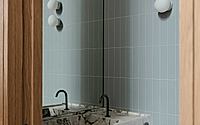
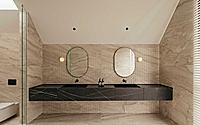
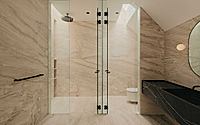
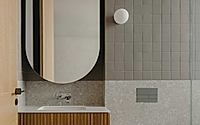
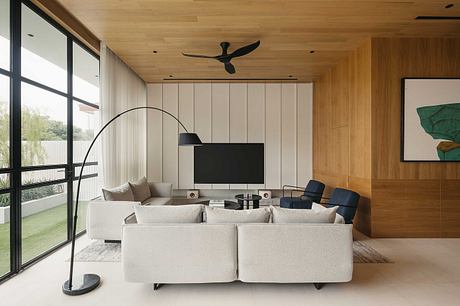
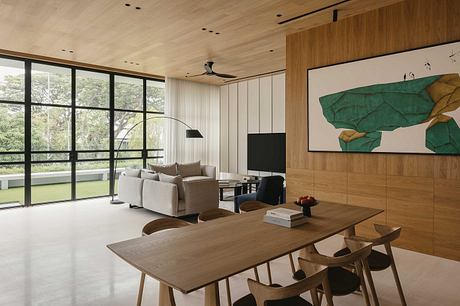
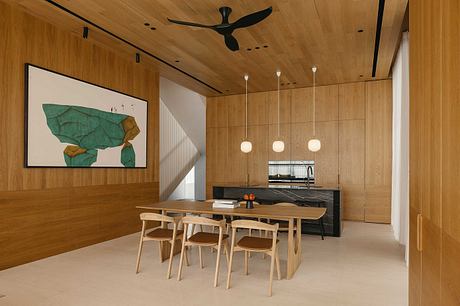
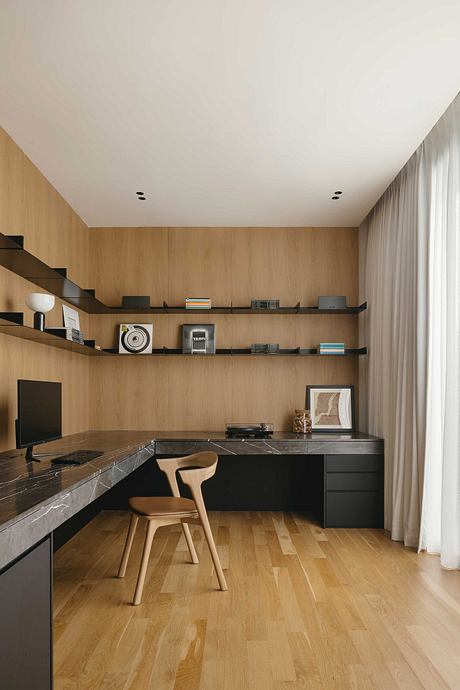
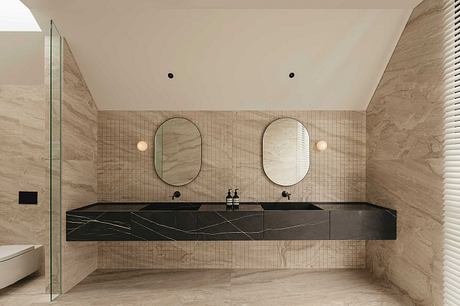
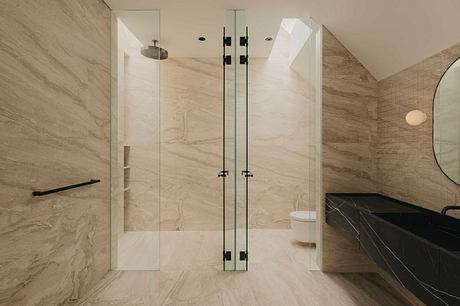
Material choices underline the divide between harsh street conditions and the calm interior world. American white oak and limestone set the tone for floors and wall paneling, bringing warmth and a tactile grain that contrasts with the city’s harder surfaces. Bauwerk limewash paints give the rooms a soft, matte depth, while natural stones shape countertops and bathrooms to keep a consistent, grounded character throughout the house. Every finish leans toward touch and light rather than gloss.
Back at the elevated living level, filtered daylight slips past the metal skins and plays across timber and stone. The house reads as a quiet refuge, not by hiding from the street but by thickening the threshold between public and private worlds. Through elevation, layered screening, and calm materials, daily life stays close to nature even in a dense suburban row.
Photography courtesy of Ming Architects
Visit Ming Architects