Locanda la Concia by Eligo Studio
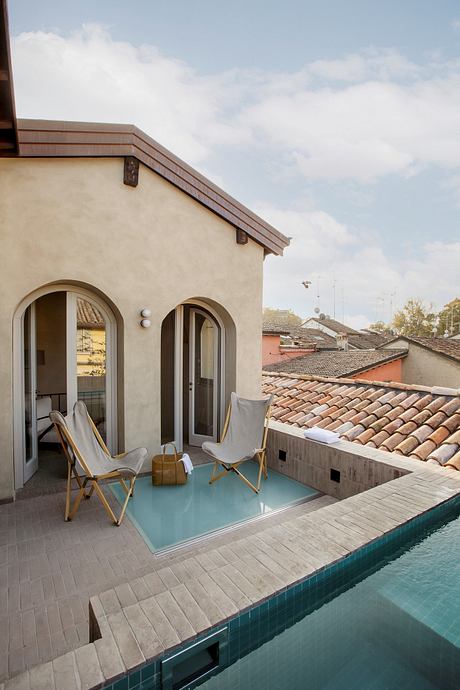
Locanda la Concia rises above Reggio Emilia, Italy, as a penthouse retreat shaped by Eligo Studio within a long-held family building. The project revives a deteriorated property as a contemporary locanda, where restaurant and guest rooms share a narrow vertical volume that balances inherited character with a fresh interior attitude. Guests enter an unassuming structure and move upward into an “Italian riad” that quietly references Marrakech while remaining rooted in local tradition.
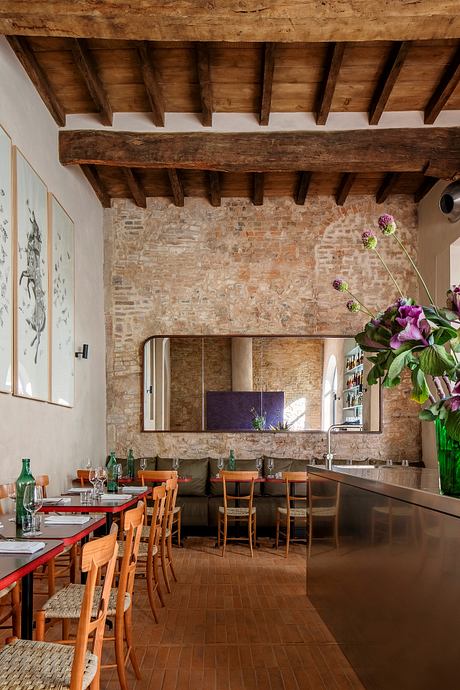
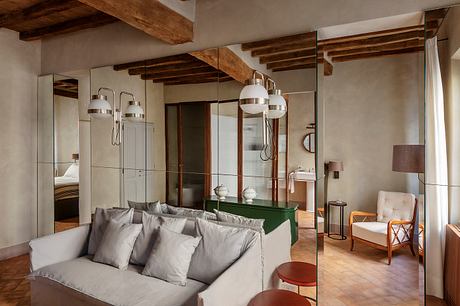
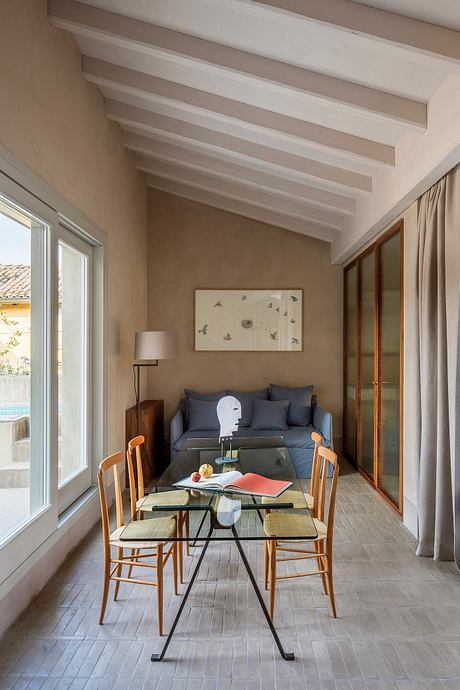
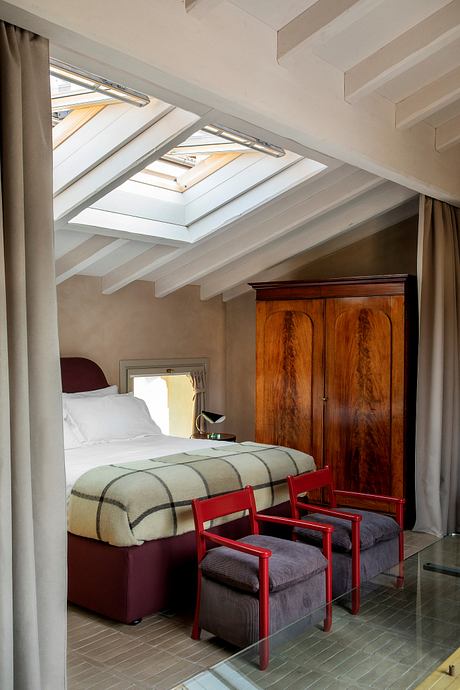
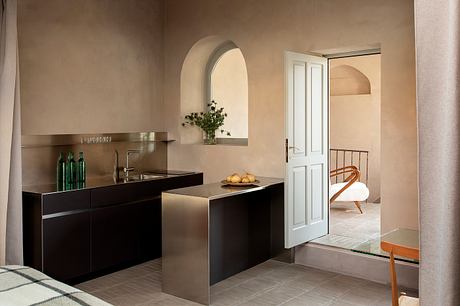
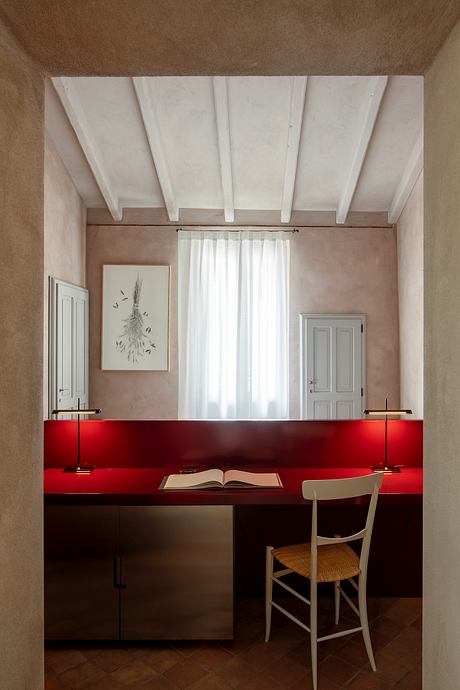
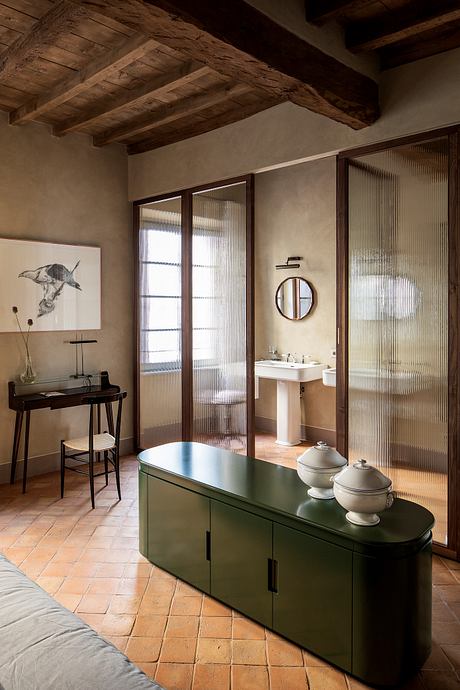
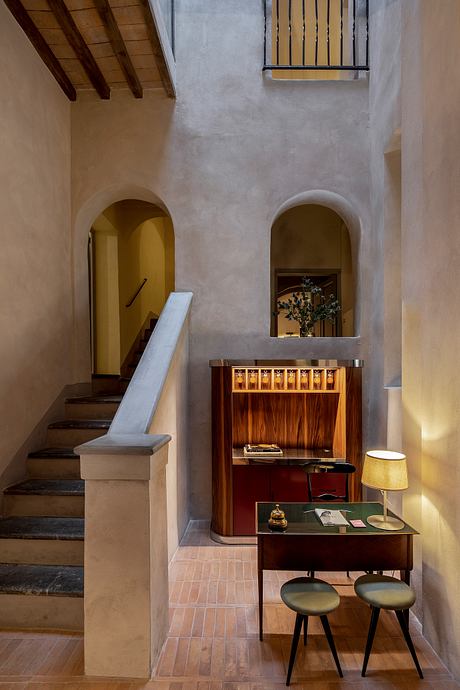
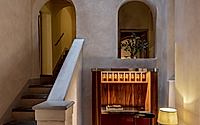
Light slips through the narrow entrance and climbs upward, catching the rough clay walls and old timber. Each landing feels a little more removed from the street below.
Within this once-ruined building, Eligo Studio reshapes a long family property into Locanda la Concia, a penthouse locanda in Reggio Emilia. The project restores structure and character while threading a contemporary interior through wooden beams and clay construction. Restaurant, rooms, and penthouse share a single vertical body, so the interior palette carries guests from level to level as the program shifts from public to private.
At its core, this is a hospitality project in a historic Italian town: a narrow urban building revived as a locanda rather than a conventional boutique hotel. The owner, trained as an interior designer and architect, draws on two decades of practice to handle the internal composition personally. Inspiration from Antwerp’s Graanmarkt 13 and Vincent Van Duysen’s penthouse work informs the layered atmosphere, while the idea of an “Italian riad” introduces a courtyard-like sense of retreat behind the modest façade.
Layered Interior Atmosphere
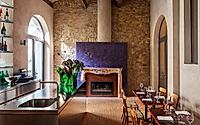
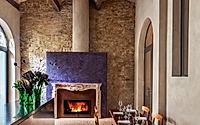
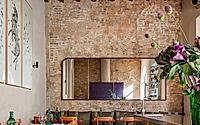
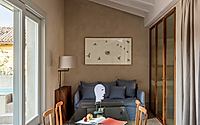
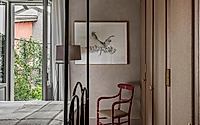
The interior carries a deliberate mix of contemporary lines with the texture of age, so new surfaces sit against exposed beams and clay construction. Rather than hiding the building’s narrow proportions, the rooms and corridors emphasize vertical movement and framed views, letting each floor feel connected yet distinct. Contemporary pieces and finishes temper the rustic structure, creating calm, measured rooms that respond to the building without imitating its past. Guests sense this rhythm most clearly as they rise toward the penthouse, where the height of the volume and the tuned palette deepen the feeling of retreat.
Rooms Shaped by History
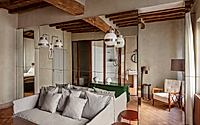
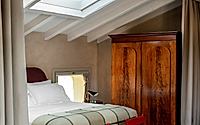
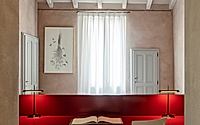
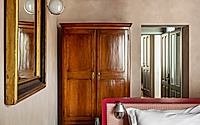
Wooden beams overhead and the clay fabric of the walls keep the building’s origins visible inside every room. Narrow floor plates demand careful planning, so bedrooms and baths line up along the depth of the plan rather than sprawling across it. This constraint sharpens the layout and the furnishings, which stay spare enough to respect sightlines and daylight. Instead of heavy decoration, the project leans on proportion, tactile surfaces, and the repeated rhythm of openings to tie rooms together.
Hospitality Across the Floors
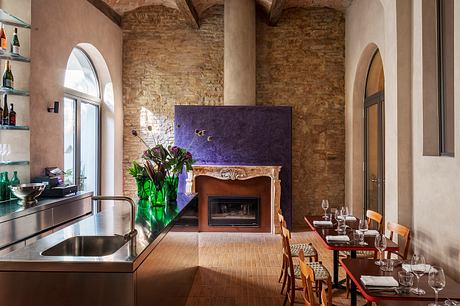
Different levels carry different concepts—restaurant below, guest rooms above, penthouse crowning the stack—yet the interior language remains consistent. The locanda idea shifts attention from anonymous hotel corridors to a more domestic hospitality, where guests move through a sequence that feels intimate and deliberately scaled. Public dining areas keep closer contact with the city, while upper rooms gather more quiet and filtered light. The building’s narrow footprint becomes a narrative device, guiding visitors upward through progressively more private interiors.
An Italian Riad Within
From the street, the structure reads as an unassuming urban building, almost reserved. Crossing the threshold, guests find a concealed world that recalls the layered privacy of a Marrakech riad, translated into Italian materials and proportions. Circulation knits together landings and rooms like a vertical courtyard, with each level forming its own small realm around the central volume. This inward focus turns the penthouse into the quiet culmination of the journey, rather than simply the top floor.
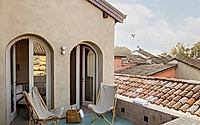
By the time guests reach the highest rooms, the city feels distant, filtered through the mass of clay walls and timber. Every restored element carries the memory of the former ruin while the contemporary interior keeps the experience firmly in the present. In that balance between history and new hospitality, Locanda la Concia finds its character and its calm.
Photography courtesy of Eligo Studio
Visit Eligo Studio